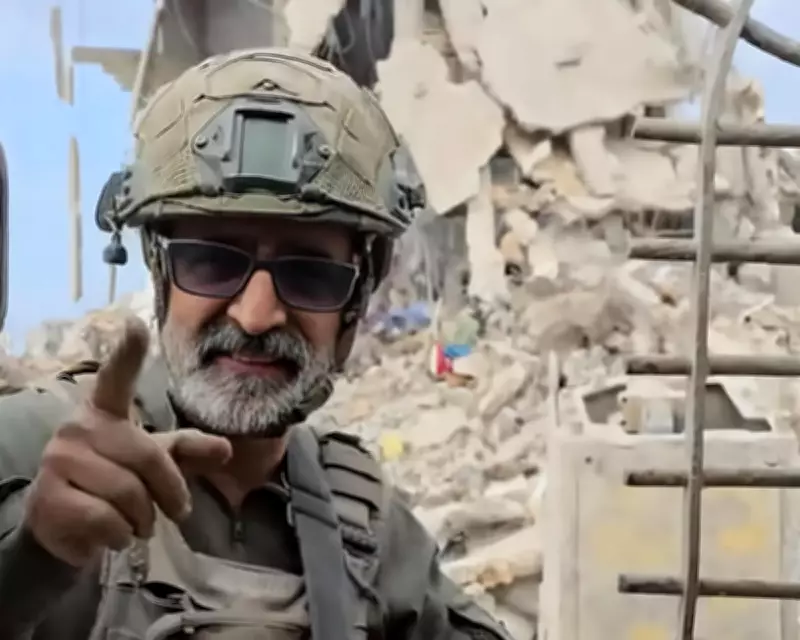
Rabbi Who Bulldozed Palestinian Homes to Light Israel's Independence Torch
Rabbi Avraham Zarbiv, known for his role in demolishing Palestinian homes in Gaza, has been chosen to light a torch at Israel's national independence day celebration on Tuesday. The selection has ignited fierce criticism from human rights campaigners, who argue it endorses ethnic cleansing and war crimes.
Controversial Honour Sparks Outrage
Zarbiv is one of 14 individuals selected for their "extraordinary contribution to society and the state," a group that includes a scientist, a Michelin-starred chef, a leading doctor, security force members, and entrepreneurs. However, his inclusion has drawn condemnation from groups like B'tselem, which stated that this choice sends a clear message that genocide, ethnic cleansing, and war crimes represent the "spirit of the nation" in Israel.
Cabinet minister Miriam Regev defended the decision, citing Zarbiv's "inspirational" dual leadership as both a rabbi and a soldier, balancing "the book and the sword." Yet, critics argue this official endorsement undermines Israel's defence against charges of genocide in international courts, as highlighted by Haaretz newspaper in an editorial.

Destruction and Dehumanisation
As a reservist operating an armoured bulldozer, Zarbiv gained notoriety through videos documenting his personal campaign of destruction in Gaza, often accompanied by inflammatory rhetoric. In one instance, he declared, "You will have nothing left. We will flatten you and destroy you." His actions have become so infamous that "to Zarbiv" has entered Hebrew slang as a term meaning to destroy.
Zarbiv has boasted of demolishing "50 homes a week" in Gaza, leaving tens of thousands of families without homes, documents, or personal belongings. The devastation in Gaza is extensive, with UN figures indicating that nine in ten homes have been destroyed or damaged, along with schools, hospitals, mosques, cemeteries, and shops.
Legal and Ethical Concerns
Despite his role, Zarbiv has faced censure from Israel's judicial watchdog for extremist statements, with Commissioner Asher Kula ruling earlier this year that he violated the code of ethics for judges. Additionally, his own home, built on private Palestinian land in an illegal settlement, has been under a demolition order since 2000, though it has never been enforced, according to the monitoring group Kerem Navot.
Israeli military chiefs have sought to distance themselves from Zarbiv, with Brig Gen Effie Defrin stating that he "was not selected in coordination with the IDF – he is not an IDF representative at the torch-lighting ceremony." This separation highlights the contentious nature of his selection amid ongoing conflicts.
Broader Implications
The honouring of Zarbiv raises significant questions about Israel's moral direction. Haaretz editorialised that while Zarbiv may deserve to light the torch, it is not due to his worthiness but because "Israel has lost its way, its moral compass and its conscience." The devastation in Gaza has been so severe that some experts advocate for recognising it as a new war crime termed "domicide."
As Israel prepares for its independence day, the choice of Zarbiv as a torchbearer underscores deep divisions and the ongoing humanitarian crisis in Gaza, reflecting broader tensions in the Middle East.