Global Condemnation for Putin's 'Barbaric' Ukraine Assault as Peace Negotiations Fail
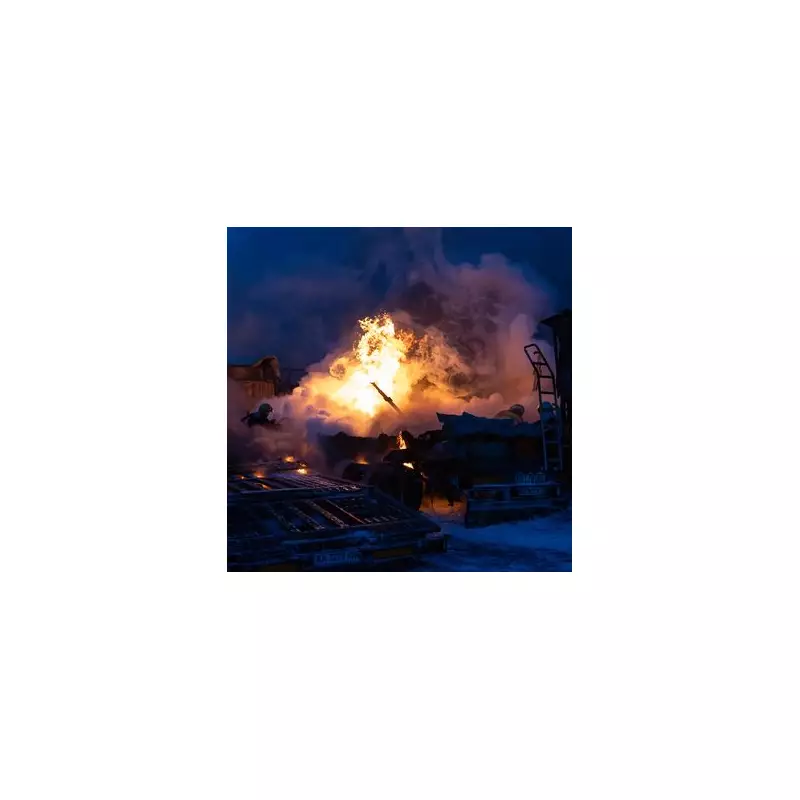
Vladimir Putin has been condemned internationally for what Ukrainian officials describe as a 'barbaric' Russian aerial bombardment on Ukraine, which has left over 1.2 million properties without power and critical infrastructure in ruins. This devastating military escalation coincided precisely with the collapse of the first three-way peace talks between Russia, Ukraine, and the United States, held in Abu Dhabi, which concluded with no significant breakthrough towards ending the protracted conflict.
Humanitarian Crisis Deepens in Freezing Capital
The immediate human cost is severe, particularly in the capital, Kyiv, where residents are enduring a deepening humanitarian emergency. More than 3,200 buildings remain without heating as the city grapples with bitingly cold temperatures plunging to -10 degrees Celsius (14°F). The assault targeted Ukraine's energy grid, crippling centralised heat distribution systems that had already been weakened by previous attacks. Kyiv Mayor Vitali Klitschko reported one fatality and four injuries in the capital, with three requiring hospital treatment.
Emergency services are working around the clock, with over 160 crews operating in Kyiv alone to restore essential services. The situation is dire beyond the capital; in the Chernihiv region, north of Kyiv, an additional 400,000 households are without power. Ukraine's Energy Minister, Denys Shmyhal, stated on Telegram that 'constant enemy attacks unfortunately keep the situation from being stabilised', highlighting the ongoing vulnerability of the nation's infrastructure.

Peace Talks End Without Resolution Amidst Escalation
The timing of the bombardment has drawn particular ire from Ukrainian leadership. The talks in Abu Dhabi, which involved US representatives, ended as the Russian air strikes commenced. Ukrainian Foreign Minister Andrii Sybiha accused Putin of having 'cynically' ordered the brutal attack, which he said had 'hit not only our people, but also the negotiation table'. He asserted that the overnight assault proved 'that Putin's place is not at the board of peace, but at the dock of the special tribunal'.
Despite the setback, diplomatic channels remain tentatively open. Ukraine's President, Volodymyr Zelensky, raised the possibility of a second meeting within days, posting on X that 'the central focus of the discussions was the possible parameters for ending the war'. The United States has suggested that talks might resume on February 1st. Zelensky expressed value in 'the understanding of the need for American monitoring and oversight of the process of ending the war and ensuring genuine security'.
Conflicting Claims and Regional Impact
The conflict continues to be marked by starkly opposing narratives. Russia's foreign ministry spokesperson, Maria Zakharova, claimed that a clearly marked ambulance was attacked by a Ukrainian drone near Hola Prystan, killing three medics—an act she said is 'prohibited by international humanitarian law'. Meanwhile, the governor of Russia's Belgorod region, Vyacheslav Gladkov, reported that Ukraine had launched its largest bombardment yet on the city, damaging energy infrastructure, though no casualties were confirmed. These claims, like many in this war, could not be independently verified.
The humanitarian impact is widespread. In Kharkiv, Ukraine's second city, more than 30 people were injured, including a child, and Mayor Ihor Terekhov reported damage to a maternity hospital and a hostel for displaced persons. Local authorities are responding by providing vulnerable residents with hot food, medicine, and establishing heated shelters operating around the clock.

Complex Diplomatic Backdrop and Territorial Stalemate
The failed peace talks occur against a complex diplomatic backdrop. US President Donald Trump stated last week that Putin had accepted an invitation to join his 'Board of Peace', an organisation focused on ending global conflicts, though Putin has not publicly confirmed this. The day before the Abu Dhabi talks began, US special envoy Steve Witkoff and Trump's son-in-law Jared Kushner met with Putin in Moscow for a four-hour discussion.
Kremlin aide Yury Ushakov said after that meeting that 'Vladimir Putin has emphasised Russia's sincere commitment to settling the Ukraine crisis by political and diplomatic means'. However, he added that 'bringing about a lasting settlement would be unlikely without addressing the territorial issue based on the formula as agreed in Anchorage'. This refers to a meeting last August in Anchorage, Alaska, where Trump and Putin discussed ending the war, reportedly resulting in an agreement that would allow Russia to take the Donbas region and retain control of the annexed Crimean peninsula.
This territorial demand remains the core stumbling block. Russia currently occupies around 20 percent of Ukrainian territory, including large parts of the eastern Donbas region, comprised of Luhansk and Donetsk. The Kremlin insists on Ukraine ceding these areas, a condition President Zelensky has ruled out unequivocally. As the winter deepens and attacks on civilian infrastructure continue, the path to peace appears fraught with immense challenges, leaving millions of Ukrainians in a precarious and freezing limbo.