Pope Leo XIV's Poignant Visit to Angola's Historic Slave Trade Shrine
Pope Leo XIV has embarked on a significant journey to Angola, where he delivered a powerful call for Angolans to combat the "scourge of corruption" by fostering a culture of justice. The American pope's visit, which occurred on Sunday 19 April 2026, marks a profound moment in his African odyssey, taking him to a site deeply intertwined with the harrowing history of the African slave trade.
Mass and Message in Kilamba
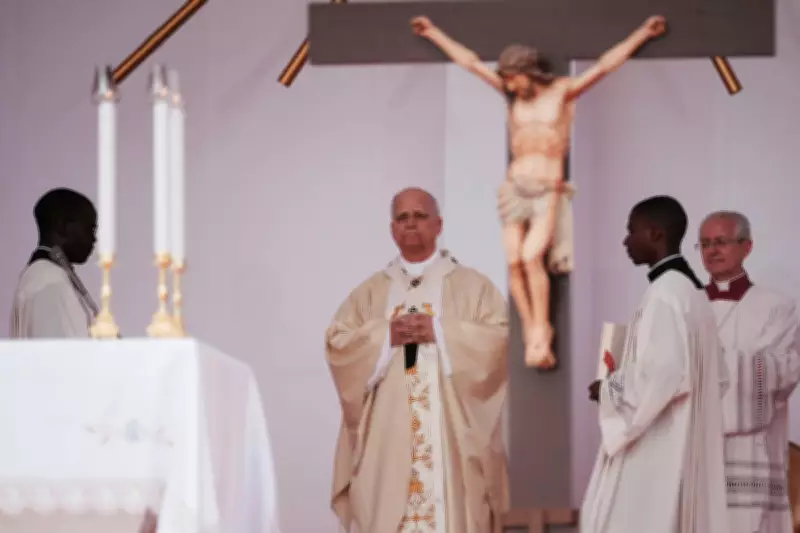
Before an estimated crowd of 100,000 people in Kilamba, a Chinese-built development approximately 25 kilometers outside the capital Luanda, Pope Leo celebrated Mass. In his homily, he passionately denounced the exploitation of Angola's mineral-rich land and its people, who continue to bear the scars of a brutal post-independence civil war.
"We wish to build a country where old divisions are overcome once and for all, where hatred and violence disappear, and where the scourge of corruption is healed by a new culture of justice and sharing," declared Pope Leo, urging national unity and moral renewal.

The Sanctuary of Mama Muxima: A Site of Contradiction
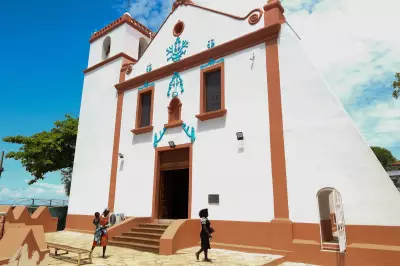
Later on Sunday, Pope Leo proceeded to the Sanctuary of Mama Muxima, an important Catholic shrine situated on the edge of the Kwanza River, about 110 kilometers south of Luanda. There, he celebrated the Rosary prayer, honoring its religious significance while acknowledging its dark past.
The Church of Our Lady of Muxima, constructed by Portuguese colonizers at the end of the 16th century as part of a fortress complex, served as a critical hub in the trans-Atlantic slave trade. Enslaved Africans were gathered at this very site to be baptized by Portuguese priests before being forced to march to the port of Luanda, where they were loaded onto ships bound for the Americas.
Today, while it remains a popular Catholic pilgrimage destination, its history starkly symbolizes the Catholic Church's complicit role in the slave trade centuries ago. This includes the forced baptisms of enslaved individuals and what scholars describe as the Holy See's ongoing reluctance to fully acknowledge and atone for these actions.
Historical Context and Papal Bulls
The visit gains added depth due to Pope Leo's personal ancestry, which includes both enslaved people and slave owners, according to genealogical research. This connection makes his presence at Muxima a potent symbol for many Black Catholics.
"For Black Catholics, Pope Leo’s visit to the Muxima shrine is an important moment of healing," noted Anthea Butler, a senior fellow at the Koch Center, Oxford University. She highlighted that many Black Catholics trace their faith to slavery-era practices, such as the "Code Noir," which mandated baptism for slaves owned by Catholics.
Historically, Angola's Portuguese colonizers were empowered by 15th-century Vatican directives, notably papal bulls like Dum Diversas (1452) and Romanus Pontifex (1455). These documents authorized the enslavement of non-Christians and laid the groundwork for the Doctrine of Discovery, which justified colonial land seizures and slavery.
Although the Vatican formally repudiated the Doctrine of Discovery in 2023, it has never rescinded the original bulls. Reverend Christopher J. Kellerman, a Jesuit priest and author, pointed out that while most enslaved Africans were sold by other Africans, the Portuguese actively engaged in both purchasing and raiding for slaves at Muxima's time, fully utilizing their papal permissions.
Kellerman expressed hope that Pope Leo's visit would foster greater awareness, stating, "It would be so powerful if at some point Pope Leo were to apologize for the popes’ role in the trade." He referenced past papal actions, such as Pope Leo XIII's condemnation of slavery in the late 19th century, but criticized the perpetuation of a "false narrative" that the Holy See always opposed slavery.
Personal Reflections and Scholarly Perspectives
According to research by Henry Louis Gates Jr., 17 of Pope Leo's American ancestors were Black, with his family tree encompassing slaveholders and enslaved individuals. Gates presented these findings to the pope in a July 5 audience at the Vatican, though Pope Leo has not publicly addressed his heritage.

Scholars like Tia Noelle Pratt, a sociologist of religion at Villanova University, emphasize caution, arguing that it is inappropriate to impose narratives on the pope without his own public commentary. Meanwhile, Cardinal Wilton Gregory, the first African American cardinal, expressed delight at the connection, noting that many people of color take pride in the pope's roots.
This visit echoes historical precedents, such as St. John Paul II's 1985 apology for the slave trade in Cameroon and his 1992 denunciation of slavery in Senegal. Pope Leo XIV's journey to Mama Muxima thus stands as a multifaceted event—blending spiritual devotion, a call for social justice, and a sober reflection on a painful legacy that continues to resonate across continents and generations.