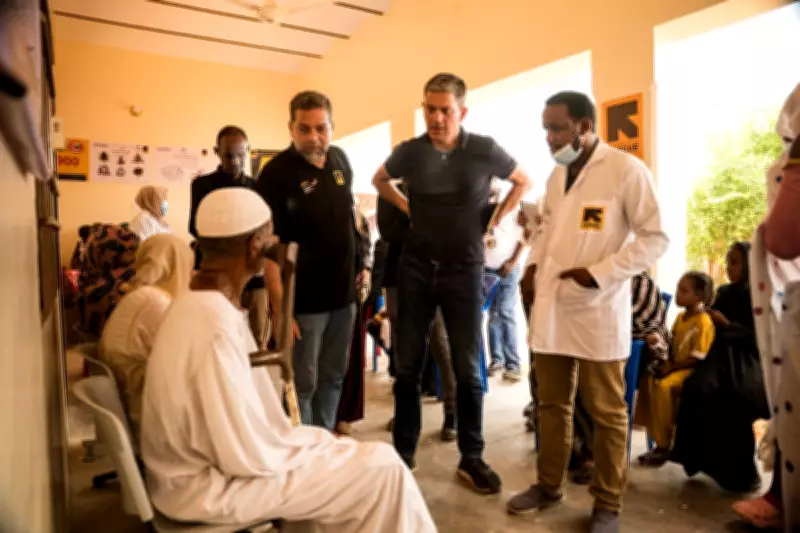
David Miliband Links Climate Aid Cuts to Escalating Global Conflicts
In a stark warning, former foreign secretary David Miliband has declared that a collapse in aid for climate adaptation is actively fueling wars and humanitarian crises around the world. Speaking to The Independent, Miliband, who serves as CEO of the International Rescue Committee (IRC), emphasised that rich nations must reverse recent cuts and significantly boost grant-based foreign aid to help the most vulnerable countries adapt to climate change.
Grant-Based Aid Essential for Fragile States
Miliband highlighted that the escalating climate crisis is a major driver of conflict, particularly in resource-stressed regions. He argued that grants and donations, rather than loans, are crucial to avoid burdening fragile states with additional debt. "We need grant-based aid not just for vaccinations and to treat things like malnutrition, but also to fund climate resilience," he stated after a speech at Chatham House. He pointed out that climate adaptation efforts, such as protecting communities from flash floods, offer long-term benefits but struggle to attract private investment, especially in conflict-affected areas.
Climate Change as an Underestimated Conflict Factor
Referencing a recent IRC report listing 20 countries most likely to face worsening humanitarian crises this year, Miliband noted that the contribution of climate change to conflict is often underestimated. The report, titled Emergency Watchlist for 2026, identifies Sudan and the Occupied Palestinian Territories as top concerns. Miliband explained that many of these countries are located around the equator, a climate-stressed zone, where resource scarcity exacerbates tensions. "Climate change is a major contributing factor to resource stress, which is known as one of the major factors driving conflict globally," he added, while acknowledging that not all conflicts, such as those in Ukraine and Gaza, are directly climate-related.

Inadequate Funding and Private Sector Challenges
The article reveals a dire funding landscape for climate adaptation. Aid budgets have faced immense pressure, with cuts from the US and UK, and private investment remains minimal. Data from the Organisation for Economic Co-operation and Development shows that only around 10% of climate adaptation finance in developing countries comes from the private sector. An analysis by Mercy Corps suggests that, even optimistically, the private sector could meet only about 15% of adaptation needs in these regions. Miliband criticised the current inverse relationship where the poorest and most climate-exposed nations receive the least support, stating, "We have to really shift this inverse relationship at the moment, where the poorer and more exposed you are to climate change, the less money you get for climate adaptation."
Global Humanitarian Crisis at Unprecedented Levels
The IRC report describes the world at an "unprecedented moment", with global support collapsing. It notes that the 20 listed countries represent 12% of the global population but account for 50% of people in extreme poverty and 89% of those in humanitarian need. Conflicts are intensifying, with 61 recorded globally in 2024, the highest since World War II, and significant death tolls in 2025. The IRC itself had to cut its budget by $400 million due to aid reductions, leading to thousands of staff redundancies.
Calls for Action Ignored at International Forums
Miliband's comments follow appeals from conflict-affected countries at COP30 in Brazil, where they warned that war is a "blind spot" in climate talks. These nations, among the most vulnerable to climate impacts, receive only 10% of global climate aid, hindering their ability to adapt. Despite the formation of a network of such countries at COP29 in 2024, which called for $20 billion annually in adaptation aid, the Brazilian presidency at COP30 overlooked their agenda requests. This neglect underscores the urgent need for increased diplomatic focus and funding to address the intertwined crises of climate change and conflict.