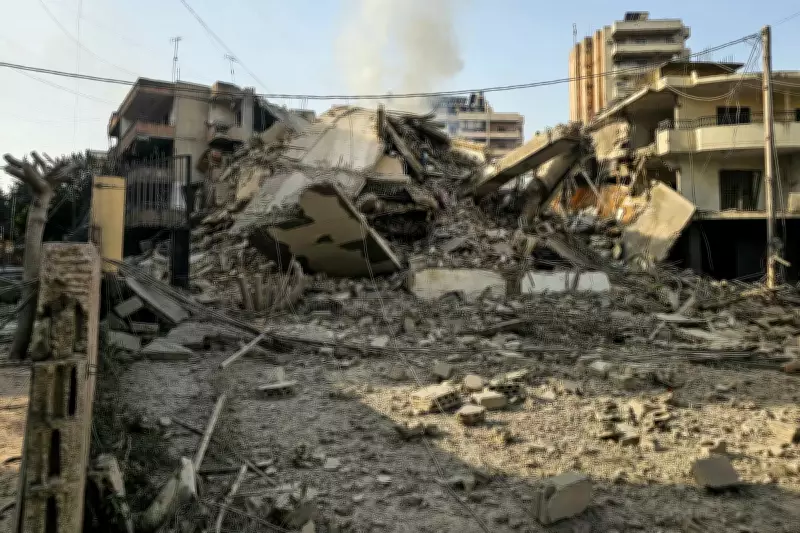
Israeli Strike on Beirut Seafront Claims Seven Lives
An Israeli military strike targeted central Beirut's seafront, resulting in at least seven fatalities and 21 injuries, according to Lebanon's health ministry. The attack, which reportedly hit a car in the Ramlet al-Bayda area, represents the third such incident in the Lebanese capital since the onset of the ongoing conflict. This latest escalation underscores the deepening violence in the region, with the World Health Organization warning of an 'unprecedented' crisis that could 'spin out of control'.
Military Actions and Retaliatory Strikes
The Israeli military confirmed conducting overnight strikes on Beirut's southern suburbs, stating they targeted 10 Hezbollah sites and multiple launchers. In response, Hezbollah announced it fired missiles at an Israeli military intelligence base located in the suburbs of Tel Aviv. These exchanges highlight the intensifying tit-for-tat attacks between the two sides, contributing to a broader regional instability.
Humanitarian Impact and International Concerns
The broader Israeli offensive in Lebanon has led to over 630 fatalities and displaced more than 800,000 people, creating a severe humanitarian crisis. French President Emmanuel Macron has urged an immediate halt to the ground offensive, emphasizing the need for de-escalation to prevent further civilian casualties and displacement. The conflict's ripple effects are also felt economically, with oil prices soaring after recent attacks on Iraqi tankers in the Gulf, suspected to be linked to Iranian actions.

The situation remains volatile, with ongoing military operations and diplomatic efforts struggling to curb the violence. As casualties mount and displacement figures rise, international calls for a ceasefire grow louder, yet the path to peace appears increasingly fraught with challenges.