Israeli Strike Kills Lebanese Security Forces as Israel and Hezbollah Trade Fire Ahead of Talks
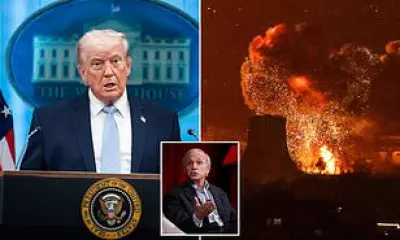
Tensions have escalated dramatically between Israel and Hezbollah, with intensified attacks on Friday marking a significant surge in hostilities. This escalation comes just ahead of direct talks scheduled between the Lebanese government and Israel, set to begin next week.
Deadly Strikes and Counterattacks
At least 13 members of Lebanon's State Security forces were killed in an Israeli strike in southern Lebanon on Friday. In a retaliatory move, Hezbollah claimed responsibility for an attack targeting a naval base in the Israeli port city of Ashdod, located approximately 90 miles away from the border.
Israel launched strikes across several towns in southern Lebanon, including a devastating attack on a government building in the southern city of Nabatieh that resulted in the deaths of government security personnel. Hezbollah, in turn, claimed 31 other attacks on northern Israel and on Israeli ground troops that have invaded southern Lebanon.

Background of the Conflict
Israel initiated its latest aerial campaign and a ground invasion of southern Lebanon after Hezbollah fired rockets toward northern Israel on March 2. This action was taken in solidarity with Iran, Hezbollah's key ally and patron.
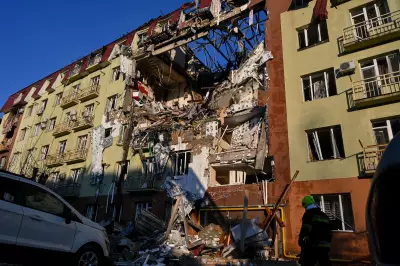
The human cost of this conflict has been staggering. According to the Lebanese Health Ministry, at least 1,888 people in Lebanon have been killed in Israeli strikes. A particularly bloody incident occurred on Wednesday when a rapid series of 100 strikes hit the country within just 10 minutes, killing at least 303 people. These strikes targeted multiple areas in dense residential and commercial zones in central Beirut, marking the deadliest day in the latest war between the two sides.
Civil Defense first responders are still engaged in the grim task of searching for bodies trapped under the rubble in the Lebanese capital. The situation remains dire and fraught with danger.
Hospital Under Threat
Officials at Beirut's main government-run hospital, located on the southern edge of the capital, fear it could be in the line of fire. This concern arises after the Israeli military issued an evacuation warning for the surrounding suburbs, including the busy neighborhood of Jnah where the hospital is situated. Israel has previously launched attacks in Jnah, both with and without warning.
The World Health Organization has called for the Rafik Hariri University Hospital to be spared from attacks and has urged against evacuation. WHO officials stated on Friday that they received assurances the hospital would not be struck. Despite these assurances, the hospital has not evacuated, though staff members are living in fear.
Dr. Mohammad Cheaito, who heads the emergency department, explained the perilous situation. "The entire zone around the hospital was threatened and deemed dangerous," he told the AP. "But at the end of the day, we have a humanitarian duty." Getting to work now requires staff to drive on roads that can be struck at any time, adding to the daily risks they face.
Lebanon's Position and Hezbollah's Stance
Lebanon's authorities have not yet commented on Israeli Prime Minister Benjamin Netanyahu's announcement on Thursday regarding the decision to proceed with talks. Netanyahu indicated that the talks would focus on disarming Hezbollah and establishing "peaceful relations" between the two countries.
A Lebanese government official familiar with the developments stated that a halt in the fighting is a critical condition for Lebanon to engage in direct talks with Israel. This approach is similar to the one taken between the U.S. and Iran. Lebanon has yet to appoint a representative for these negotiations. The official spoke on condition of anonymity in line with regulations.
Lebanese President Joseph Aoun had initially proposed direct talks early in the war on similar terms, hoping at the time for Israel to stop the escalation in airstrikes and refrain from invading the country. However, with only the backing of France, that initiative failed.

Ceasefire Complications and Protests
On Wednesday, the U.S. and Iran announced a temporary ceasefire in the war that began on February 28. Mediator Pakistan announced that this ceasefire included Lebanon and other countries impacted in the wider regional conflict. However, Israel—and later the United States—denied this agreement. Both nations aim to separate the diplomatic tracks of the two wars.
Hezbollah considers Israel's attacks on Lebanon to be a violation of the ceasefire. Meanwhile, Beirut, in a bid to disarm Hezbollah and assert its full sovereignty over the country, insists on being included in talks related to Lebanon.
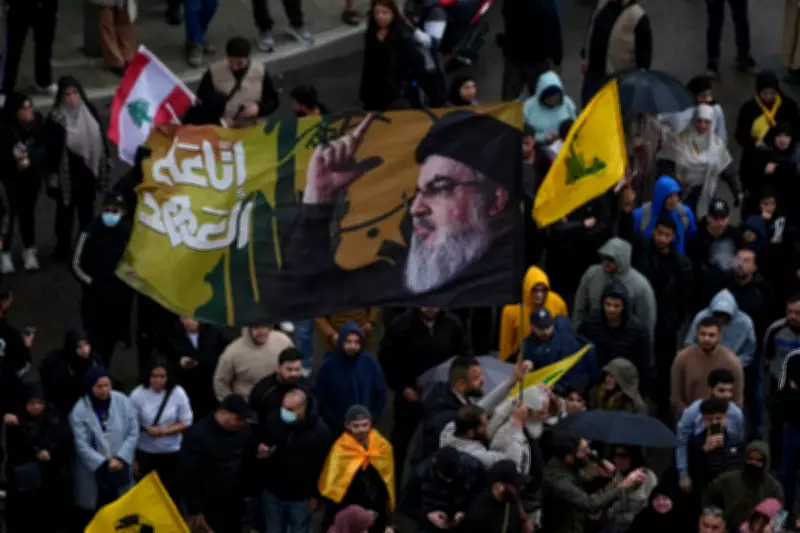
Hezbollah Secretary-General Naim Kassem, in a statement broadcast on Thursday, did not directly mention the prospect of Israel-Lebanon talks. However, he called on the Lebanese government to "stop giving free concessions" to Israel.
Dozens of supporters of the Iran-backed group protested outside the Lebanese prime minister's office in central Beirut. They view the scheduled direct talks as a surrender to Israel, which has stated its troops will remain in the country indefinitely.
Protester Hassan Shuaib expressed the group's anger, saying, "Our blood has been spilled on this land, and our state is conspiring against us. Our state wants to kill us; our state wants to strip us of our weapons."
The situation remains highly volatile as both sides continue to exchange fire, with the looming talks adding another layer of complexity to an already tense and deadly conflict.