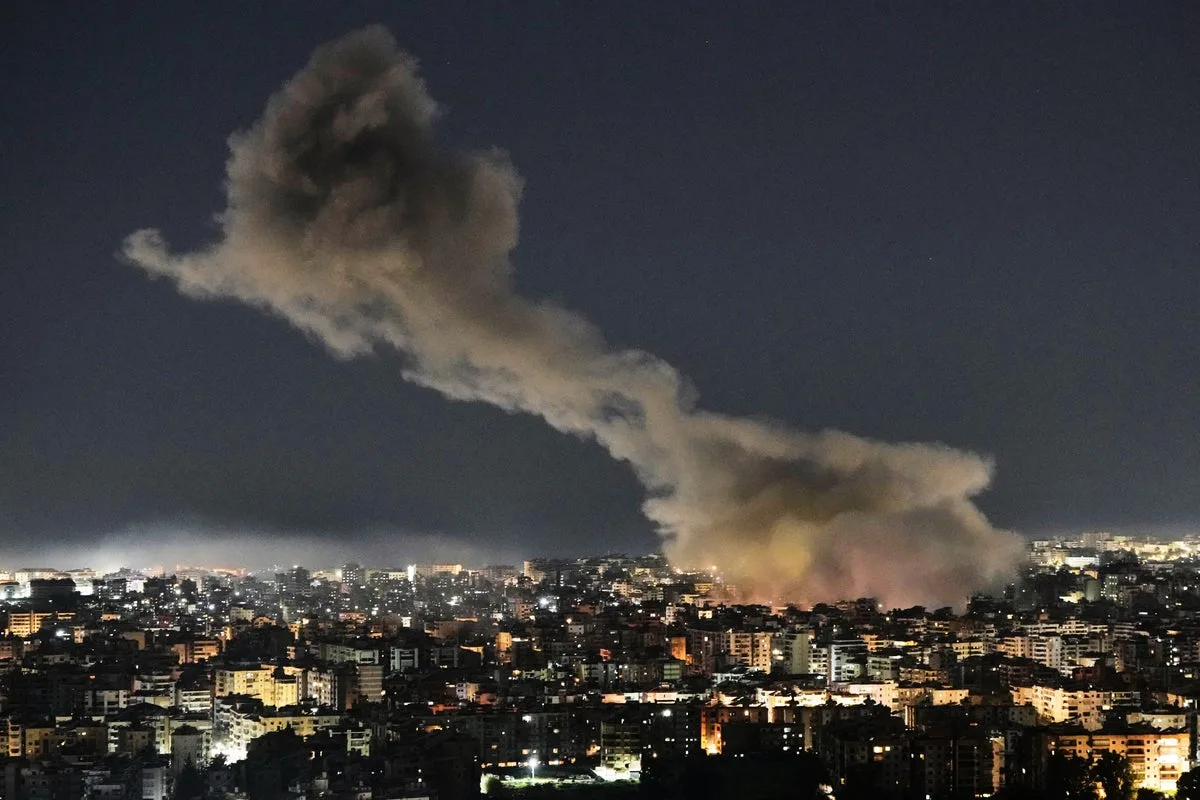
Israeli Military Expands Campaign Against Hezbollah's Civilian Network
An Israeli airstrike on a Hezbollah-operated health centre in southern Lebanon has resulted in the immediate deaths of twelve medical workers, with one seriously injured and four individuals missing beneath rubble for hours. The attack, which occurred on March 13 in the village of Burj Qalaouiyah, represents one of the deadliest single incidents in Lebanon since the latest phase of the Israel-Hezbollah conflict erupted on March 2.
Targeting the Islamic Health Society
The targeted facility was run by Hezbollah's health division, the Islamic Health Society. This organisation has now lost twenty-four members over the preceding fortnight. This strike signifies a strategic shift by the Israeli military, which is now explicitly targeting not just the group's military assets but also its civilian institutions. This appears to be a calculated effort to further weaken the Iran-backed organisation and erode its popular support base.
Hezbollah operates as both a political party and an armed militia, and its extensive network of health and social service institutions has been instrumental in consolidating its support among the Lebanese population over many years.
Systematic Destruction of Civilian Infrastructure
The campaign against Hezbollah's civilian wings has been broad and systematic. In addition to health centres, Israeli forces have destroyed more than a dozen branches of Hezbollah's financial arm, al-Qard al-Hasan. Other strikes have inflicted heavy damage on the headquarters of Hezbollah's Al-Manar television network and its Al-Nour radio stations.
The offensive has also extended to the group's economic infrastructure, including Amana gas stations and the Sajjad discount shops, which provide heavily subsidised products to low-income communities. In a significant escalation, a Wednesday airstrike on an apartment in central Beirut killed Mohammed Sherri, the head of political programming at Al-Manar TV, along with his wife.
Conflicting Narratives and Legal Accusations
Israel has justified these strikes by accusing Hezbollah of utilising health facilities for military purposes and alleging that al-Qard al-Hasan—officially registered as a charitable organisation providing interest-free loans—is funnelling funds to support the group's military activities. The Lebanese Health Ministry has categorically denied Israeli claims that Hezbollah's health facilities are being used for military ends.
"This is a different war that will not end with a ceasefire," stated Hilal Khashan, a political scientist at the American University of Beirut. "This war will not end before Israel achieves its full objective - that is, the elimination of Hezbollah not only as a military movement, but also the ultimate objective is to erase Hezbollah from the Lebanese political picture."
An Existential Conflict for Hezbollah
Hezbollah is facing mounting internal and external pressure to disarm, and recognises the pivotal nature of this latest confrontation. Intense clashes along Lebanon's southern border between Hezbollah fighters and advancing Israeli troops have resulted in dozens of Lebanese combatant fatalities.
During a Monday visit to the northern front, Israel's army chief, General Eyal Zamir, declared that Hezbollah is now fighting "a war for its very existence and is paying a heavy price for entering this battle." He warned that military pressures exerted by Israel would only "increase more and more."
Hezbollah's leadership has vowed resilience. "This is an existential battle. It is not a limited or simple battle," asserted Hezbollah leader Naim Kassem in a televised weekend address, promising his group would fight to the bitter end and never surrender.
Broader Context and International Reaction
Israel contends that the Lebanese government has failed to disarm Hezbollah as per its own commitments, necessitating Israeli intervention. Unlike previous conflicts, the current hostilities unfold as the Lebanese government has declared Hezbollah's military activities illegal, with authorities detaining several group members for unlicensed weapons possession.
The conflict was triggered when Hezbollah fired rockets into Israel, an act it stated was in retaliation for the killing of Iran's Supreme Leader Ali Khamenei, following the commencement of U.S. and Israeli attacks on Iran. Israel's retaliatory airstrike campaign across parts of Lebanon has, to date, claimed over 1,000 lives and displaced more than one million people from southern and eastern Lebanon, as well as Beirut's southern suburbs.
The backlash within Lebanon has been palpable. Following airstrikes on Hezbollah institutions in central Beirut, resident protests forced the group to close a branch of al-Qard al-Hasan in the capital's heart, with workers removing signage and dismantling ATMs.
Allegations of War Crimes and Regional Stakes
Amnesty International has argued that al-Qard al-Hasan branches do not constitute legitimate military targets under international humanitarian law and that the strikes should be investigated as potential war crimes.
"The Israeli military has appeared to assume that labelling something as Hezbollah-affiliated, be that healthcare workers, homes in border villages, or financial institutions, makes it targetable. That’s wrong," said Heba Morayef, Amnesty International's regional director for the Middle East and North Africa.
Mahmoud Karaki of Hezbollah’s Islamic Health Society reported that the group lost 153 members in Israeli attacks during the 2024 war, but vowed to continue its operations. "By targeting us, they are targeting the safety network for the people and their steadfastness in areas under attack," Karaki stated.
The Israeli military's Arabic spokesperson has alleged Hezbollah uses ambulances to transport weapons and fighters, a charge strongly denied by the paramedic group. The conflict's resolution is further complicated by regional linkages. Hezbollah and Iranian officials insist that any halt to U.S.-Israeli strikes on Iran must also include a cessation of Israeli attacks in Lebanon.
"We do not believe in a ceasefire; we believe in ending the war. And ending the war means exactly that — ending the war on all fronts," Iranian Foreign Minister Abbas Araghchi told Al Jazeera English, explicitly including Lebanon, Yemen, Iraq, and Iran in this demand.
This latest confrontation follows a 34-day war in 2006 that ended in a stalemate and a 14-month conflict beginning in October 2023, which severely degraded but did not destroy Hezbollah's command structure. The current campaign, targeting the very foundations of Hezbollah's societal influence, marks a dangerous and expansive new phase in the long-standing conflict.