The Enduring Conflict: Israel and Hezbollah's Four-Decade Timeline
The ongoing war between Israel and the Lebanese militant group Hezbollah represents merely the latest chapter in a conflict that has spanned more than four decades. This enmity, characterised by sporadic outbursts of intense fighting interspersed with periods of fragile and tense calm, has shaped the geopolitical landscape of the Middle East. Below is an expanded timeline detailing significant milestones in this protracted and often brutal hostility.
The Genesis: Invasion and Formation
1982: Israel launched a full-scale invasion of Lebanon, primarily targeting the Palestinian Liberation Organization and its allied factions. In response to the ensuing Israeli occupation of southern Lebanon, the militant group Hezbollah was formed. Backed by Iran and modelled on Iran's Islamic Revolution, Hezbollah initiated a guerrilla war campaign against Israeli forces, marking the beginning of a direct and enduring confrontation.
Leadership and Escalation in the 1990s
1992: Hezbollah's leader, Abbas Mousawi, was assassinated in a targeted Israeli helicopter attack. This pivotal event led to the ascension of Hassan Nasrallah, who would go on to lead the group for the subsequent three decades, becoming a central figure in the conflict.

1996: Israel initiated a major offensive with the objective of pushing Hezbollah forces north of the Litani River, approximately 30 kilometres from the border. During this operation, Israeli artillery shelling struck a United Nations compound in Qana that was housing hundreds of displaced civilians. The attack resulted in the deaths of at least 100 civilians and left scores more wounded, drawing international condemnation.
Withdrawal and War in the 2000s
2000: Following a prolonged war of attrition, Israel withdrew its military forces from southern Lebanon. This withdrawal was celebrated across the Arab world as a significant strategic victory for Hezbollah, bolstering its prestige and influence within Lebanon and the region.
2006: Hezbollah fighters conducted a cross-border raid, ambushing an Israeli patrol, killing three soldiers, and taking two others hostage. This incident ignited a month-long war between Israel and Hezbollah, which concluded in a stalemate. Israeli bombardment during the conflict devastated villages and residential areas in southern Lebanon and Beirut's southern suburbs, employing a scorched-earth strategy later termed the “Dahiyeh Doctrine.”
2008: Imad Mughniyeh, Hezbollah's military chief, was assassinated in Damascus when a bomb planted in his car detonated. The killing was widely attributed to Israeli intelligence operations.
Regional Entanglements and Border Skirmishes
2012: Hezbollah entered the Syrian civil war, providing crucial support to President Bashar Assad's regime. In the years that followed, Israel began conducting periodic airstrikes within Syria, targeting Iranian and Hezbollah facilities, officials, and weapons shipments allegedly destined for Hezbollah. Notably, Israel largely refrained from striking Hezbollah targets directly on Lebanese soil during this period.
October 8, 2023: One day after the Hamas-led attack in southern Israel sparked the war in Gaza, Hezbollah fired missiles across the Israeli border. Israel retaliated with airstrikes and shelling, initiating a low-level conflict that, initially, remained largely confined to the border region.
Recent Escalations and Ceasefire Efforts
September 17, 2024: Israel executed a sophisticated attack in Lebanon using remotely-triggered explosive devices concealed within pagers issued to Hezbollah fighters and civilian employees. A subsequent attack the following day targeted walkie-talkies. These coordinated assaults resulted in dozens of fatalities and thousands of injuries, predominantly among Hezbollah members but also including women and children.
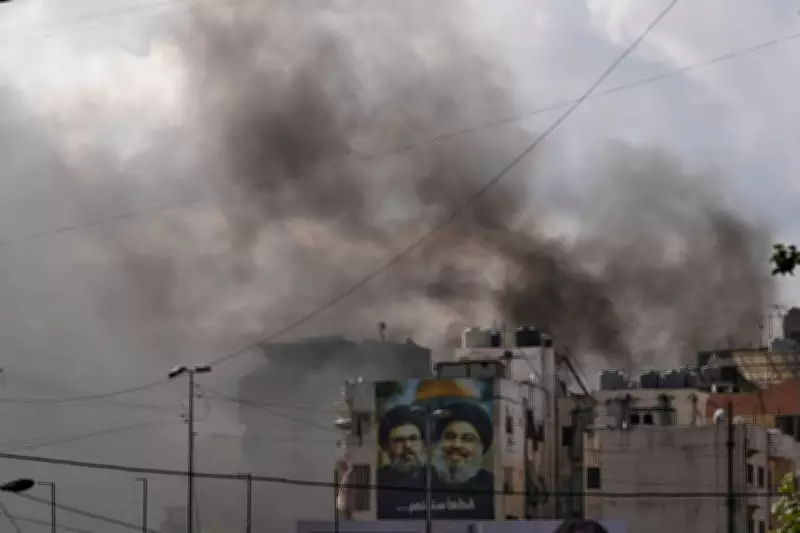
September 27, 2024: Hassan Nasrallah, the long-standing leader of Hezbollah, was killed in a series of massive airstrikes targeting Beirut's southern suburbs, a stronghold of the group.

November 27, 2024: A ceasefire, brokered by the United States, nominally brought an end to the intense Israel-Hezbollah war. However, Israel continued to conduct regular strikes within Lebanon, asserting that these operations were necessary to prevent Hezbollah from rebuilding its military capabilities.
March 2, 2025: Two days after Israel and the United States launched attacks on Iran, triggering a broader regional war in the Middle East, Hezbollah fired a salvo of missiles toward Israel. The group stated that this retaliation was in response to the killing of Iranian Supreme Leader Ayatollah Ali Khamenei and what it described as "repeated Israeli aggressions" on Lebanese territory.
This timeline underscores the complex and deeply entrenched nature of the Israel-Hezbollah conflict, a struggle that has evolved through guerrilla warfare, full-scale wars, assassinations, and regional proxy engagements over more than forty years.