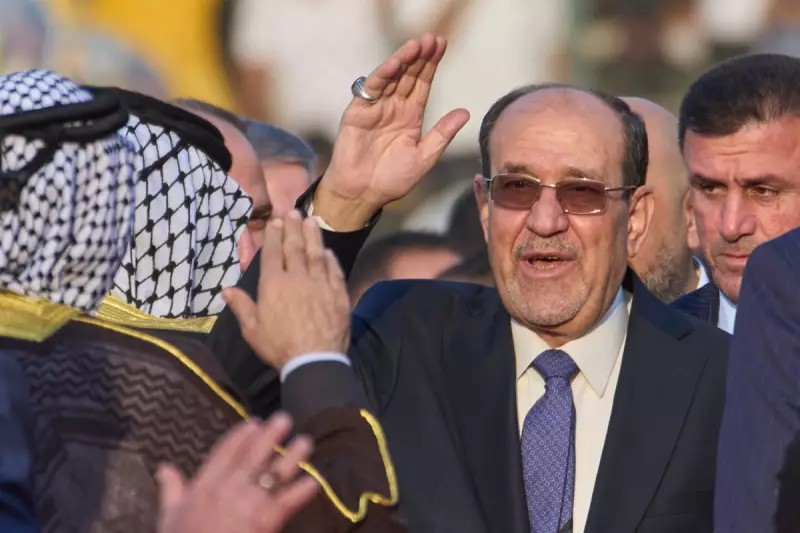
Iraq's dominant political bloc has formally nominated former prime minister Nouri al-Maliki as its candidate for the nation's premiership, a significant development announced on Saturday. The announcement follows the withdrawal of caretaker Prime Minister Mohammed Shia al-Sudani earlier this month, who had secured the largest share of parliamentary seats in November's elections.
Political Landscape Shifts as Al-Maliki Returns
The nomination came from the Coordination Framework, a powerful collection of Shiite parties, after al-Sudani stepped aside. This cleared the path for al-Maliki, who had been competing with al-Sudani for the bloc's backing. Under Iraq's constitutional framework, parliament must first elect a president, who then names a prime minister responsible for forming a new government.
The Coordination Framework has urged parliament to convene a session to elect the president, citing al-Maliki's extensive political and administrative experience as key factors in their decision. Al-Maliki initially served as prime minister in 2006 and remains the only Iraqi leader to complete a second term since the 2003 U.S.-led invasion that toppled Saddam Hussein.

Historical Context and Controversial Legacy
Al-Maliki's previous bid for a third term ultimately failed amid accusations of monopolising power and alienating Sunni and Kurdish communities. His selection now is anticipated to be deeply polarising, particularly within Iraq's Sunni population. The National Political Council, a coalition of Sunni parties, issued a statement calling on the Coordination Framework to assume "historical responsibility" and warning against recycling leaders "whose past experiences have failed" to achieve stability or restore public trust.
However, divisions within Sunni political ranks quickly emerged. The influential Sunni Azm Alliance rejected the council's statement and voiced support for al-Maliki, highlighting significant splits over the nomination that reflect broader political fractures across the country.
Future Challenges for the Next Government
The incoming government will likely face intensified pressures from both the United States and Iran, alongside the delicate issue of managing non-state armed groups. The U.S. has been advocating for Iraq to disarm Iran-backed militias, a complex proposition given their political influence and Iran's probable opposition to such measures.
Disarming these groups, many of which played crucial roles in combating the Islamic State during its incursion a decade ago, is expected to encounter internal resistance. This is especially pertinent amid growing concerns about an IS resurgence due to instability in neighbouring Syria. In a related development, the U.S. military confirmed on Wednesday that it has begun transferring some of the 9,000 IS detainees held in northeast Syrian detention centres to facilities in Iraq.
The nomination of al-Maliki marks a pivotal moment in Iraq's political trajectory, setting the stage for potentially contentious parliamentary proceedings and a challenging government formation process ahead.