Viral Theory Connects Iran Flag Colors to Biblical Apocalypse Prophecy
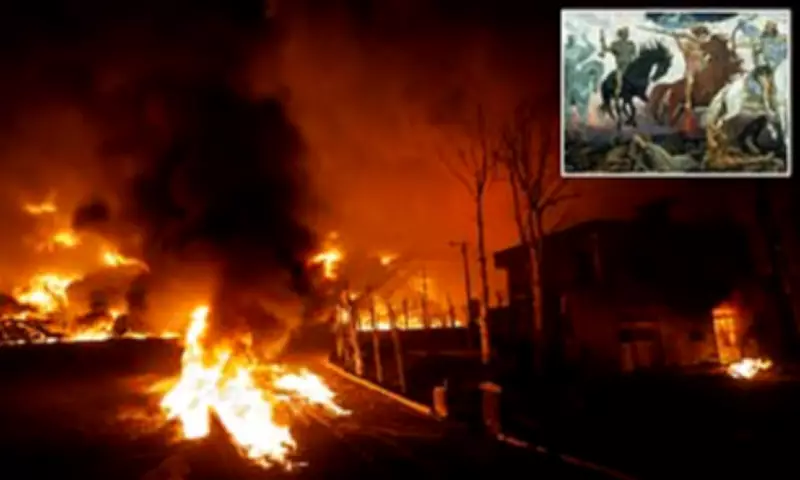
As military tensions intensify between the United States, Israel, and Iran, a striking conspiracy theory has gained momentum online, suggesting the conflict may fulfill a chilling prophecy from the Bible's Book of Revelation. Social media platforms have become flooded with discussions claiming the colors of Iran's national flag symbolically represent the Four Horsemen of the Apocalypse, described in Revelation as harbingers of the end times.
The Color Connection to Biblical Prophecy
Proponents of the theory argue that Iran's flag contains three colors that directly correspond to three of the Four Horsemen: white representing conquest, red symbolizing war, and green (interpreted as pale) denoting death. According to Revelation chapter 6, when the Lamb of God opens the first four of seven seals, four horsemen are unleashed upon the Earth, initiating a period of divine judgment and widespread devastation.
The missing element in this comparison is the color black, which in the biblical text represents famine. Some social media users have attempted to explain this discrepancy by linking it to contemporary concerns about rising food prices or potential oil supply disruptions in the Persian Gulf region. However, biblical scholars note that the Book of Revelation itself makes no explicit connection between this prophecy and modern-day Iran.

Historical and Prophetic Context
The theory draws additional support from another biblical passage in the Book of Ezekiel, which describes an invasion of Israel by ancient nations including Persia—the territory now occupied by modern Iran. This connection has led some believers to interpret the current geopolitical confrontation as having prophetic significance.
Pastor Jeff Cramer of Westminster Calvary in Colorado emphasized this perspective, stating the current moment carries 'biblical significance' because 'Iran is ancient Persia.' He pointed specifically to Ezekiel chapter 38, which names Persia among nations aligned against Israel, suggesting recent developments in the Middle East have caused many Christians to believe these ancient prophecies may be moving closer to fulfillment.
'We're living in the prophetic timeline somewhere close to chapter 37 and the opening of chapter 38,' Cramer explained, adding that 'Israel is always God's timepiece when it comes to prophecy.'
Social Media Amplification and Economic Concerns
Across various platforms, users have connected the theory to practical economic concerns, particularly regarding global food security. One X user posted, 'One of the four horsemen in the Book of Revelation is famine,' linking the discussion to warnings that higher fuel and fertilizer costs resulting from Middle Eastern turmoil could trigger another global surge in food prices.
This interpretation stems from a theological approach called dispensationalism, which treats Revelation as a literal roadmap for future events rather than symbolic literature. The Book of Revelation, traditionally attributed to John (believed by many to be the Apostle John), describes a dramatic sequence of end-times events including natural disasters, plagues, persecution, and the opening of seven seals that unveil divine judgments.
Geopolitical and Economic Realities
The theory emerges against a backdrop of genuine geopolitical escalation. As the United States and Israel continue military operations against Iran, the newly appointed supreme leader of Iran issued his first public message, warning that both nations would have to pay 'compensation' for their strikes. He further vowed to keep the strategically vital Strait of Hormuz closed as leverage in the conflict.
This threat targets one of the world's most critical shipping corridors, through which approximately twenty percent of global oil supplies normally pass. The International Energy Agency has already warned that the fighting has triggered what it called the 'largest supply disruption in the history of the global oil market,' prompting multiple countries to release emergency oil reserves in attempts to stabilize prices.

Meanwhile, political leadership has offered conflicting signals about the conflict's duration, with remarks suggesting the fighting could either conclude rapidly or extend for several months. This uncertainty further fuels both practical economic anxieties and the proliferation of apocalyptic interpretations among certain online communities.