Global Aid Plummets by 23% as Germany Overtakes US to Become Biggest Donor
New figures from the Organisation for Economic Co-operation and Development (OECD) show that overseas aid from wealthy nations plummeted by 23.1% in 2025 compared to the previous year. This dramatic decline marks a historic shift, with Germany overtaking the United States to become the world's largest aid donor for the first time in history.
Steep Declines Across Major Donors
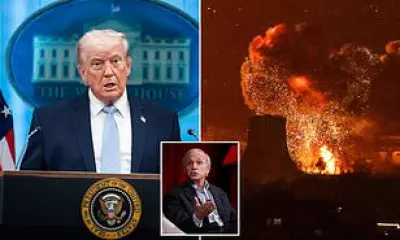
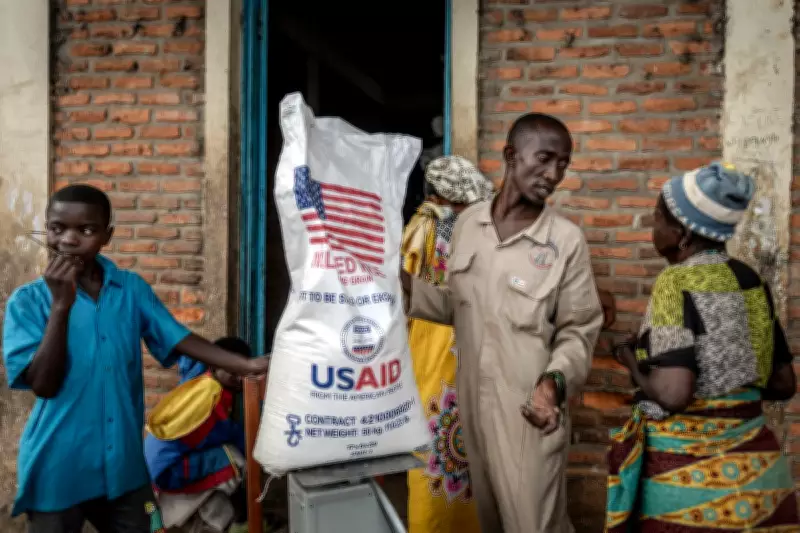
The data, published by the Paris-based OECD, reveals that overall aid from the Development Assistance Committee (DAC)—a group of the world's 34 richest countries—fell to $174.3 billion (£129.8 billion). The United States alone accounted for three-quarters of this decline, driven by the closure of the US Agency for International Development (USAID) under the Trump administration. Other major donors also reported significant cuts: Germany reduced its aid by 17.4%, France by 10.9%, the United Kingdom by 10.8%, and Japan by 5.6%.
As a result, Germany provided $29.1 billion in aid, narrowly surpassing the US at $29 billion. Bilateral aid from DAC countries dropped by 26.4%, while multilateral aid to global institutions like the UN fell by 12.7%. The UN experienced its largest annual funding cut on record, with a 27% budget reduction, largely due to an 87.2% year-on-year decrease in US contributions.

Impact on Ukraine and Vulnerable Regions
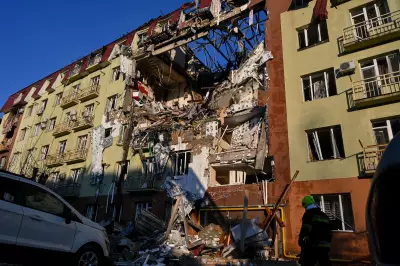
The US also slashed its bilateral aid to Ukraine by a massive 91.1%. However, this was offset by increased support from other DAC countries and the European Union, ensuring Ukraine received $44.9 billion—more than the total bilateral aid provided to all Sub-Saharan African nations. Aid to Sub-Saharan Africa fell by 26.3% to $24.5 billion, while assistance to the world's least developed countries dropped by 25.8% to $23.5 billion.
Mikaela Gavas, managing director for the Center for Global Development Europe, commented: "Today's figures confirm that we are witnessing the steepest and most widespread contraction in Official Development Assistance in a generation. With a second consecutive year of decline and the four largest donors all cutting simultaneously for the first time in nearly thirty years, it is a structural shift in how wealthy countries are choosing to engage with the world's poorest."
UK Aid Cuts and Criticism
Separate data from the UK's Foreign, Commonwealth and Development Office (FCDO) showed that UK aid spending fell by just over £1 billion, or 7.4%, to £13 billion in 2025. This reflects the government's decision to reduce the aid budget from 0.5% to 0.3% of Gross National Income (GNI). Over 18% of the UK aid budget was spent on asylum seeker and refugee costs within the UK, a move criticised by non-governmental organisations.
Adrian Lovett, UK executive director of the ONE Campaign, stated: "Supporting refugees is vital, but this was never the purpose of Official Development Assistance. Spending more than £2 billion of the development budget within the UK shortchanges our international partners and misleads taxpayers about how their money is being used."
Callum Northcote, economic justice lead at Save the Children UK, added: "This is yet another example of the realities now facing the world's children. The UK's decision to cut aid has poured fuel on the fire of global decision-making. This will have real-world impact for health centres, schools, and the ability to treat malnutrition and keep children safe."
Future Projections and Warnings
The 23.1% decline follows a 6.1% drop in 2024, and the OECD projects a further 5.8% decrease next year. María del Pilar Garrido Gonzalo, OECD Director for Development Co-operation, noted: "Three consecutive years of decline in overseas aid is something we have not seen since 1993, during the end of the Cold War. These projections do not yet account for the potential impact of the current crisis in the Middle East, which could represent an additional shock after two years of cuts."

On a webinar discussing the data, Carsten Staur, chair of the DAC Committee, emphasised: "There are still more than 800 million people living on less than $3 a day—two-thirds in Sub-Saharan Africa—and millions of children die before age five from preventable causes. Overseas aid remains an essential investment in global solidarity, partnerships, and long-term security."
In response to concerns, an FCDO spokesperson said: "National security is the first duty of this government. That is why, to fund an essential increase in defence spending, the Government has taken the hugely difficult decision to reduce the UK Official Development Assistance budget. These statistics reflect those essential decisions."