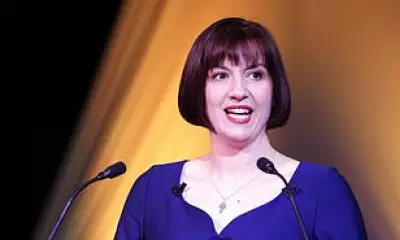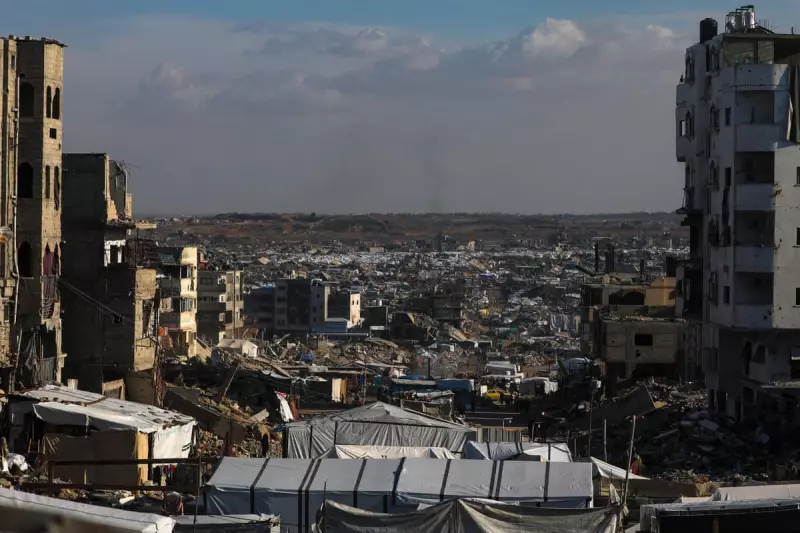
For Palestinian journalist Plestia Alaqad, the world has contracted to a terrifyingly small point. From her position within the Gaza Strip, she describes a reality where borders are sealed, movement is forbidden, and the very concept of a future feels like it is being erased.
A Life Defined by Barriers and Closure
In a poignant account, Alaqad articulates the profound claustrophobia experienced by Palestinians in Gaza. She states that for them, the world is not expanding but shrinking with each passing day. The central symbol of this confinement is the Rafah crossing into Egypt, a gateway that remains firmly shut for the vast majority, transforming it from a potential route to safety into a mere backdrop of despair.
Alaqad powerfully reframes the common notion of "the world is your oyster." For Gazans, she says, the world has become the exact opposite—an inaccessible, distant entity. Travel for leisure, education, or even urgent medical care is an impossible dream for most, requiring permits that are nearly unattainable. This enforced isolation creates a life lived entirely within a narrow, besieged strip of land.

The Psychological Weight of Immobility
The physical restrictions have a deep psychological impact. Alaqad describes the intense feeling of being trapped, with no horizon to look toward. The inability to leave, even temporarily, breeds a sense of abandonment and a looming fear that the opportunities of the wider world are permanently out of reach.
This reality stands in stark contrast to the global connections fostered by the internet. While digitally connected, Gazans are physically imprisoned. Alaqad touches on the painful irony of seeing a globalised world online while being completely cut off from it in person. The promise of technology to bridge divides only highlights the impenetrability of the very real walls and checkpoints that define daily existence.
More Than a Border: A Metaphor for Hope
The closure of the Rafah crossing is not just a logistical or political issue; it is a crushing psychological blow. It represents the severing of a lifeline, the final bolt on a door that leads away from hardship. For many, it extinguishes the last flicker of hope for escape or respite.
Alaqad's testimony is a stark reminder that for millions in Gaza, fundamental human aspirations—to explore, to learn abroad, to seek safety, to simply move—are denied. Their world is not defined by maps with many routes, but by one ever-tightening circle. Her words bring into sharp focus the human cost of a protracted blockade, where the landscape of life itself diminishes day by day.