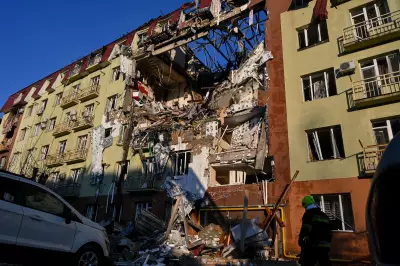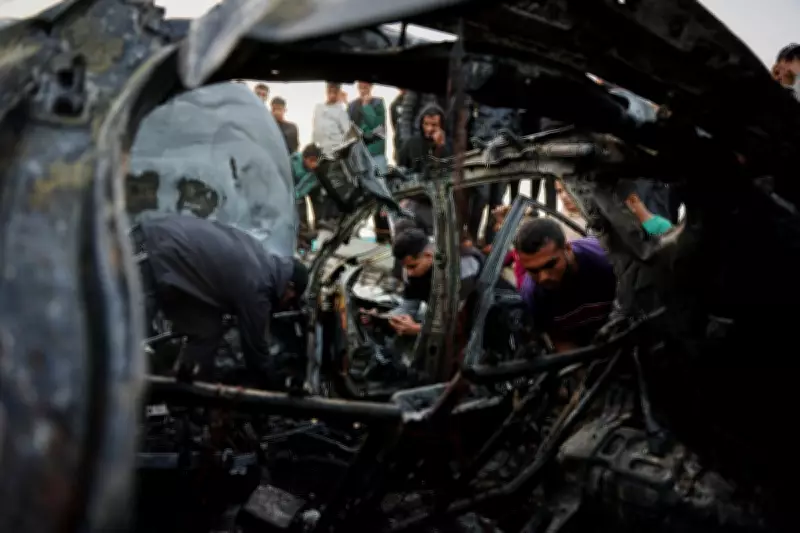
Friday marks six months since the ceasefire in Gaza took effect, a milestone overshadowed by the emerging and precarious ceasefire in the Iran war. In the ravaged Palestinian territory, home to 2 million people, the most intense fighting between Israeli forces and Hamas-led militants has ceased, yet the core challenges of the ceasefire remain largely unaddressed.
Ceasefire Challenges and Global Implications
From disarming Hamas and ending its two-decade rule to deploying an international stabilization force and initiating vast reconstruction, the work is far from complete. Gaza residents find themselves in a state of limbo, with aid trickling in through a single, Israeli-controlled border post. These persistent issues could foreshadow similar obstacles in the Iran war, where U.S. President Donald Trump's peacemaking strategy appears focused on halting bombardment while leaving complex diplomatic resolutions to others.
The Board of Peace and Diplomatic Stalemates
Whether Trump can enforce a comparable deal on Iran, with more global actors involved and markets reacting nervously to every development, remains uncertain. The U.S.-created and Trump-led Board of Peace, launched with $7 billion in pledges and ambitious goals to resolve conflicts worldwide, has gone quiet. Nine days after its inaugural meeting, the U.S. and Israel attacked Iran, and the board has not reconvened since.

It awaits a response from Hamas on a proposal for disarmament—a major concession that aligns poorly with the group's founding charter advocating armed resistance against Israel. A U.S. official, speaking anonymously, noted that while no definite deadline has been set for Hamas, "patience is not unlimited." This lack of urgency may weaken pressure for action, as diplomacy struggles to manage multiple crises simultaneously.
Humanitarian Crisis in Gaza
For Palestinians, the ceasefire has brought little relief beyond a reduction in explosions. Vast tent camps house most of the population, with others sheltering in damaged buildings. Health and humanitarian workers report minimal progress in delivering medical supplies and aid. A scorecard released by five international aid groups highlights the failure of the U.S. 20-point ceasefire plan on humanitarian fronts, with conditions worsening since the Iran war began.
"During the first two weeks of March 2026, trucks entering Gaza declined by 80%, and the price of basic goods increased dramatically," the groups stated, adding that medical evacuations have stalled. Palestinians express dwindling hope for improvement. Maysa Abu Jedian, displaced from Beit Lahiya, lamented, "There is pollution and disease. It's as if there's no ceasefire at all." Eyad Abu Dagga, sheltering in Khan Younis, echoed, "The war is still ongoing and life is still terrible as it is."
Ongoing Violence and Casualty Figures
Despite the ceasefire, violence persists. Israeli forces have conducted airstrikes and fired on Palestinians near military zones, citing responses to militant attacks and ceasefire violations. According to Gaza's Health Ministry, Israeli attacks have killed 738 people in the six months since the ceasefire, with overall Palestinian deaths since the war began in October 2023 totaling 72,317. The ministry's records, considered reliable by U.N. agencies, do not distinguish between civilians and militants.
Diplomatic Distractions and Regional Focus
International focus on Gaza has waned with the rise of the Iran war, reducing pressure for progress. The humanitarian scorecard emphasizes that aid advancements in Gaza require "sustained diplomatic pressure at the highest levels, particularly from the United States," but such pressure has been inconsistent and insufficient. The Trump administration is not alone in its distraction; key mediators like Egypt and Qatar are now preoccupied with Iran's economic impacts.
With Israel's renewed conflict with Hezbollah in Lebanon adding uncertainty, interest from countries in contributing troops to a Gaza stabilization force has diminished. Indonesia, one of the few confirmed contributors, recently lost three peacekeepers in southern Lebanon, highlighting the broader regional instability.

As Nickolay Mladenov, director of the Board of Peace, told the U.N. Security Council, the world must not lose sight of Gaza amid new conflicts. The choice remains between "a renewed war, or a new beginning; the status quo, or a better future." For now, neglect seems the prevailing third option, with lessons from Gaza's stalled ceasefire looming over the fragile peace in Iran.