The Ominous Legacy of Friday the 13th
Friday the 13th has returned to the calendar in 2026, appearing in both February and March—a rare occurrence that happens only three times every 28 years. This date, steeped in superstition and fear, carries a reputation for bringing misfortune through actions like breaking mirrors, walking under ladders, opening umbrellas indoors, or encountering black cats. However, the roots of this dread trace back nearly two millennia to a pivotal moment in Christian history.
Biblical Origins: The Last Supper and Betrayal
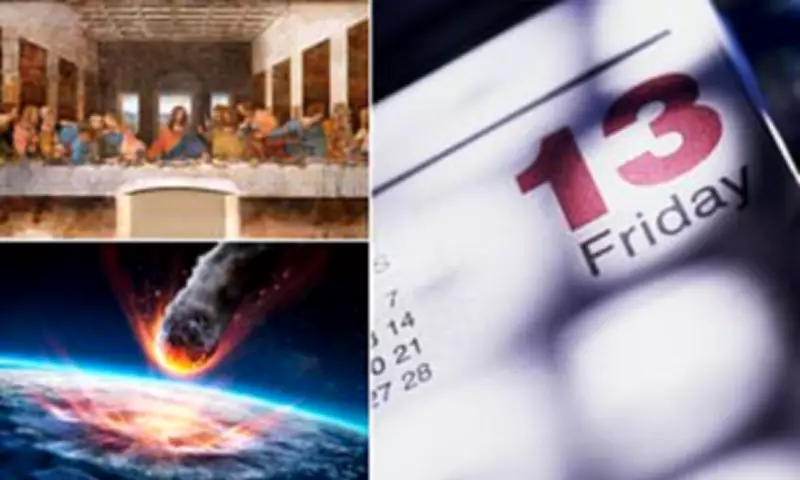
The foundation of Friday the 13th's bad luck is believed to originate at the Last Supper around 33 AD, where Jesus dined with his 12 disciples. Judas Iscariot, the 13th guest, betrayed Jesus to the Sanhedrin, the Jewish religious council, leading to Jesus' trial under Roman governor Pontius Pilate and crucifixion on a Friday. This event forged a lasting association between the number 13 and negativity within Christian and Catholic traditions, often symbolizing death and betrayal. Over time, Fridays gained their own stigma as Jesus was crucified on Good Friday, prompting Christians to observe fasting and penance in remembrance.
Modern Prophecies: Asteroid Apophis and Doomsday Predictions
Contemporary Christian scholars have linked Friday the 13th to biblical prophecies, including one warning of a devastating asteroid strike coinciding with Doomsday. Tom Horn, a researcher focused on end times studies, claims that the asteroid Apophis, dubbed the 'God of Chaos,' will unexpectedly strike Earth on April 13, 2029—another Friday the 13th. This prediction ties into the Wormwood prophecy from the Book of Revelation, which describes a star falling from heaven, poisoning a third of Earth's waters and causing widespread death.

NASA, however, refutes this interpretation, stating that Apophis, a 1,000-foot-wide asteroid, will safely pass within 20,000 miles of Earth in 2029, marking the closest approach by a 'city-killer' asteroid in modern recorded history. The agency asserts there is no impact risk for at least 100 years, but Horn argues that miscalculations could fulfill Revelation 8:10-11, where a star named Wormwood brings bitterness and death.
Historical Misfortune: Knights Templar and Norse Mythology
Beyond biblical ties, Friday the 13th has been marred by historical events. In 1307, King Philip IV of France and Pope Clement V orchestrated the betrayal and mass arrest of the Knights Templar on this date. Grand Master Jacques de Molay cursed both men as he was burned at the stake, and their deaths within a year cemented the date's infamous reputation. The first published reference to Friday the 13th as unlucky appeared in 1834 in French literature, but its origins extend further back to Norse mythology.
In Norse tales, a banquet in Valhalla included 12 gods, with the trickster god Loki arriving uninvited as the 13th guest. Loki tricked the blind god Hodur into killing Balder, the god of light, with a mistletoe arrow, plunging the world into darkness. Friday, named after Frigg (Balder's mother), became associated with mourning, blending with Christian traditions to shape modern superstitions. These stories, first written down in 13th-century Iceland, influenced terms like Friggatriskaidekaphobia, coined in the 1980s to describe fear of Friday the 13th.
Conclusion: A Date Shrouded in Fear and Legend
From ancient betrayals to asteroid prophecies, Friday the 13th remains a symbol of misfortune across cultures and centuries. Whether rooted in religious history, mythological chaos, or scientific debate, its legacy continues to captivate and unsettle, reminding us of humanity's enduring fascination with luck and destiny.