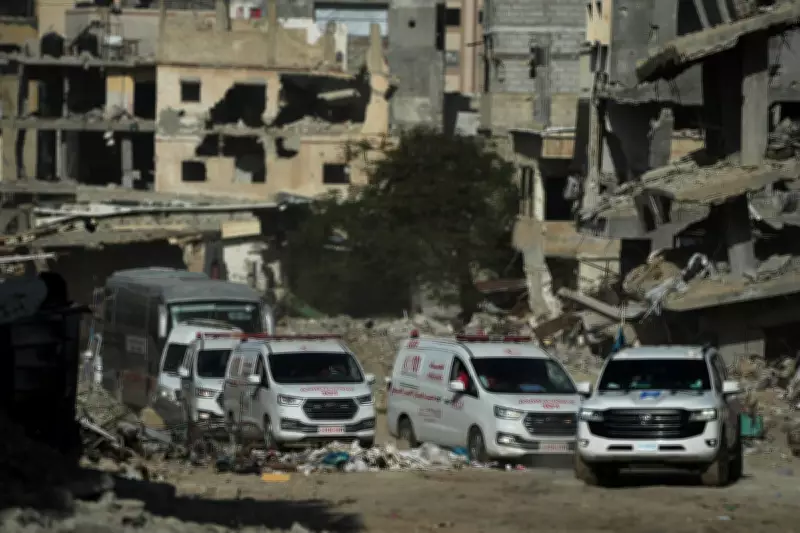
The first five patients have been medically evacuated from Gaza to Egypt through the Rafah border crossing, according to a World Health Organisation official, marking a significant yet limited development under the fragile, US-backed ceasefire struck in October.
Reopening Marred by Delays and Limited Movement
The crossing's reopening on Monday was hailed as a step forward for the ceasefire but was immediately marred by substantial delays. After more than ten hours of operation, only a dozen returnees and a small group of medical evacuees managed to cross in each direction, highlighting the logistical and bureaucratic challenges that persist.
WHO Confirms Historic Medical Transfer
"On the second of February, WHO and partners supported the medical evacuation of five patients and seven companions to Egypt via the Rafah crossing," stated WHO spokesperson Christian Lindmeier on Tuesday. He emphasised the historic nature of the transfer, noting, "It was the first medical evacuation through this route since sometime in 2025," referring to a limited number of evacuations conducted during an earlier ceasefire in early 2025.

The emotional significance of the moment was palpable, with reunions occurring at the border as Palestinians crossed between Gaza and Egypt, though the overall numbers remained disappointingly low.
Over 18,500 Patients Await Evacuation
Lindmeier revealed the staggering scale of the medical crisis, with over 18,500 patients currently awaiting evacuation following the devastating two-year war. These patients suffer from a range of severe conditions, including trauma injuries sustained during the conflict and chronic illnesses such as cancer and diabetes.
A UNICEF spokesperson provided a particularly harrowing detail, indicating that more than 3,000 of those awaiting evacuation are children. Gaza health authorities are now faced with the agonising task of prioritising whom to evacuate among the sick and wounded.
Patients Have Died Awaiting Help
"We know that patients have died basically waiting for evacuation, and that's something which is horrible when you know just a few miles or kilometres outside that border, help is available," Lindmeier added, underscoring the urgent and life-threatening nature of the delays.
Future Crossings Dependent on System Functioning
Officials have indicated that the number of crossings could gradually increase if the current system proves effective. The process involves stringent vetting by both Israel and Egypt for those allowed to enter and exit, a procedure that has contributed to the initial bottlenecks and slow pace.
The arrival of a bus at Nasser Hospital following the long-awaited reopening symbolised hope, but the reality on the ground demonstrates that the pathway to sustained medical evacuations remains fraught with obstacles. The international community watches closely as this fragile mechanism is tested, with thousands of lives hanging in the balance.