Archaeologists have made an extraordinary discovery in Egypt, unearthing a cache of 225 ancient figurines that has finally solved a long-standing mystery about the burial place of a powerful pharaoh.
A Stunning Discovery in the Sands of Tanis
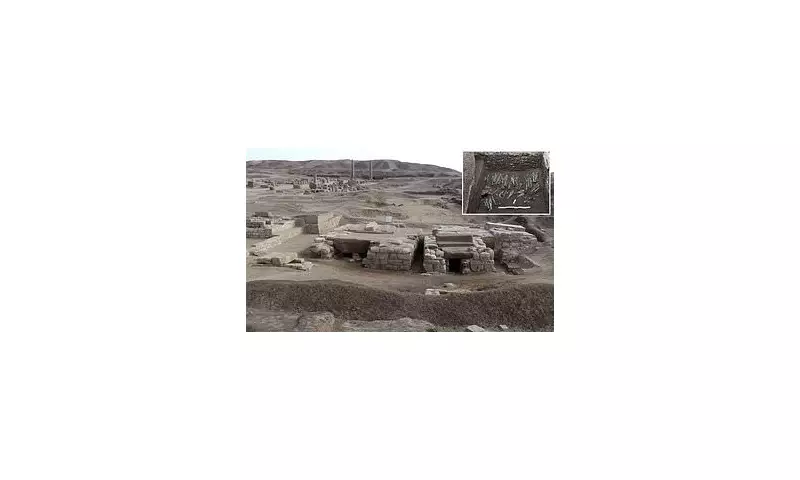
The remarkable find was made at the site of the ancient Egyptian capital of Tanis, located in the Nile Delta. The team uncovered a total of 225 funerary figurines, known as ushabtis, which were crafted to serve the deceased in the afterlife. These small statues were found arranged with clear ceremonial intent.
"When we saw three or four figurines together, we knew right away it was going to be amazing," said French Egyptologist Frederic Payraudeau. The figurines were positioned in a star shape along the sides of a trapezoidal pit and laid in horizontal rows at the bottom.

This marks the first time such figurines have been discovered in their original placement within a royal tomb at Tanis since 1946, making it a truly significant archaeological event.
Identifying the Royal Occupant
Careful analysis of the royal symbols inscribed on the figurines provided the crucial breakthrough. The evidence confirmed the tomb belonged to Pharaoh Shoshenq III, who reigned from approximately 830 to 791 BC.
This identification solves a puzzle that has baffled experts for decades. Another, larger tomb at the same site also bears Shoshenq III's name, leaving his true final resting place in question. "Why isn't he buried in this tomb?" Payraudeau asked reporters in Paris, describing the discovery as 'astonishing'.
The team noted an unusual feature: more than half of the 225 figurines are female, a rarity for tombs of this type.
A Pharaoh's Turbulent Reign and Burial Gamble
Experts suggest that the pharaoh may not have been interred in his intended, larger tomb due to the political instability that marked his four-decade rule. His reign was turbulent, marred by a "very bloody civil war between upper and lower Egypt, with several pharaohs fighting for power," Payraudeau explained.
"Obviously, for a pharaoh, building a tomb is a gamble because you can never be sure your successor will bury you there," he said. "Clearly, we have new proof that these gambles are not always successful."
Other theories propose that his remains might have been moved later due to ancient looting. The limestone tomb was first uncovered by French Egyptologist Pierre Montet in 1939. Although looted in antiquity, one chamber still held the sarcophagus of Pharaoh Osorkon II.
Meticulous Recovery and Future Display
Recovering the fragile figurines was a delicate operation. The excavation team worked for over ten days, including through the night, to carefully remove them and preserve their condition.
Following detailed study, the figurines are destined for public display in an Egyptian museum. This will offer visitors a rare glimpse into the burial customs and afterlife beliefs associated with one of Egypt's more enigmatic rulers.
Payraudeau emphasised the uniqueness of the find, noting that such an intact discovery is almost unheard of, even in the famed Valley of the Kings, with the 1922 discovery of Tutankhamun's tomb being a notable exception, due to widespread historical looting.