E Pluribus Unum: The Enduring Struggle for American Unity from 1776 to Today
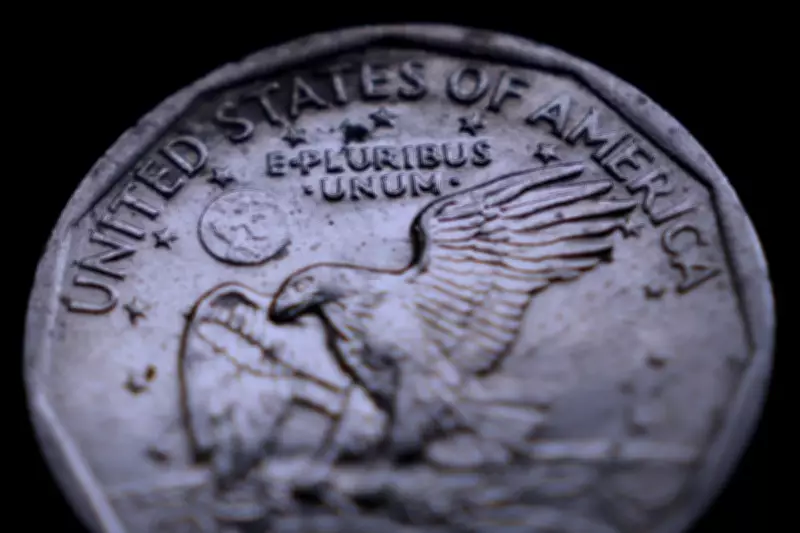
The Latin phrase E Pluribus Unum, meaning "out of many, one," has adorned American coins and currency for centuries, serving as a national motto that encapsulates a profound aspiration. From the earliest days of the republic, the diverse United States has consistently aimed for unity, yet this ideal has proven both optimistic and elusive throughout its 250-year history.
A Foundational Ideal with Immediate Contradictions
The country's very name—the UNITED States of America—emphasized this collective vision from its inception in 1776. Founding figures like George Washington championed national union as essential to collective happiness, urging citizens to maintain "a cordial, habitual, and immovable attachment to it" upon leaving office. However, even as they articulated these high-minded principles, the founders imposed significant limitations on participation, excluding many from the promise of unity.
According to Daniel Immerwahr, a history professor at Northwestern University, "The United States has had a more volatile history in terms of how it deals with questions of inclusion and exclusion, how it draws the line and polices the line of who's in and who's out." This tension between aspiration and reality has persisted, raising fundamental questions: Does unity require blending diverse perspectives to create something greater, or does it demand sameness? There has never been a singular America where all lived identically or enjoyed equal access to power and prosperity.

Historical Fractures and Ongoing Divisions
American history reveals deep-seated differences that have challenged unity. Some divisions were geographical or climatic, such as rural versus urban landscapes or regional weather patterns. Others were cultural, stemming from varied countries of origin or generational depth. However, the most severe fractures involved systemic injustices:
- Enslaved Africans and their descendants endured brutal oppression, with racism persisting legally into the 20th century and echoing today.
- Indigenous tribes faced population decimation and cultural stripping as settlers seized lands and the government enforced assimilation.
- Communities were barred from opportunities based on gender, sexual orientation, or other characteristics.
Despite these exclusions, movements across eras have leveraged American ideals to expand access. Eileen Cheng, a history professor at Sarah Lawrence College, notes that excluded groups invoked "the ideals of the Revolution and the Declaration" to challenge barriers, using the language of unity and equality to demand inclusion.
Defining Unity in a Raucous Democracy
What does "unity" even signify in a vibrant democracy, and is it inherently beneficial? Paul Wachtel, a psychology professor at City College of New York, observes that "there are always tensions between unity and separateness" in societies, emphasizing that negotiation of these tensions is crucial. The United States experienced this firsthand; its Constitution replaced the weaker Articles of Confederation, illustrating that excessive decentralization hindered national cohesion.
The nation's history reflects mixed success in managing these tensions. Migration patterns, for instance, have fluctuated between open influxes and restrictive barriers. Politically, the emergence of factions and parties was initially resisted but eventually became embedded in the culture. Cindy Kam, a political science professor at Vanderbilt University, remarks, "What have we learned over the last 250 years is that things change. We are inclined to be social animals, but what those groups are is culturally constructed."

Modern Polarization and Historical Echoes
Recent decades have amplified discussions about unity amid demographic, technological, and economic shifts. Today, Americans navigate a landscape of rampant polarization, with serious questions about the nation's future. This divisiveness, however, may align more closely with the country's origins than many realize. Cheng suggests that current polarization represents "a return back to the way that we were at the beginning of the country," rather than a linear progression toward acceptance. She adds, "It's not like this kind of linear development where we're growing more and more accepting of difference. I think it's up and down."
As the United States marks 250 years, the motto E Pluribus Unum continues to provoke reflection on whether unity can ever fully reconcile with diversity. The ongoing struggle to define and achieve this ideal remains a central thread in the American narrative, challenging citizens to negotiate the tensions between many and one in an ever-evolving society.