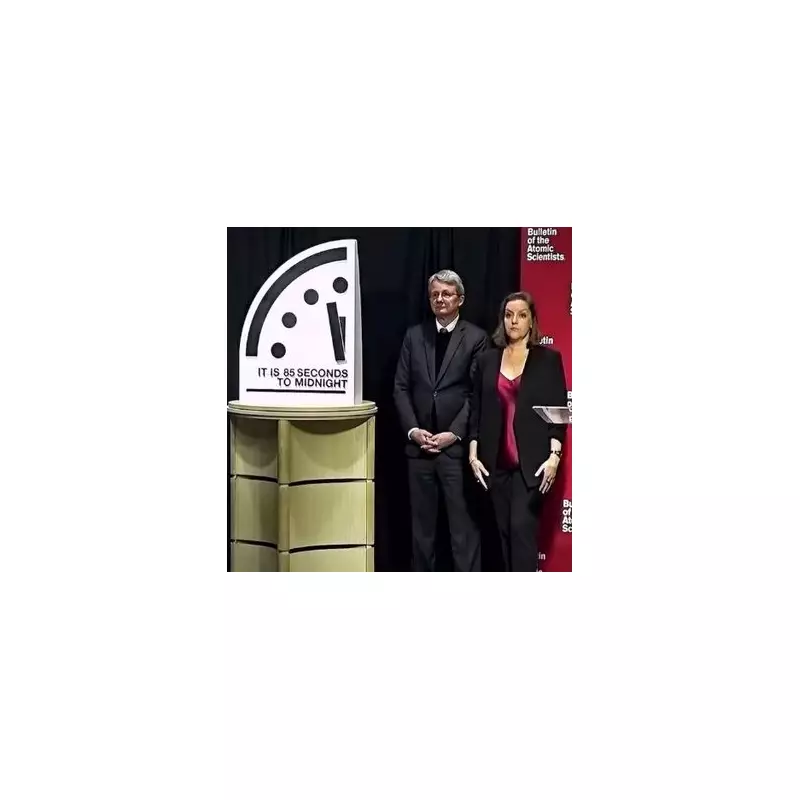
The symbolic Doomsday Clock, which measures humanity's proximity to global catastrophe, has been advanced by four seconds to stand at just 85 seconds before midnight. This represents the closest the clock has ever been to the symbolic point of apocalypse since its creation in 1947.
Scientists Issue Stark Warning About Running Out of Time
The Bulletin of the Atomic Scientists, the organisation responsible for maintaining the Doomsday Clock, announced the adjustment from Washington DC on Tuesday, January 27th. The clock is updated annually to reflect the current level of existential threats facing civilisation, with midnight representing the point of complete destruction.
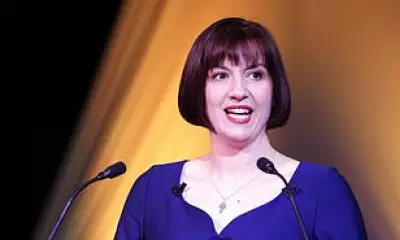
Alexandra Bell, the bulletin's chief executive, delivered a sobering assessment of humanity's current trajectory. "Every second counts and we are running out of time," she stated. "It's a hard truth, but this is our reality. Overall, 2025 has been a pretty bleak picture in terms of advancing existential risks."

Unprecedented Consensus Among Scientists
According to board member John Wolfsthal, while determining how much to adjust the clock typically presents difficulties, the panel faced "no such challenges this year" in reaching their decision. This suggests an unusual level of consensus about the severity of current threats.
The clock has been steadily approaching midnight in recent years, moving from 90 seconds to midnight in 2023 to 89 seconds the following year. This marks a stark contrast to 1991, when it stood at its furthest point from midnight at 17 minutes following an agreement between the United States and Soviet Union to reduce nuclear arsenals.
Public Reaction Divided Between Alarm and Skepticism
While some individuals expressed understandable alarm at the clock's advancement, significant criticism emerged dismissing the symbolic device as a "fear tactic" aimed at the public.
On social media platform Reddit, particularly in climate-focused forums, users voiced strong opinions. One contributor argued: "I really hate the doomsday clock. It feels like just a fear tactic for the public. We all know things are difficult and we all know the powers that be are making problems for the rest of us. There's no need to instil more fear on top of that."
Another user questioned the clock's methodology: "It's not based on anything measurable and the start at seven minutes before midnight was just a random guess. Extremely unhelpful."
Historical Context and Contemporary Criticism
A particularly pointed criticism noted that during the Cuban Missile Crisis - widely recognised as bringing the world within 24 hours of nuclear war - the clock stood at 420 seconds to midnight. "So for it to be 89 seconds today - it's losing its meaning," the commenter observed, suggesting that multiple clocks might better represent today's diverse threats without causing what they termed "fear-paralysis."
On video platform TikTok, skepticism was equally prevalent. One commenter stated simply: "They just want you to be afraid at all times," while another questioned: "Who actually believes this?" A third user humorously remarked: "Can't trust that clock. Three quarters of it is missing. Must have got it from an online marketplace."
Defenders Highlight Scientific Credibility
However, others pushed back against the criticism, emphasising the scientific credentials behind the assessment. One person noted: "Everyone in the comments doesn't understand that these are scientists. They look at nearly every aspect of the world and civilisation we live in and analyse changes."
Another respondent drew parallels to popular culture, stating: "People not listening and just cracking jokes reminds me so much of the movie Don't Look Up. They never listen until it's too late."
The Doomsday Clock was established by scientists who worked on the Manhattan Project and has been maintained for decades as a symbolic representation of global threats, originally focused on nuclear war but now encompassing climate change, biological threats, and disruptive technologies.