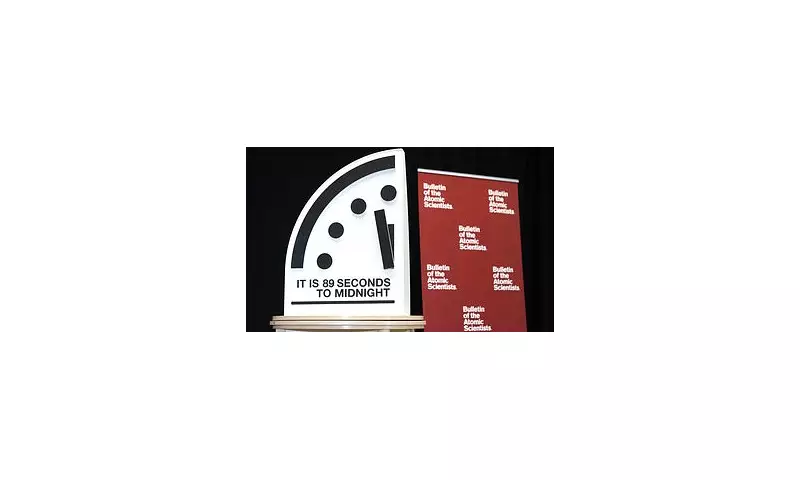
Humanity awaits a sobering update on its proximity to self-destruction as the Bulletin of the Atomic Scientists prepares to reveal the new setting of the Doomsday Clock. The symbolic timepiece, which measures how close the world is to a human-made global catastrophe, will be adjusted on Tuesday, January 27, during a livestream event starting at 15:00 GMT.
What is the Doomsday Clock?
Created in June 1947 by artist Martyl Langsdorf for the Bulletin of the Atomic Scientists journal, the Doomsday Clock was designed to "frighten men into rationality" amid post-war atomic fears. Each year, the Chicago-based nonprofit organisation assesses global threats and adjusts the clock's hands accordingly. Midnight represents total annihilation, with movements forward indicating increased danger and movements back suggesting reduced risk.
Current Position and Expert Predictions
Since last year, the clock has remained at 89 seconds to midnight – the closest it has been in its 78-year history. However, multiple experts consulted by the Daily Mail anticipate further advancement this year.

Alicia Sanders-Zakre, head of policy at the International Campaign to Abolish Nuclear Weapons, told the Daily Mail: "In my opinion, the Clock could be moved forward by at least one second. Our biggest concern is the existential threat posed by the more than 12,000 nuclear weapons in the world today."
Dr SJ Beard, researcher at the Centre for the Study of Existential Risk at the University of Cambridge, predicts a more dramatic nine-second advance. "Personally, I am no longer so worried about nuclear weapons being used in a proxy war like Ukraine, but I am more worried than I have ever been about direct nuclear conflict between the world's superpowers," Dr Beard explained.
Key Factors Driving the Clock Forward
Nuclear Escalation:
- Expiration of the New START nuclear arms treaty in three weeks with no renewal framework
- China's rapidly growing nuclear arsenal potentially matching US and Russian ICBM numbers by decade's end
- Russia's deployment of nuclear-capable Oreshnik missiles previously reserved for warheads
- Global nuclear weapons spending reaching $100 billion
- Fractured international cooperation around Ukraine
Artificial Intelligence Risks:
- Military integration of AI into decision-making systems accelerating conflict escalation
- AI tools potentially enabling non-state actors to engineer biological weapons
- Development of artificial general intelligence creating existential risks
- Hamza Chaudhry of the Future of Life Institute suggests this warrants a five to ten-second advance
Climate Change Pressures:
- Return to rapid ice loss in Greenland and continued decline in Southern Ocean sea ice
- Extreme weather events driving sea level rise and global warming
- Professor Andrew Shepherd, climate scientist at Northumbria University, expects the clock to change again
Historical Context and Recent Trends
The clock has fluctuated significantly since its inception. Notable positions include:
- 1947-48: 7 minutes to midnight
- 1953-59: 2 minutes (closest during Cold War tensions)
- 1991-94: 17 minutes (furthest after Cold War ended)
- 2020-22: 100 seconds
- 2025: 89 seconds (current record closest position)
While initially focused on nuclear war between Russia and America, the clock now incorporates multiple existential threats. Dr Beard notes this will be the first year AI receives "equal billing to nuclear weapons" in the assessment.
The Bulletin of the Atomic Scientists' decision will reflect what experts describe as a "fundamental breakdown" in nuclear arms control architecture, combined with emerging technological and environmental dangers that collectively push humanity closer to the brink.