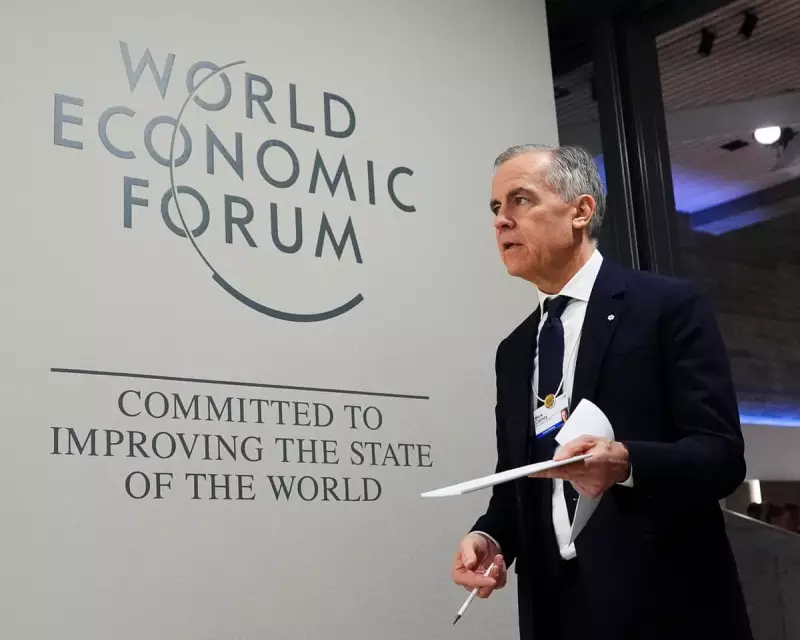
Canadian Prime Minister Mark Carney's stark address at the World Economic Forum in Davos, Switzerland, last week has sent shockwaves through the corridors of global power. For the first time, a Western head of state has openly declared that the long-cherished rules-based international order is not merely under strain but is actively fading, caught in a profound rupture with no return to the status quo.
The Three Pillars of a Crumbling System
This order, a layered and complex construct, rested upon three fundamental components. The first was structural: a formal agreement among powerful, prosperous nations to establish mechanisms and protocols designed to maintain political stability, contain the outbreak of wars, and promote mutual economic interests. This top layer of global governance was embodied by institutions like the EU, NATO, the UN, the WTO, and the IMF, which directed international traffic for decades.
Norms and the Ideological Glue
The second component was more abstract, consisting of the norms those same countries adhered to in both action and rhetoric. These included pledges not to launch aggressive protectionist economic policies against one another, to definitively renounce designs on each other's territory, and to avoid passing overt judgment on domestic affairs.

The third, and perhaps most crucial, was the ideological glue that held the entire edifice together. This advanced the impression that these arrangements were not merely transactional but were rooted in noble liberal ideals: the promotion of universal human rights, the right to self-determination, and the sanctity of individual freedoms.
The "Pleasant Fiction" of American Hegemony
As Carney termed it, a "pleasant fiction" underpinned the whole system: the pretence that it wasn't fundamentally about American hegemony. The United States and its allies frequently committed, endorsed, or allowed violations of international law, yet broadly invested effort to make those actions appear coherent. The rationale was that they sometimes had to violate the order to save it, acting not merely because they could, but because they must as self-appointed custodians of global moral standards and security.
This argument faced its first monumental challenge with the "war on terror." Any faith that powerful nations would not indulge imperial rights to invade other countries, practice illegal rendition, or imprison individuals for years without due process was shattered. For the victims in Iraq and Afghanistan, their lands became theatres for foreign troops, succumbing to years of catastrophic war, sectarian violence, and eventual handback to regimes like the Taliban. Yet, the architects could still console themselves and their publics that it served to combat the great threat of Islamic terrorism, blaming the disastrous consequences on "unknown unknowns."
Gaza: The Necrosis Spreads
That consolation became nearly impossible during the conflict in Gaza, where another critical part of the order died and the necrosis spread visibly. Every feature of the violence throttled the pretence that the system was rooted in any universal ideals—or rather, that those ideals applied to anyone but those at the very top of the hierarchy.
The scale of killing and the violation of fundamental rules, from the wholesale harm to non-combatants to the deprivation of food and medicine, obliterated the fiction. Crucially, Israel was both armed and given sustained diplomatic cover to pursue its campaign, rendering its allies not passive bystanders but active partners. This was not a distant tragedy in an African country allowing for hand-wringing condemnation from afar; it was a joint venture that persisted precisely because Israel is a close ally, laying bare the selective application of the rules.
Internal Tensions and Institutional War
Gaza proved destructively catalytic in other ways, introducing a severe internal tension between the spoiled parts of the order and those that still functioned. In maintaining support for Israel, some European nations and the US effectively went to war with their own institutions. They refused to respect rulings from the International Criminal Court regarding indictments of Israeli leaders, with the US imposing sanctions on the court itself. Gaza exposed these global institutions as an exclusive club where insiders enjoy immunity.

The American Hegemon Turns Inward
The most recent demise involves the constituent parts of that order becoming targets of the American hegemon itself, rather than its handmaidens. This encompasses the political designs on territories like Greenland, overt contempt for European allies and NATO, and relentless tariff wars. Allies are now reckoning with how to coexist on new terms, hastily and violently rewritten by a US that has discarded the notion of covert supremacy.
Carney's intervention, while welcome to some, is exasperating to many who view it as stating the obvious far too late. He only felt compelled to speak once the rot reached his own doorstep, worsened by his admission that the order's foundations were always false and unjust, yet the "bargain" had hitherto worked. This realisation is arguably more challenging for nations like Canada, deeply integrated within the American security, economic, and ideological complex, than for those who always knew they were dispensable.
Contemplating the Aftermath
As the custodians of the rules-based order contemplate its death and potential replacements, they must confront that much of it still has a pulse. Moving forward won't merely involve pivoting away from the US on foreign policy; it requires unpicking an entire system. This system is profoundly practical, encompassing globalised capital, intricate trade agreements, and the dollarisation of international commerce.
Yet, it is also a system of coding, values, norms, and a persistent contempt for those outside the privileged club. Notably, as Carney detailed the old order's hypocrisies, there was no acknowledgment of the people who have always borne their brunt.
Proposed Solutions and Lingering Structures
The solutions floated so far—greater middle-power coordination to counterbalance the US, increased defence spending, lowering taxes and trade barriers to offset American isolationism—are policies that perpetuate the security and economic supremacy of the old order. Those seeking to break free remain imprisoned by the very structures they created and continue to believe in.
The pivotal question is no longer what can be realistically built from the ruins, which would imply a clean break. The real, more profound question is how much of that old order remains ingrained within the architects themselves, shaping their vision for whatever comes next.