Darfur's Humanitarian Catastrophe After Three Years of War
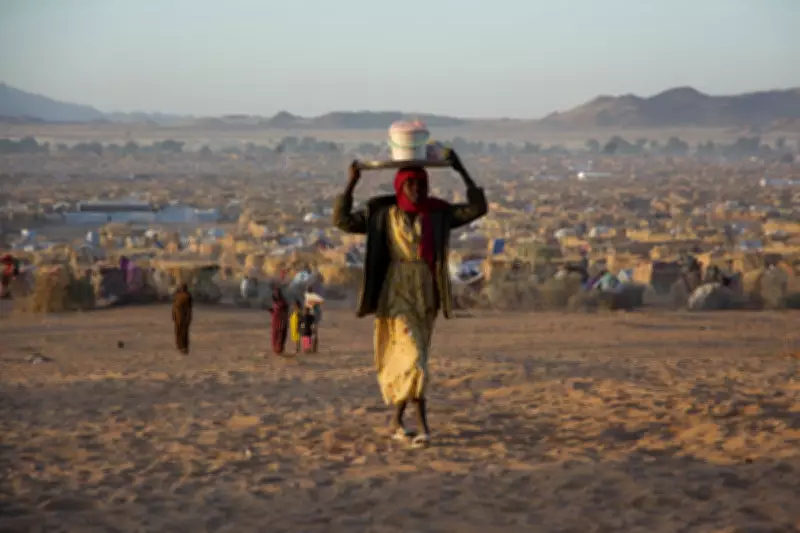
As Sudan's devastating civil war enters its fourth year, the region of Darfur remains at the epicentre of a profound humanitarian crisis. Photographer Jérome Tubiana has captured stark images depicting the daily struggles of approximately 600,000 displaced individuals who have gathered in the town of Tawila, North Darfur. These survivors are calling for an end to the bloodshed as international talks in Berlin mark the conflict's grim anniversary.
Sudan now holds the tragic distinction of being the world's largest displacement crisis, with about 11 million people forced from their homes. This includes 7 million internally displaced persons and 3.5 million refugees who have fled to neighbouring countries, underscoring the war's regional impact.
The Plight of El Fasher Survivors
The town of Tawila is currently hosting at least 600,000 homeless and displaced people, the majority of whom have arrived from El Fasher, located about 30 miles to the east. Among them are survivors of a brutal two-day massacre that occurred last October, as well as those who fled earlier when the city was besieged by the Rapid Support Forces paramilitaries. These fighters are now engaged in conflict with their former allies, the regular Sudan Armed Forces.

Many displaced individuals undertake perilous journeys back to the war-ravaged city of El Fasher in attempts to salvage belongings they were forced to abandon. These trips are fraught with complexity, involving payments to RSF fighters and rigorous inspections by the Sudan Liberation Army, a neutral rebel group that maintains control over Tawila.
Systematic Exploitation and Survival Mechanisms
Vehicles laden with reclaimed possessions from El Fasher arrive at Tawila's northern gate, where a disturbing system of exploitation has emerged. After the city's fall in October, numerous residents returned to assess damage to their homes and recover furniture and other items. RSF vehicles transport these belongings to an exchange point near Tawila, where people must pay fees to have their goods loaded onto vehicles bound for the camp. At the northern gate, SLA soldiers conduct checks to prevent theft, though looting remains widespread, and traders caught selling stolen goods face arrest.
New arrivals continue to swell displacement camps like Shakshako near Tawila, while in El Fasher, remnants of the siege include foxholes dug at sites such as the Amna Binti Wahab school. Residents created these underground shelters, sometimes burying entire containers, to protect themselves from shelling. The RSF used the presence of such foxholes to justify bombing locations they claimed were military targets. Following the city's capture, schools like Amna Binti Wahab have become gathering points for the few families who remain.
Cultural Heritage and Medical Emergencies
The wars have inflicted severe damage on Darfur's rich cultural heritage, with monuments like the 18th-century mosque and Quranic school of Sultan Teirab reportedly damaged by Janjaweed militias during the 2003 conflict. This destruction erases vital testaments to the region's historical significance.
Medical crises abound, with hundreds of people from El Fasher suffering serious injuries from bullets, shelling, and drone bombings. Makeshift clinics in El Fasher performed countless amputations, while in Tawila, emergency care has been provided to 1,400 patients with violence-related injuries in the month following El Fasher's fall, including over 400 surgical procedures. Dr. Jiddu, director of the Tawila military hospital operated by the SLA, treats injured men, women, and children who managed to reach safety despite their wounds.
Starvation and Healthcare Attacks
At the Gerne displacement camp, about eight miles from El Fasher, injured men receive daily meals of grain boiled in water at a takiya, or communal kitchen. Initially supplied by the RSF, food distributions were suspended in January as the paramilitary group pressured people to return to El Fasher with promises of aid. Takiya have proliferated across Sudan since the war began, operated by Emergency Response Rooms that were twice nominated for the Nobel Peace Prize in 2024 and 2025.

Malnutrition rates are alarming, with Médecins Sans Frontières screening arrivals in Tawila and finding that 63% of children under five are malnourished, including 30% severely. Among adults, a staggering 50% suffer from malnutrition. Healthcare facilities have not been spared, as evidenced by the bombing of Kutum hospital by the SAF, which destroyed electrical infrastructure and crucial obstetrics services. According to the UN World Health Organization, 213 attacks on health facilities by both sides over three years have resulted in more than 2,000 deaths, with Sudan accounting for 82% of global fatalities from such attacks in 2025.
Economic Realities and Fragile Peace
Women from El Fasher hope relatives in Tawila can help pay RSF drivers who transport belongings from the ruined city, highlighting a marketplace-like system at the Khor Luey exchange point where people must pay a tax to reclaim their own possessions. RSF cars arrive laden with goods, mostly furniture, taken from El Fasher after the October massacres.
Amid the conflict, some trade alliances and peaceful exchanges persist. In the Ain Siro mountains near Kutum, Arab herders, some wearing RSF uniforms, sell camels and livestock at a joint marketplace known as a suq al-salam or suq tshikek, where transactions occur quickly for security reasons. Soldiers from various non-Arab groups, some integrated into the RSF, oversee security at these peace markets, ensuring livestock is not stolen.
Rebel factions, such as the SLA-Transitional Council which allied with the RSF, control areas like Korma and jointly manage rural zones between Kutum, Farok, and Ain Siro. Former SLA rebels in the Ain Siro mountains, who joined the RSF in 2017, now protect displacement camps and escort internally displaced people for farming or trade, with their dedication to these tasks keeping them from active combat. In no man's lands between RSF-controlled Kutum and Joint Forces-held Dar Zaghawa, different non-Arab rebel factions avoid conflict, allowing for activities like internet access.
Despite the overwhelming hardship, moments of resilience emerge, such as children flying kites at the Tawila displacement camp, where at least 600,000 people, mostly survivors from El Fasher, seek shelter. These images underscore both the enduring human spirit and the urgent need for international intervention to address Sudan's escalating humanitarian disaster.