Colombia's Vice-President Francia Márquez Blames Racism for Government Frustrations
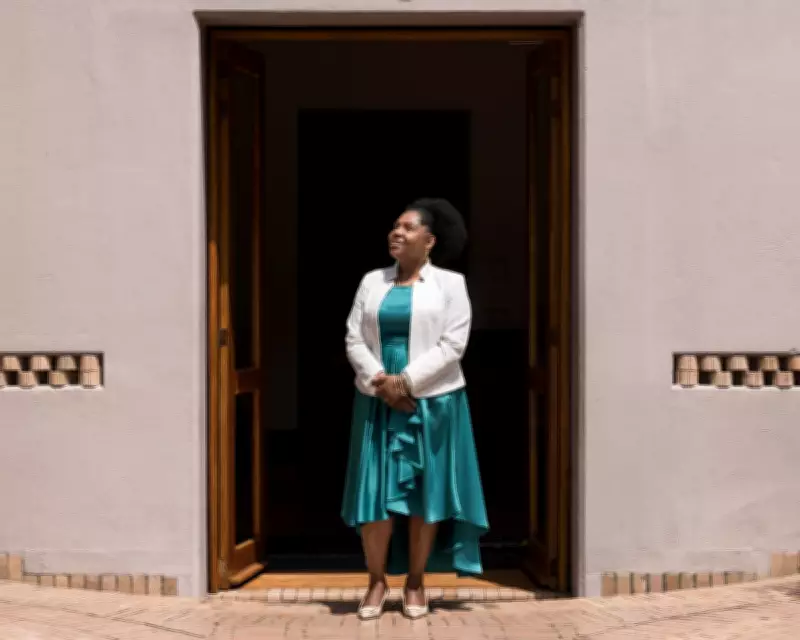
Francia Márquez, the first Black vice-president of Colombia, has openly discussed the significant challenges and racial discrimination she has faced during her four-year term. In a rare interview at the vice-presidential residence in Bogotá, Márquez attributed much of her political frustration to systemic racism within the Colombian state.
Historic Representation and Racial Barriers
Elected in 2022 alongside leftwing President Gustavo Petro, Márquez made history as Colombia's first Black woman vice-president in a nation where approximately 10% of the population identifies as Afro-descendant. She joins Epsy Campbell Barr of Costa Rica and Kamala Harris of the United States as one of only three Black women to serve as second-in-command in the Americas.
"The three of us were unable to take on leading roles within our governments. On the contrary, we were blocked," Márquez stated. "This has been a strategy of racism, and it doesn't matter whether the government is right or left; it has happened."

She specifically noted that Harris "was excluded" by former US President Joe Biden, which she believes contributed to Harris's loss in the 2024 election against Donald Trump.
Strained Relationship with President Petro
Márquez revealed that her relationship with President Petro has been strained for over a year, with minimal communication between them. The tension reached a critical point in February 2025 when Petro removed her from leading the Ministry of Equality, a department she had helped establish from scratch.
"When I was about to show the results, I was removed," Márquez explained, expressing sadness that her efforts seemed to benefit others who would take credit. Despite these differences, she maintains "a relationship of cordial respect" with the president.
Racism from Multiple Directions
Márquez described facing racism from various sources during her tenure:
- Media Portrayals: Local press caricatures depicted her as King Kong, and outlets criticized her travel expenses, labeling trips to African countries as a "safari."
- Government Insiders: Within her own administration, officials allegedly told Afro-Colombian staff they were only present because of Márquez, implying they didn't deserve their positions.
- Online Attacks: She has been targeted with derogatory language on social media, including being called a "primate" in one post that resulted in a controversial acquittal.
"The Colombian state is a racist state," Márquez declared unequivocally.
From Activist to Vice-President
Márquez's journey to the vice-presidency began in the Afro-descendant mining community of Yolombó in Cauca. She became an activist at age 13 when a dam threatened her village and later gained international recognition for leading the 2014 March of the Turbans, where 80 Black women walked 350 miles to protest illegal mining.
After winning the prestigious Goldman Environmental Prize in 2018 and an unsuccessful congressional bid, she launched a presidential campaign that garnered 783,000 primary votes, leading to her partnership with Petro on the winning ticket.
Limited Political Future
Despite her visibility as Colombia's number two, Márquez has decided not to run for president in the upcoming election, citing a promise to serve only one term. Political analyst Ana María Ospina Pedraza suggests that even if she did run, her chances would be limited as "the very special political moment Márquez had during the elections has faded somewhat."
Márquez believes her leadership was perceived as threatening: "I heard people say, 'If they empower Francia Márquez, she will end up being the president.' That fear is what led to me not being given the tools I needed to deliver."
Legacy and Pride
Despite the challenges, Márquez takes pride in her historic achievement. When she leaves office in August, her portrait will join the gallery of former vice-presidents at the official residence, breaking the pattern of exclusively white faces that has existed since 1886.

"In a few months, in this corridor, there will be a photo of a face that is not the one usually seen in these institutions, and that makes me proud," she said. "So it was worth it, just as it was worth it for my ancestors to fight so that today I do not have shackles."
She concluded with an invitation to other marginalized women: "My invitation is for other women to dare to occupy these spaces."