The 'Becoming Chinese' Meme: A Watershed Moment for China's Global Cultural Influence
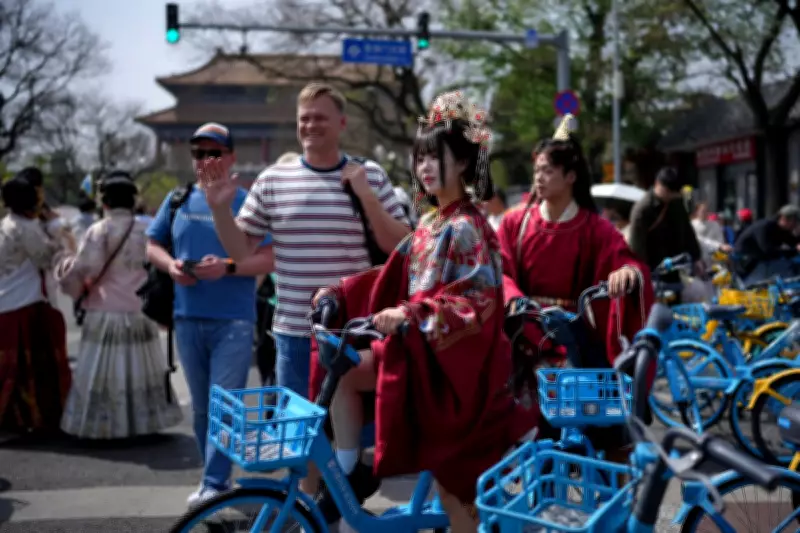
Young Western social media users are enthusiastically adopting what they term a "very Chinese time" in their lives, embracing everyday habits from drinking hot water with goji berries to wearing slippers indoors. This organic trend, far surpassing previous government-led efforts, signals that China's soft power moment has genuinely arrived on the global stage.
Viral Phenomenon Captures Global Imagination
In recent months, twenty-somethings worldwide have flooded platforms like TikTok with videos proclaiming they are "Chinamaxxing" or entering a distinctly Chinese phase. Content featuring dumpling consumption, admiration for China's modern infrastructure, and other lifestyle elements has amassed millions of views, creating an unprecedented cultural cachet for Chinese products and customs.
Professor Shaoyu Yuan of New York University's Center for Global Affairs observes: "China is gaining real soft power, visible in how Chinese culture and 'Chineseness' are becoming familiar, repeatable, and globally consumable in daily life. This legitimacy is earned through taste, utility, and entertainment."

Official Recognition and Strategic Leveraging
Even senior Chinese diplomats have noted the trend. Xie Feng, China's ambassador to the United States, recently referenced the internet craze while promoting a new visa-free transit policy, urging Americans to "experience for yourselves a real, dynamic and panoramic China."
This soft power rise is underpinned by China's industrial development:
- A record $1.2 trillion trade surplus with the rest of the world
- Dominance in manufacturing sectors like green energy and electric vehicles
- The creation of addictive social media algorithms powering platforms like TikTok
- A vibrant consumer culture where domestic brands compete globally
Cultural Exports Achieving Global Success
The meme builds upon broader acceptance of Chinese popular culture. Notable successes include:
- Labubu dolls, carried by celebrities like Rihanna, driving 300% profit increases for parent company PopMart
- Cantonese rapper Skaii isyourgod gaining international fans despite linguistic barriers
- Animated blockbuster "Ne Zha 2" becoming the highest-grossing animated film ever before North American release
- Video game "Black Myth: Wukong" breaking Steam records with 2.4 million simultaneous players
- Digital maps like Amap going viral for superior detail compared to Western alternatives
Complex Reactions and Historical Context
While creators like 23-year-old Sherry Zhu from New Jersey celebrate the trend, others express reservations. For many Chinese diaspora communities who have faced discrimination, the sudden fascination with Chinese culture raises questions about cultural appropriation.
Elise Zeng, 28, from Brooklyn notes: "Appreciation does not erase the racism that many Chinese people grew up with. During the COVID-19 pandemic, Asians were attacked and blamed for virus spread. Those experiences don't just disappear because Chinese culture is suddenly cool."
Zhu acknowledges experiencing identity-based bullying but maintains that "visibility and cultural sharing can reduce misunderstanding over time."
Beyond Official Narratives
Despite President Xi Jinping's longstanding directive to "tell China's story well," state-led initiatives like the Belt and Road Initiative and Confucius Institutes have faced skepticism and accusations of propaganda. The organic nature of the "becoming Chinese" meme represents a more authentic form of cultural influence.
Professor Yuan cautions: "Cultural influence travels farther when it is chosen rather than announced. The more officials frame these successes as part of the 'China story,' the more skepticism they may encounter."
As China's hard power—evident in its military strength and manufacturing dominance—continues to grow, this social media-driven cultural moment demonstrates that soft power ultimately flourishes through genuine public engagement rather than government decree.