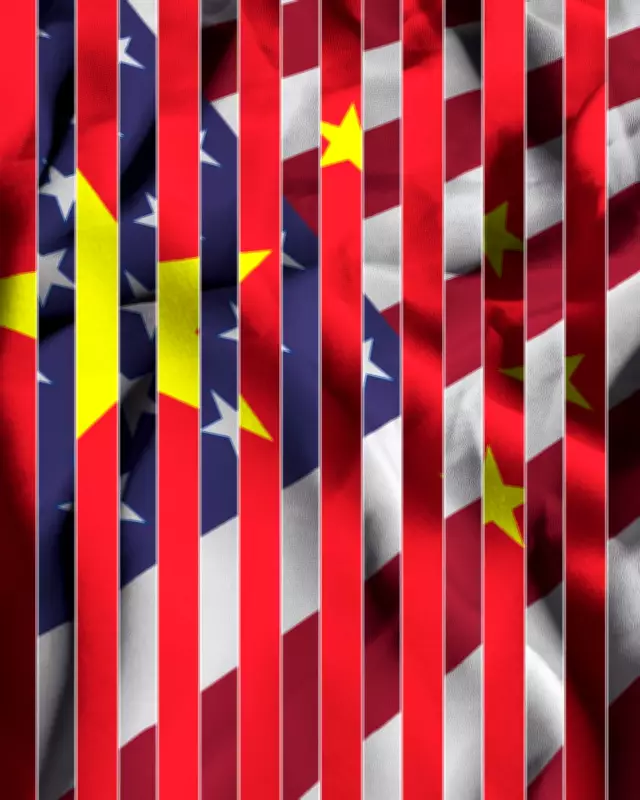
Chinamaxxing vs Kill Line: A Social Media Divide Between US and China
Across the digital landscape, a fascinating mirroring effect has emerged between the United States and China, revealing starkly contrasting perceptions through viral social media trends. In recent months, two distinct narratives have captured the attention of young internet users on both sides of the Pacific, highlighting how each country views the other in an era of heightened geopolitical tensions.
The Rise of Chinamaxxing in the US
On platforms like TikTok and Instagram, American Gen Zers are enthusiastically adopting what they term "Chinamaxxing"—a trend centered on embracing traditional Chinese lifestyle habits. This movement includes practices such as drinking hot water for health benefits, wearing slippers indoors, and playing games like mahjong. The slogan "You've met me at a very Chinese time in my life" has become a popular catchphrase among participants, symbolizing a newfound appreciation for Chinese cultural elements.
This trend aligns with broader efforts by the Chinese government to boost tourism and soft power. Beijing has been relaxing visa requirements for visitors from European countries, including the UK, and welcoming influencers who promote positive aspects of life in China. While these narratives often skirt sensitive topics like human rights, they present an idealized version of Chinese culture that resonates with young Americans seeking alternative lifestyles.

The Kill Line Narrative in China
Conversely, on Chinese social media platforms like Weibo and Bilibili, a darker trend known as the "kill line" has gained massive traction, with related hashtags amassing over 600 million views. Originating from gaming terminology, where it refers to a point of near-total defeat, the kill line in this context describes the perceived risks and fragility of daily life in the US. It paints a picture of America as a dystopian capitalist society where the middle class can easily plummet into poverty, with no safety net to catch them.
This narrative has been amplified by state media and influential commentators. For instance, a Chinese news presenter cited the case of Tylor Chase, a former Nickelodeon star seen homeless in California, as evidence of this societal breakdown. The commentary argues that the US exhibits a dual nature: winners achieve ultimate success, while losers fall into an abyss with no return. This marks a significant shift from historical perceptions, where many Chinese viewed the US as a land of opportunity, especially after China's opening up in the 1980s.
Historical Context and Shifting Perceptions
Chinese propaganda has long depicted the West, particularly the US, in negative terms. During the Cultural Revolution in 1968, the People's Daily published multiple articles describing America as a hellscape of famine and elite exploitation. However, public admiration for US prosperity persisted for decades. According to Wang Haolan, a research associate at the Asia Society in New York, events like the 2008 economic crisis, the election of Donald Trump, and the US's handling of the COVID-19 pandemic have transformed this admiration into curiosity about American turmoil.
Ren Yi, a nationalist blogger known as Chairman Rabbit, attributes the declining regard for the US to Trump's re-election and the US-China trade war. He notes that Chinese attitudes are closely linked to the changing balance of power between the two nations. While China faces its own challenges, such as youth unemployment and economic pessimism, the kill line meme serves as a psychological comfort, diverting attention from domestic issues by highlighting problems abroad.
Homelessness and Social Safety Nets
The kill line narrative often focuses on homelessness in the US, which reached a record high of over 771,000 people in 2024, according to the National Alliance to End Homelessness. In contrast, homelessness in China is harder to quantify due to the hukou system, which registers people based on their birthplace rather than current residence. Millions of domestic migrants live in precarious conditions, but they are not officially counted as homeless. The Chinese government frequently promotes its success in eradicating extreme poverty, a milestone declared by President Xi Jinping in 2021.

Ren Yi argues that cultural factors in China, such as family support networks, prevent people from ending up on the streets, making US homelessness incomprehensible to many Chinese. This perception reinforces the idea that social catastrophe is more likely in the US, further fueling the kill line discourse.
Diverting Attention from Domestic Issues
Some analysts view the kill line trend as a distraction from China's internal problems. With nearly one in five young people unemployed and economic growth sluggish, promoting US struggles provides a sense of psychological relief. Wang Qinglin, a Chinese writer in Germany, suggests that this creates an image where the West is seen as worse off, shifting public criticism away from the Chinese government.
However, attempts to explicitly link the kill line meme to China's domestic issues have faced censorship. For example, legal blogger Li Yuchen wrote an essay criticizing US-bashing nationalism as a "cheap dose of 'patriotic aphrodisiac'" that doesn't solve real problems, but it was quickly deleted. Henry Gao, a professor at Singapore Management University, notes that this pattern of deflecting attention to US issues during internal challenges is recurring in China.
Conclusion: A Window into Cross-Cultural Perceptions
The contrasting trends of Chinamaxxing and the kill line offer a revealing window into how the US and China see each other in the digital age. While American youth romanticize Chinese traditions, Chinese internet users fixate on American vulnerabilities. These narratives not only reflect cultural exchanges but also underscore deeper geopolitical and social dynamics, shaping public opinion in both countries. As online platforms continue to splinter, these mirrored perceptions highlight the complex interplay between soft power, propaganda, and the quest for national identity in a globalized world.