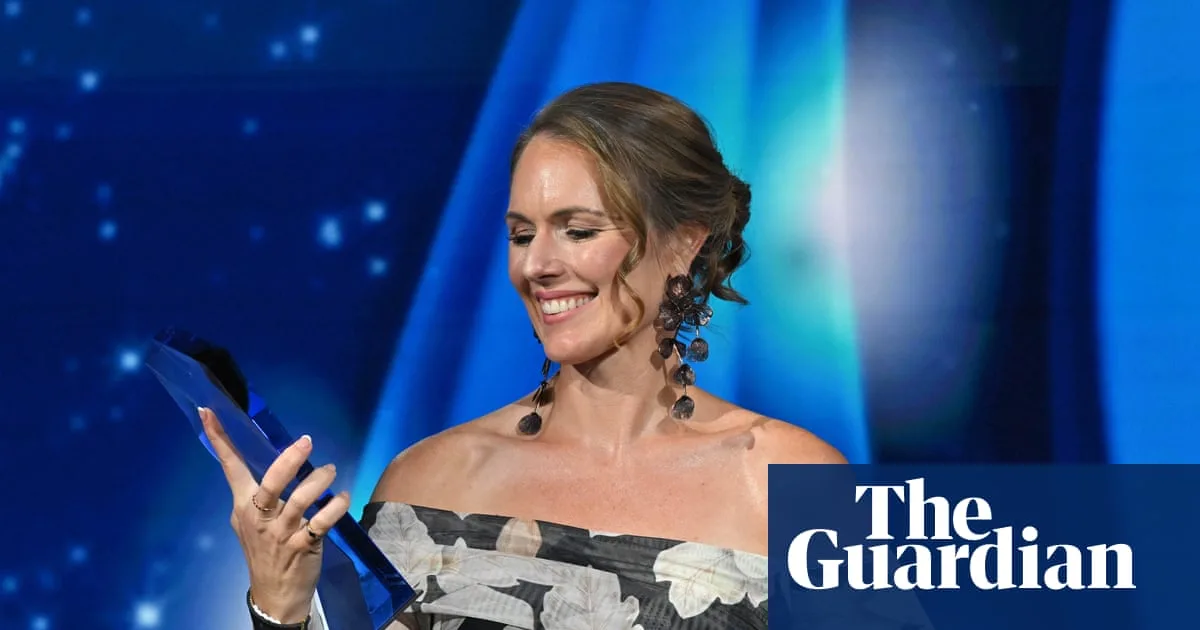
In a ceremony that celebrated national achievement and humanitarian spirit, astronaut Katherine Bennell-Pegg was officially named the Australian of the Year for 2026. The prestigious award was presented at the National Arboretum in Canberra on Sunday evening, marking a significant moment for Australia's burgeoning space sector.
A Trailblazer's Journey to the Stars
Katherine Bennell-Pegg, aged 41, has carved a unique path as the first Australian astronaut to train under the nation's own flag. Her journey began in childhood, lying on the dry grass of her backyard in Sydney's northern beaches, gazing skyward with dreams of space exploration. This early fascination propelled her to study aeronautical engineering and physics at Sydney University, followed by two master's degrees in Europe.
Her dedication culminated in a historic invitation in 2021 to undertake astronaut training with the European Space Agency. By 2024, she had graduated as the first Australian woman from the program and the inaugural astronaut to fly under the Australian flag, a milestone she described as profoundly emotional during her acceptance speech.
Inspiring the Next Generation
"When I received my blue flight suit, and right there, bright on the left shoulder was the Australian flag, it was quite emotional, because it marked something so much greater than myself," Bennell-Pegg told the audience. "It said that the door has opened for Australia to take our place at the forefront of human endeavour."
She expressed hope that her achievement would motivate young people to pursue their ambitions, stating, "It gave me hope – hope that one day more Aussie flags on spacesuits will follow." Bennell-Pegg, who currently resides in Adelaide and volunteers with the West Beach Surf Life Saving Club, also serves as an Air Force reservist, appointed in December 2024.
Honouring a Legacy of Courage
Bennell-Pegg succeeds AFL legend Neale Daniher, the 2025 Australian of the Year, who was recognised for raising over $100 million for motor neurone disease (MND) research. Daniher, who battles MND himself, was unable to attend the ceremony due to illness, as confirmed by his wife, Jan. She shared, "We call MND the beast. He's struggled in the last couple of months. MND has taken away Neale's ability to move, talk, eat swallow and eventually it will take away his ability to breathe."
In a tribute to Daniher's advocacy, Prime Minister Anthony Albanese announced the creation of the Neale Daniher MND clinical network. This government-funded initiative aims to enhance access to clinical trials, treatment, and care for Australians affected by the neurological condition. Albanese remarked, "Neale, your courage and advocacy has brought hope to so many, and we will ensure your work continues to change lives."
Celebrating Diverse Contributions
The awards ceremony also highlighted other remarkable Australians across various categories. Former electrician Nedd Brockmann was named Young Australian of the Year for his ultra-marathon run from Perth to Sydney, which raised significant funds for a homelessness charity.
Pioneering dementia researcher Henry Brodaty received the Senior Australian of the Year award for his work in developing cost-effective interventions to reduce Alzheimer's disease risk. The Local Hero award went to Frank Mitchell, a Noongar man from Western Australia, who has created over 70 upskilling roles for Indigenous people in construction and electrical industries, fostering economic empowerment and community development.
These honours collectively underscore the diverse ways Australians contribute to society, from space exploration and medical research to social justice and grassroots initiatives. The event served as a powerful reminder of the nation's capacity for innovation, compassion, and resilience in the face of challenges.