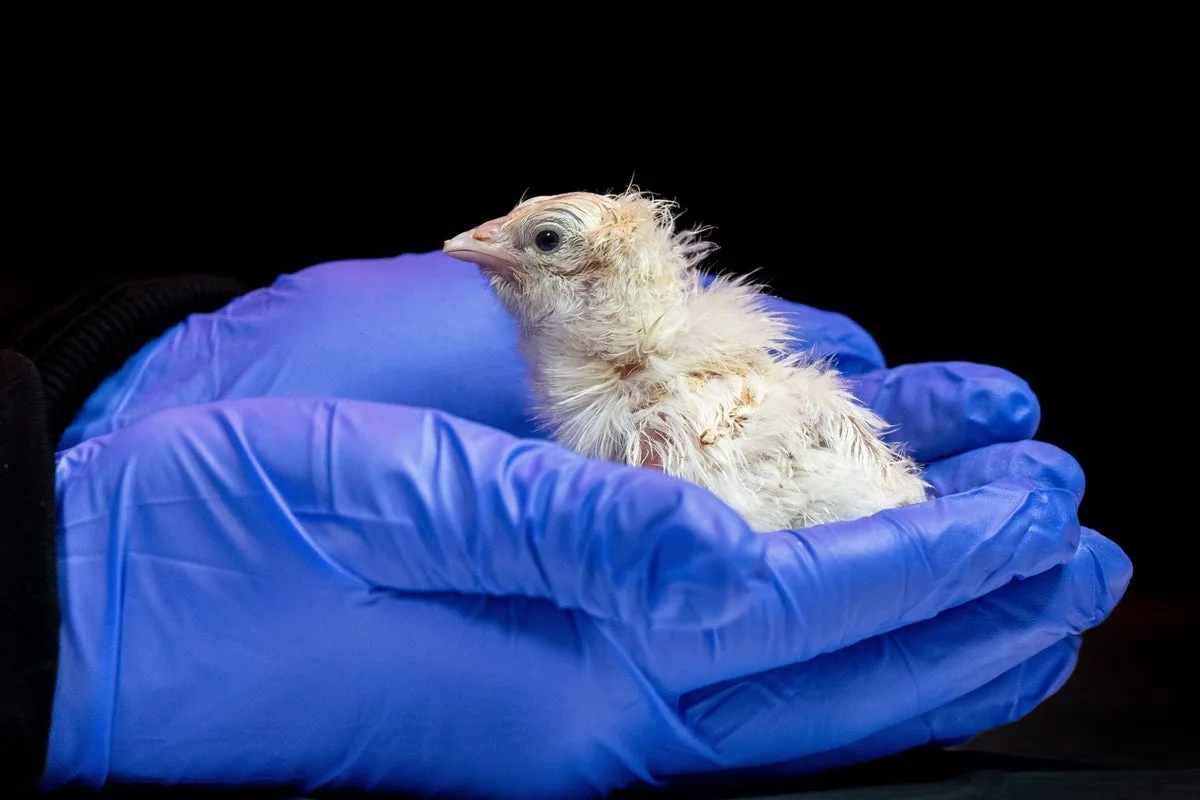
A biotechnology company has successfully hatched chicks using a 3D-printed artificial eggshell, a step it claims could eventually help revive New Zealand's extinct giant moa. Colossal Biosciences says 26 chicks were born from a lattice structure designed to mimic an eggshell, with the oldest now several months old.
The company's CEO, Ben Lamm, suggested the technology could be scaled up to genetically modify living birds to resemble the South Island giant moa, whose eggs are about 80 times larger than a chicken's. 'We wanted to build something that nature has done a pretty good job of developing and make it better and scalable,' Mr Lamm said.
However, independent scientists have questioned whether the system truly constitutes an artificial egg. Vincent Lynch, an evolutionary biologist at the University at Buffalo, noted that the artificial shell lacks crucial components such as temporary organs that nourish the embryo. 'That's not an artificial egg because you've poured in all the other parts that make it an egg. It's an artificial eggshell,' he said.
Nicola Hemmings, a bird reproduction specialist at the University of Sheffield, added that producing chicks from artificial vessels is not new, with researchers having previously used plastic films. She argued that de-extinction efforts might be better focused on preserving currently endangered species.
Bioethicist Arthur Caplan from New York University raised concerns about the survival of any revived moa in a modern landscape that bears little resemblance to its ancient habitat. 'The big challenge is, what environment is this animal going to live in?' he questioned.