Israel Kills Three Journalists in South Lebanon, Lebanon Condemns 'Blatant War Crime'
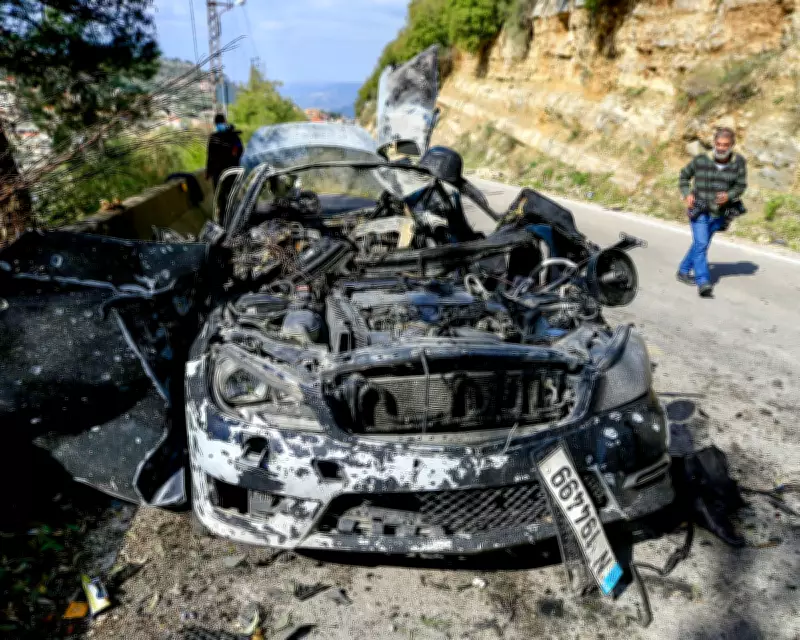
The Lebanese government has strongly condemned what it describes as a "blatant war crime" after an Israeli missile strike destroyed a car carrying three journalists near Jezzine in south Lebanon on Saturday. The attack resulted in the deaths of Ali Shoeib from the Hezbollah-owned al-Manar television station, along with Fatima Ftouni and her brother Mohammed Ftouni, who worked as a cameraman for the pro-Hezbollah outlet al-Mayadeen.
Israeli Military Claims Target Was Hezbollah 'Terrorist'
Shortly after the strike, the Israeli military claimed responsibility, stating that the primary target was Ali Shoeib. Israeli authorities accused Shoeib of being a Hezbollah "terrorist" operating within an intelligence unit, alleging he had reported on the locations of Israeli soldiers in southern Lebanon. The Israeli military provided no additional evidence to substantiate this claim and made no comment regarding the killing of the other two journalists.
Local television broadcasts from the scene showed that at least four missiles were fired at the journalists' vehicle. Disturbing footage appeared to capture a missile being launched between the car and bystanders who were attempting to approach and offer assistance. Video of the aftermath revealed singed press jackets and helmets, alongside tripods and microphones that had been pulled from the wreckage of the destroyed car.

Lebanese Government and International Law Response
Lebanon's President, Joseph Aoun, described the slain journalists as "civilians doing their professional duty." In a post on the social media platform X, he asserted, "It is a brazen crime that violates all treaties and norms through which journalists enjoy international protection in war." Lebanon's Minister of Information, Paul Morcos, echoed this sentiment, stating that the killing "constitutes a deliberate and blatant war crime against the media and the mission of journalism."
Under international law, journalists are considered civilians regardless of their political affiliations, and targeting them is classified as a war crime. The Lebanese government has announced it is compiling a detailed list of Israeli attacks targeting healthcare workers and media personnel, which it plans to submit to the United Nations and the European Union.
Background on the Victims and Broader Context
Ali Shoeib was a well-known war correspondent in Lebanon, having reported for al-Manar for nearly three decades. His death prompted a wave of condolences from audiences and fellow journalists across the country, with many regarding him as a mentor figure in Lebanese journalism. Fatima Ftouni had been actively reporting from the frontlines of the Israel-Hezbollah conflict in recent days, including filming in the town of Taybeh in south Lebanon.
Tragically, Ftouni's own family had been killed in Israeli strikes just weeks earlier. In a previous incident eighteen months prior, she and her colleagues were struck by an Israeli bomb while sleeping in a hotel in south Lebanon; Ftouni survived, but two of her colleagues did not. Reflecting on those deaths at the time, Ftouni remarked, "It is the silence of the international community that let this happen."
The Israeli military elaborated that the strike targeted Shoeib, whom it claimed was a member of Hezbollah's elite Radwan force, a unit specializing in cross-border raids. It cited his contacts with senior Hezbollah members and his documentation of Israeli force locations as evidence of his military role within the group.
Wider Implications and Casualty Figures
This incident is part of a broader pattern, with eight out of the nine journalists killed by Israel in Lebanon since October 13, 2023, having worked for Hezbollah-affiliated media outlets. Analysts have suggested these killings may be part of an Israeli strategy to attack the civilian wings of the group. The Israeli military has made similar allegations about journalists it has killed in Gaza, claiming they also served as operatives for Hamas.

According to Reporters Without Borders, Israel has killed more than 220 journalists since 2023. The conflict in Lebanon escalated when Hezbollah launched missiles at Israel on March 2, following a US-Israeli assault on Iran, which triggered an Israeli aerial campaign and invasion. Lebanese health ministry figures report that Israeli attacks have killed 1,189 people and wounded 3,427 in Lebanon, including 48 healthcare workers. In response, Hezbollah fire has killed three Israeli soldiers in South Lebanon and one person in northern Israel.