Time Capsule of 2002 Slang: A Hilarious Look Back at Outdated Terms
From contemporary phrases like 'vibe–coding' to numerical slang such as '6,7', new slang words and expressions appear almost daily in our rapidly evolving linguistic landscape. However, a fascinating journey back in time has been prompted by language learning app Preply, which recently uncovered a humorous glossary of slang from 2002, originally produced by the BBC. This historical document offers a captivating snapshot of the vernacular from over two decades ago, revealing which terms have endured and which now seem remarkably antiquated.
Enduring Classics vs. Forgotten Relics
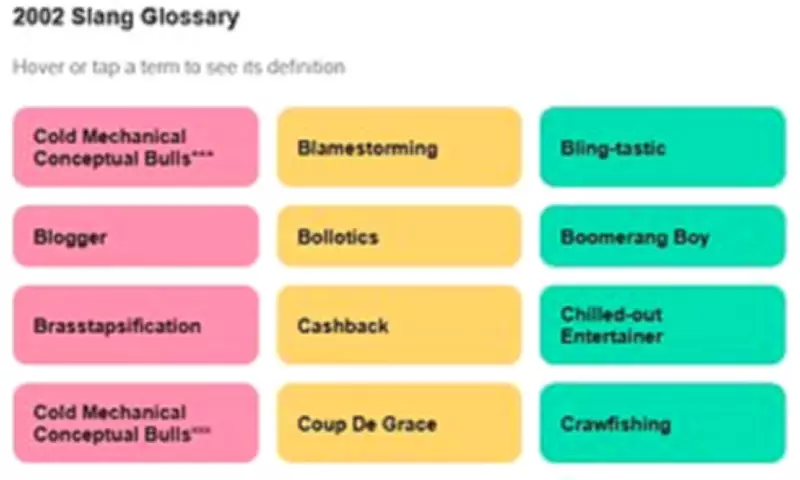
The 2002 glossary includes several terms that have successfully stood the test of time, maintaining relevance in today's conversations. Notable survivors include 'blogger', 'lifestyle guru', and 'minging'. In contrast, other entries now appear wildly outdated, such as 'bling–tastic', 'do a Google', and 'T9 slang', reflecting technological and cultural shifts that have rendered them obsolete.
Anna Pyshna, a spokesperson for Preply, commented on the cyclical nature of slang. 'As we have seen time and time again through history, the usage of slang ebbs and flows, contributing to quickly evolving language,' she explained. 'Alongside cultural developments in our society, language follows the same pattern – changing in line with technology, fashion, and politics. Societal changes often have a strong influence over language change, and when past slang resurfaces, it encourages a deep, personal connection to the past.'

The Survivors: Three Terms That Defied Time
Preply's analysis identified three words from the 2002 glossary that have not only persisted but flourished over the past 24 years:
- 'Blogger': This term, referring to a person who writes a blog, experienced an astonishing 1,245 percent increase in usage in literature from 2002 to 2022. Ms. Pyshna attributed this longevity to technological advances, noting that 'the extended lifespan of this term is deeply rooted in technological advances, and in a quickly evolving digital world, has become a permanent fixture in everyday vocabulary.'
- 'Babe': A classic term of endearment that has seen a 245 percent increase in usage over the same period.
- 'Buzzing': Originally describing excitement, this term has spiked by 209 percent. Ms. Pyshna added, 'While back in 2002, the phrase was more frequently used in reference to the effects of drugs, usage of the term continues to rise, despite adaptations of the meaning.'
The Evolution of 2002 Slang: Modern Equivalents Emerge
Many popular 2002 slang words have undergone significant transformation, evolving into contemporary equivalents that reflect changing societal values and communication styles. Preply highlighted several key shifts:

- 'Bling–tastic' to 'Extra': Once used to describe someone or something flashy, showy, or extravagant, 'bling–tastic' has been largely replaced by 'extra'. Ms. Pyshna explained this shift: 'This reflects a move away from material–focused displays of wealth within fashion, and towards exaggerated self–expression. "Bling–tastic" typically boasted about visible luxury, whilst "extra" encapsulates a broader cultural movement towards embracing personality, performance, and in some cases online identity.'
- 'Minging' to 'Ick': The term 'minging', meaning unpleasant, unattractive, or disgusting, has now been supplanted by 'ick'. According to Ms. Pyshna, 'The rise of "ick" can be attributed largely to social media and reality television, evolving alongside the rise of reality dating shows. This reflects a more nuanced, emotionally driven way of communicating and an approach to dating.'
- 'Baller' to 'Boss': Instead of being called a 'baller', you might now hear 'boss'. Ms. Pyshna noted, 'The term "baller" rose in 2002, deeply rooted in hip–hop and sports culture. The change away from "baller" to "boss" suggests a broader societal change – moving away from money–centred thinking towards empowerment, control, and personal achievement.'
The Broader Context: Language in the Digital Age
This evolution of slang parallels broader changes in digital communication, where punctuation and symbols carry significant meaning. For instance, research has shown that using full stops in text messages can be perceived as insincere or heartless, leading to their replacement with emoticons, abbreviations, and emojis. These 'textisms' provide vital emotional cues that are otherwise missing in written communication, much like facial expressions and tone of voice in face-to-face conversations.
The 2002 slang glossary serves as a poignant reminder of how language continuously adapts to reflect technological advancements, cultural shifts, and societal trends. As we navigate an ever-changing linguistic landscape, these historical snapshots offer valuable insights into the dynamic nature of human communication and our enduring connection to the past through the words we use.