Detroit Opera Orchestra to Reimagine George Clinton's P-Funk Hits in Classical Style
The Detroit Opera is preparing to showcase the legendary music of Parliament-Funkadelic in an entirely new light this weekend. In a groundbreaking fusion of genres, the opera's orchestra will perform classical arrangements of George Clinton's iconic funk hits, transforming songs like "Flash Light" and "One Nation Under a Groove" for violins, cellos, horns, and other traditional orchestral instruments.
Ray Chew Leads the Symphonic Transformation
Ray Chew, the arranger and conductor behind "Symphonic PFunk: Celebrating the Music of Parliament Funkadelic," believes Saturday's performance marks a historic first. "This will be the first time an orchestra has performed the iconic group's music," Chew stated. As a musician who has worked with industry giants and a self-professed funk enthusiast, Chew sees immense potential in this crossover. "George's and P-Funk's music is just waiting to explode through that orchestra," he explained, emphasising that his arrangements are crucial to blending these distinct musical worlds.
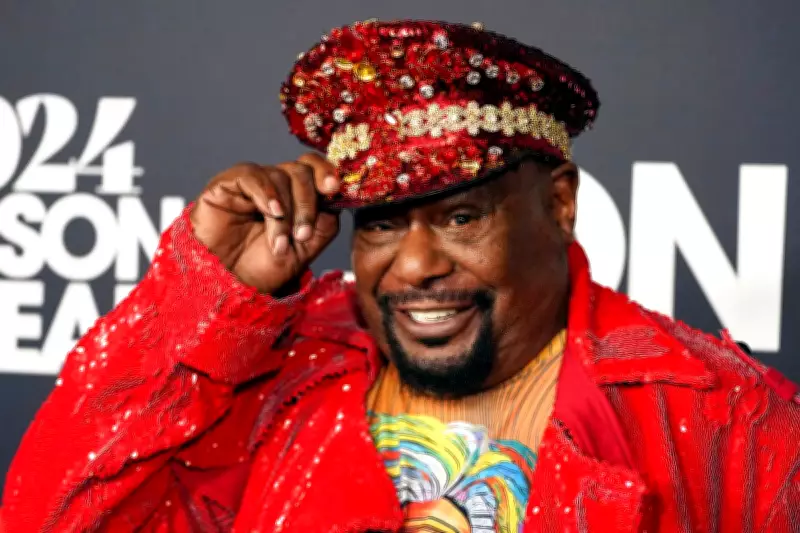
For 84-year-old funk maestro George Clinton, this orchestral interpretation feels like a natural progression. "I've been waiting on it to happen over the years," Clinton told The Associated Press. "We knew we were going to be doing this one day. We expected to gravitate into classical or something."

The Evolution of the Parliafunkadelicamentthang
Clinton's musical journey began in 1955 with The Parliaments, a doo wop group from Plainfield, New Jersey. Their 1967 hit "(I Wanna) Testify" on Detroit's Revilot Records laid the foundation for what would become the Parliament-Funkadelic phenomenon. Following a naming rights issue, Funkadelic emerged in 1968, though Clinton later reclaimed The Parliaments name.
Throughout the 1970s, essentially the same ensemble of talented musicians recorded and performed under both banners. Parliament became synonymous with intricate funk, characterised by layered harmonies and vocal interplay, while Funkadelic embraced raw rock elements with heavy guitar riffs, pounding drums, and often provocative lyrics. Clinton famously described this evolving entity as the "Parliafunkadelicamentthang," a testament to its unique and fluid identity.
This "thang" attracted some of the era's most gifted artists, including keyboardist Bernie Worrell, guitarist and vocalist Garry Shider, and Walter "Junie" Morrison, all of whom contributed to P-Funk's legendary sound.
Can an Orchestra Truly Play Funk?
While adapting P-Funk's catalogue for a classical ensemble might seem unconventional, Chew views it as "just a different discipline." He suggests that several P-Funk members possessed the musical prowess to excel in classical composition had they pursued that path.
Rickey Vincent, a professor of African American Studies at the University of California, Berkeley and author of "Funk: The Music, the People, and the Rhythm of The One," strongly affirms the viability of orchestral funk. "Musicians are stumped by how seriously complex this funky music is," Vincent noted. "You can take an orchestra and do all kinds of funky things with it."
Vincent highlighted the genre's inherent sophistication, pointing to innovators like Junie Morrison and Bernie Worrell who subtly incorporated string arrangements into their work. "Audacity of sophistication, that's what funk plays with," he added, citing Parliament's 1970 debut album "Osmium," which featured unexpected instruments like bagpipes and banjo. "Funk has always been about toying with institutions, manipulating canon."
Legendary Motown arranger Paul Riser emphasised the importance of respectful integration. "You take what they've done. You don't try to make it different. You just try to add to it. You don't try to make it your thing," Riser advised.

The Orchestral Setup and P-Funk's Theatrical Legacy
Chew has assembled a 47-piece orchestra for the performance, featuring a full string section, harp, saxophones, and additional musicians on keyboard and guitar. While the specific setlist remains under wraps, Chew is confident in the material. "The colors that are already in the music are going to be spoken through violins and French horns and everything. We don't even have to invent new notes. All the notes are there," he remarked.
Beyond the music, P-Funk's legacy is deeply intertwined with spectacular live shows. Clinton acknowledged that albums like "Mothership Connection" and "Funkentelechy Vs. The Placebo Syndrome" formed a kind of "funk opera," with narratives centred on characters like the dance-resistant Sir Nose D'Voidoffunk. The climax of their concerts often involved the dramatic descent of the glittering "Mothership" prop, first used in 1976 and currently being rebuilt.
Clinton, inspired by The Beatles' ambitious "Sgt. Pepper's Lonely Hearts Club Band," aimed for similar grandeur. "We were trying to be the Beatles with the big extravagant arrangements," he recalled.
Looking to the Future from a Musical Homeland
As P-Funk returns to Detroit after a year's absence, Clinton feels a profound connection to the city. "To go back there now feels really good," he reflected. "I feel a future coming in the place where we have a helluva past. That's where all the music was born." With new albums in the works and the group having toured consistently for the past three years, this orchestral event in Detroit represents both a homage to their roots and an innovative step forward.