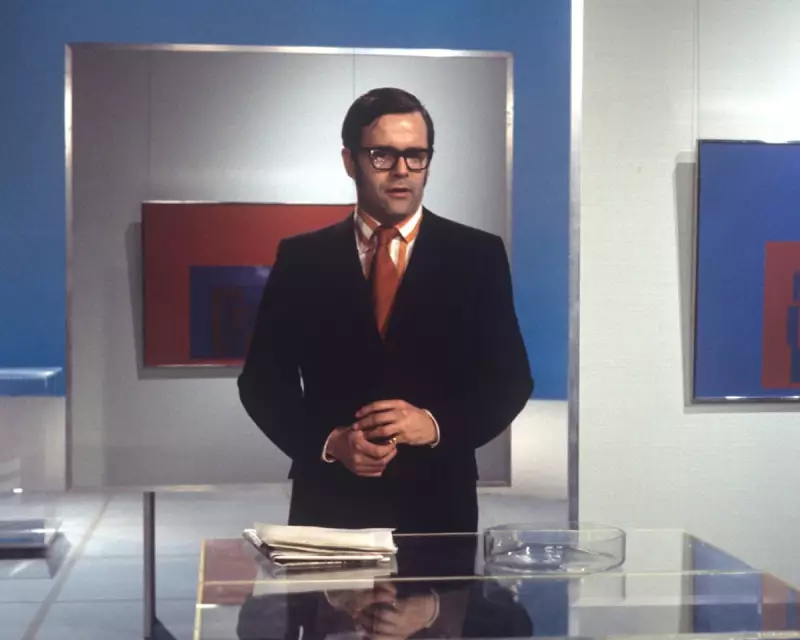
The world of arts broadcasting has lost one of its most influential figures with the death of Sir Humphrey Burton at the age of 94. For decades, Burton was the defining voice and creative force behind countless seminal music and arts programmes on British television, most notably for the BBC.
The Architect of a Golden Age
Burton's career, which he later described as operating in a 'golden age for serious music programmes on television', began at the BBC in 1955. He quickly found his home in television after moving from radio in 1958. Under the mentorship of the influential Huw Wheldon, Burton cut his teeth on the trailblazing arts series Monitor.
This programme drew audiences of three million for esoteric subjects, from Pre-Raphaelite art to profiles of Henry Moore. A landmark moment was Burton's production of Ken Russell's celebrated 1962 film portrait of Edward Elgar, which Burton said helped trigger a renaissance in the composer's music.

Promoted to Head of Music and Arts in 1965, Burton oversaw an impressive body of work. He created innovative series like Workshop, which offered a fly-on-the-wall view of musicians at work. One memorable edition featured the ebullient musicologist H.C. Robbins Landon dissecting a Haydn symphony while the orchestra played on around him.
From the BBC to LWT and Back Again
A pivotal relationship began in 1965 with a chance encounter with the conductor and composer Leonard Bernstein. This blossomed into a close friendship and prolific working partnership, with Burton eventually filming nearly 300 Bernstein events. Their collaboration included the inspirational 1973 recording of Mahler's Resurrection Symphony in Ely Cathedral, later recreated in the 2023 film Maestro.
After a period of dissatisfaction with BBC policy, Burton joined David Frost's bid for an ITV franchise, which became London Weekend Television (LWT). As Head of Drama, Arts and Music (1967-69), he later edited and presented the popular arts magazine show Aquarius, becoming a familiar face in colourful striped shirts and kipper ties.
Aquarius featured major moments, including Jessye Norman's British TV debut and a profile of a young Elton John. The show's success, winning seven Baftas in 1975, helped pave the way for Melvyn Bragg's The South Bank Show.
Yearning for the BBC's 'larger canvas', Burton returned in 1975, resuming his role as Head of Music and Arts. He launched the enduring documentary series Arena and was the principal presenter of Omnibus for several years.
A Lasting Legacy: Young Musician and Beyond
Perhaps his most enduring contribution to British cultural life came in the mid-1970s. Sensing the need for a new 'big idea', Burton created the BBC Young Musician of the Year competition with colleagues Walter Todds and Roy Tipping. The first contest in 1978 was won by trombonist Michael Hext, launching a platform that would later discover stars like Nicola Benedetti, Jennifer Pike, and Sheku Kanneh-Mason. Burton fronted the competition until 1992.
His prolific output continued with productions for the BBC Proms, broadcasts of operas from Glyndebourne and the Kirov, and a guest directorship of the Hollywood Bowl festival in 1983. He also authored acclaimed biographies of Leonard Bernstein (1994) and Yehudi Menuhin (2000).
In a fitting final flourish, to mark his 70th birthday in 2001, he fulfilled a lifelong dream by conducting Verdi's Requiem at the Royal Albert Hall, raising over £75,000 for prostate cancer research.
Born in Trowbridge, Wiltshire, in 1931, Humphrey Burton was educated in Cambridge. He was knighted in 2020, fulfilling a childhood prediction from his mother who chose his name because 'it would sound well when I was knighted'. He is survived by his second wife, Christina, and his children, including the broadcaster Clemency Burton-Hill.