Uganda's First Mobile Court Trial in Tent Draws Crowds for Child Murder Case
The trial of a Ugandan man accused of murdering four children commenced on Monday in a tent erected near the crime scene, following a presidential order for a mobile court session designed to be witnessed by local residents. This landmark event marks the debut of Uganda's controversial mobile court system, aimed at allowing the public to directly observe cases of widespread interest.
Details of the Alleged Crime and Court Proceedings
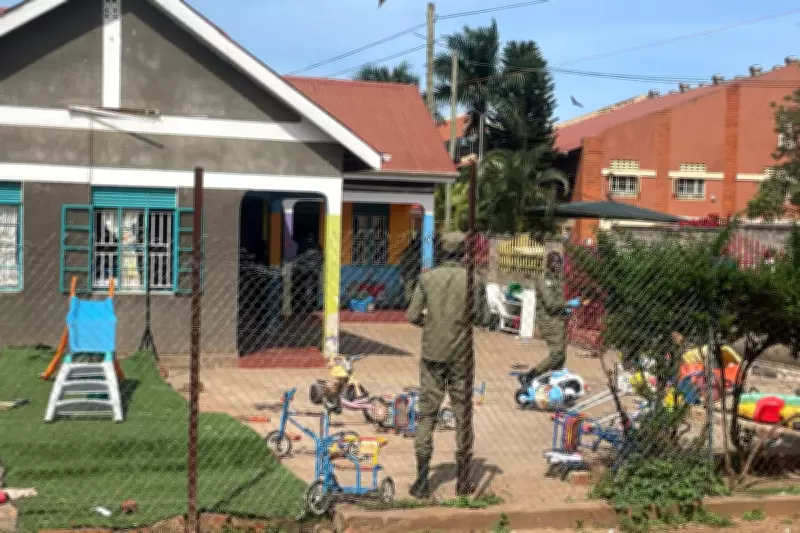
The suspect, Christopher Okello Onyum, is charged with four counts of murder for a machete attack inside a nursery school in a Kampala suburb on April 2. The motive remains unclear, but the incident has shocked the East African nation. Onyum pleaded not guilty in the mobile court, which was set up in a large tent on church grounds, attracting hundreds of spectators.
Witnesses reported that the attacker targeted the Gaba Early Childhood Development Program by disguising himself as a parent. He allegedly spoke briefly with administrators before locking the gate and assaulting the children. Following the attack, an angry crowd attempted to lynch Onyum, but police intervened to rescue him and take him into custody. If convicted, he could face the death penalty.

Controversy Surrounding the Mobile Court Initiative
President Yoweri Museveni's directive to expedite the trial in a highly public mobile court setting has sparked significant debate. Critics argue that it sensationalizes a tragic event for the bereaved families and potentially interferes with justice. The Uganda Law Society issued a statement condemning the move as executive interference that undermines the suspect's right to a fair trial, labeling it a judicial lynching rally rather than true justice.
Despite the criticism, the judiciary defended the decision, emphasizing its commitment to bringing justice closer to the people through innovative approaches. This trial represents the first implementation of mobile courts since formal directives were published in March, highlighting a shift towards more accessible judicial processes in Uganda.