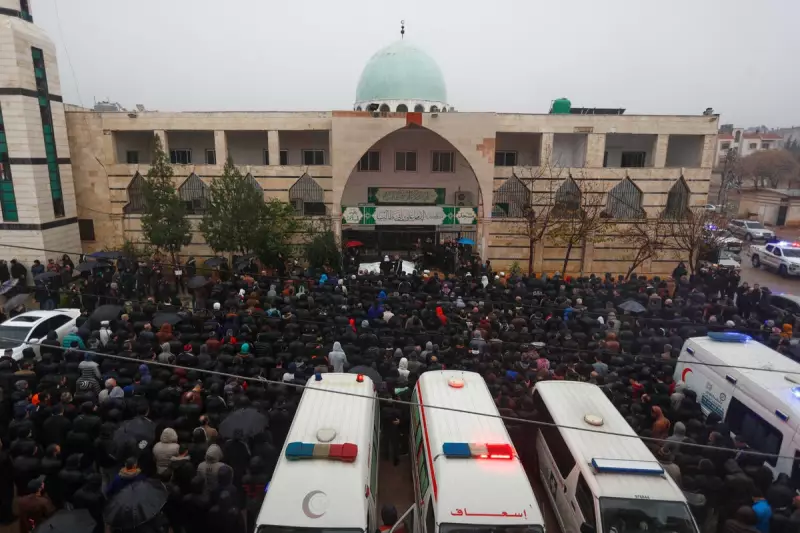
Violent sectarian clashes have erupted across Syria's coastal region, marking a dangerous escalation in tensions just two days after a deadly bombing targeted an Alawite mosque. The attack, which killed eight worshippers and wounded eighteen others during Friday prayers, has laid bare the fragile security situation in the post-Assad state.
Coastal Cities Become Flashpoints for Violence
On Sunday, thousands of protesters from the Alawite religious minority took to the streets in the cities of Latakia and Tartous. The demonstrations, called for by exiled Alawite sheikh Ghazal Ghazal, who leads the Supreme Alawite Islamic Council, were met by pro-government counter-protesters. The situation quickly deteriorated into violence.
An Associated Press photographer on the ground in Latakia witnessed counter-protesters hurling rocks at the Alawite demonstrators. In a separate incident, a group of protesters assaulted a counter-demonstrator who had crossed onto their side. Security forces attempted to separate the two factions, firing shots into the air to disperse the crowds. While numerous injuries were reported among the demonstrators, an exact count was not immediately available.

Attack Claims and a History of Sectarian Tension
The spark for the unrest was the bombing at the Alawite mosque in Homs on Friday. Officials stated that preliminary investigations suggest explosive devices were planted inside the building. A little-known group calling itself Saraya Ansar al-Sunna claimed responsibility for the attack via Telegram, stating it aimed to target Alawites, whom hard-line Islamists consider apostates. No arrests have yet been announced.
This violence is the latest in a series of sectarian clashes that have shaken Syria since the fall of former President Bashar al-Assad in December 2024. Assad, an Alawite, fled to Russia after a lightning rebel offensive ended nearly 14 years of civil war. His departure upended a decades-long system where Alawites were heavily overrepresented in government and security roles.
Since then, the Alawite community has complained of discrimination and has been sporadically targeted. A major ambush by Assad supporters in March triggered days of violence that left hundreds dead, most of them Alawites.
Security Situation Deteriorates Amid Unrest
The weekend's protests were further marred by direct attacks on security infrastructure. Syria's state television reported that two security force members were wounded in Tartous after a hand grenade was thrown at a police station. In Latakia, vehicles belonging to security forces were set ablaze by protesters.
While the government has condemned Friday's mosque bombing and vowed to hold perpetrators accountable, the rapid descent into street fighting underscores the profound challenges facing authorities. The events highlight how deeply sectarian divisions remain embedded in Syrian society, threatening the country's fragile stability as it navigates a complex and volatile post-war landscape.