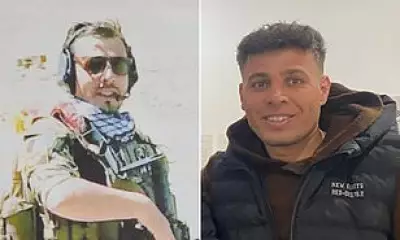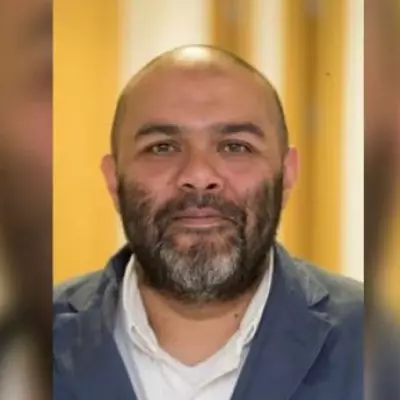
Exclusive sources have revealed to The Daily Mail that the suspects behind the horrific Bondi Beach attack held a clandestine meeting with Muslim religious leaders during a mysterious 28-day trip to the Philippines, just one month prior to the atrocity.
The Mysterious Month in Mindanao
In the wake of the Hanukkah attack, security experts asserted that Sajid Akram, 50, and his son Naveed, 24, travelled to the south-east Asian nation to receive military-style training from Islamist extremists. Their presence on the island of Mindanao – the most notorious region in Southeast Asia for Islamic extremism – has fuelled intense speculation they were there to connect with others sympathetic to the cause.
This is the area where Islamic State seized control of the city of Marawi in 2017, dragging thousands into a brutal street-by-street war. That conflict saw buildings burned to twisted steel frames, foreign jihadis infiltrate through jungle routes to join the slaughter, and over 1,200 people killed.

While the Philippine government, which has spent years trying to dismantle IS militant presence, has vehemently denied the training claims—even suggesting it was a father-son 'bonding' holiday—investigators are painstakingly piecing together the pair's detailed movements.
The Daily Mail has now established the men met with a number of Islamic leaders during their stay. Crucially, the pair repeatedly extended their trip from an initial single week to a full 28 days. Experts believe this significantly increases the probability they were there for extremist meetings or potential training.
A Low-Profile Stay in a 'Terror Academy' City
The father and son flew from Sydney into Manila on November 1 before catching an internal flight to Mindanao. They based themselves in Davao, the island's largest city. According to experts, Davao has long been such a magnet for foreign radicals it has been described as 'a terror academy' where atrocities are believed to have been plotted in the past.
They checked into the one-star GV Hotel, staying in room 315—a bare room with two clinical-looking single beds costing just £11 a night in a red-light district. Staff described the pair as keeping an extremely low profile, not engaging with anyone and spending most of their time in their small room. They had no visitors throughout their stay.
A routine emerged: morning jogs together, buying takeout from nearby fast-food joints to eat in their room. Naveed was occasionally seen playing video games at a local computer shop. His father, according to local police director Leon Victor Rosete, visited one of the city's several firearms stores, showing "interest in firearms."
Authorities discovered the longest they were away from the hotel was on a single eight-hour excursion. The Mail has learned that on this occasion, they are believed to have travelled to the nearby coastal city of Panabo, about 20 miles north of Davao.
A source close to the investigation stated: 'It is now thought that the father and son went out of Davao City to the nearest border in Panabo to meet some Muslim religious leaders. This raises more questions on what they were doing in Mindanao.'
Waiting for a Message That Never Came?
The behaviour aligns with an established pattern where foreign extremists, often from Indonesia, travel to the Philippines for meetings with IS-linked fighters or supporters. The revelation comes as Australian Federal Police refuse to comment on an active investigation into two other Sydney men who were in the Philippines simultaneously. Sources in Davao confirm the Akrams were joined by two mysterious companions at times.
Sidney Jones of the Institute for Policy Analysis of Conflict suggested the repeated extensions to their stay indicate they may have been waiting for an arranged contact. 'My best guess was that they were told by a contact to go to that hotel and wait for a message, but that message never came,' she said.
An ongoing military operation against Islamic extremists in the Philippines was active throughout November and early December. A 'stepped-up' operation against the IS-sympathising Dawlah Islamiyah-Hassan group saw its leader killed on December 7—exactly one week before the Bondi attack. This crackdown could explain why any planned meeting was delayed.

Following the attack, in which Sajid Akram was killed and Naveed was later charged with 59 offences including 15 counts of murder, ISIS claimed responsibility, praising the attackers as 'lions' and 'heroes.'
Divergent Views on the Philippine Terror Threat
The Philippine government continues to reject claims the men sought training. Military spokesperson Colonel Francel Magaretha Padilla said they are verifying all activities and stated there is 'no indication' of terrorist activities in the area at that time. President Ferdinand Marcos Jr. strongly rejected portrayals of the country as a 'training hotspot for terrorism.'
However, security analysts and some local residents tell a different story. Dr Rommel Banaloi, director of the Philippine Institute for Peace, Violence and Terrorism Research, warned: 'There are still many active training camps in Mindanao. Those did not disappear.' He expressed concern the Bondi attack could inspire local militants.
Young residents from Marawi, like 19-year-old Jalal Abdullatif, claim ISIS remnants are still embedded in the community, recruiting impressionable youth. 'We see foreign Muslims visiting the town and we think they might be ISIS,' he said.
Meanwhile, the investigation continues. All CCTV footage around the GV Hotel has been confiscated, credit card records are being traced, and posters of the suspects have been distributed to 70 mosques in the Davao area. The trip has thrust the Philippines back into the global spotlight as a nexus for terrorist activity, raising urgent questions for international security agencies.