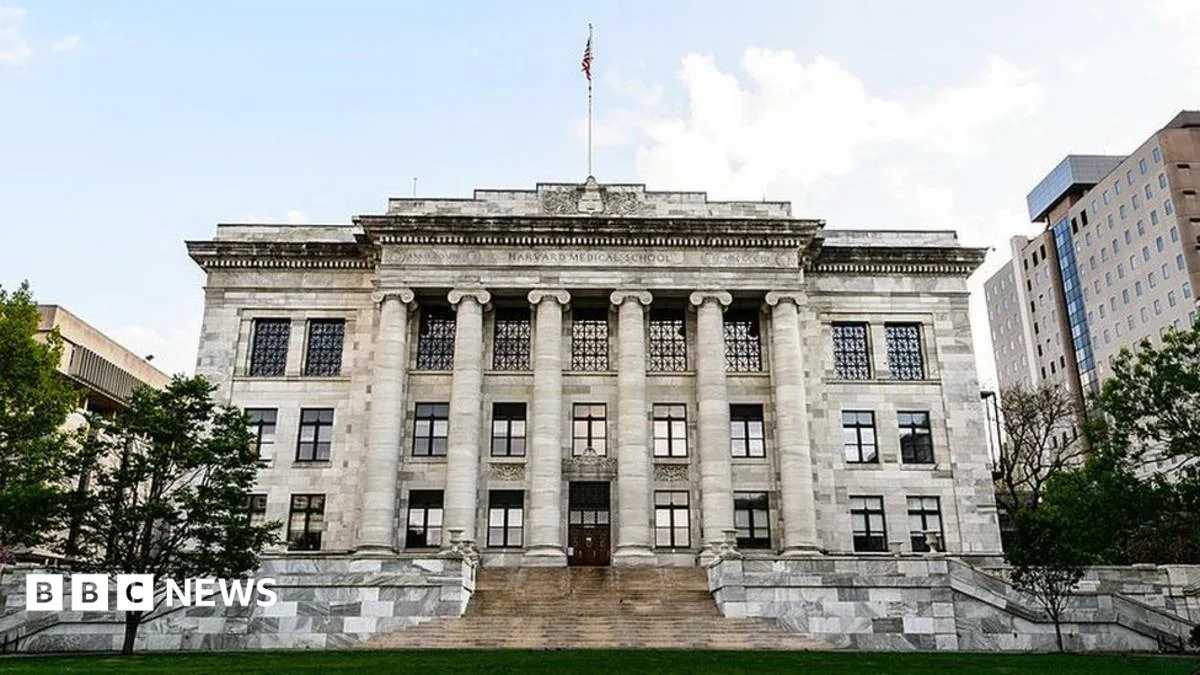
The former manager of Harvard Medical School's morgue has been charged with buying and selling stolen human remains. Cedric Lodge allegedly took 'heads, brains, skin and bones' from cadavers donated to the university and sold them online.
According to the indictment, Mr Lodge and his wife, Denise, sold body parts to buyers in Pennsylvania and Massachusetts. He used his position as manager of the 'Anatomical Gifts Program' to dismember cadavers donated for medical research. Instead of returning the remains to families or burying them in the university's medical cemetery, the Lodges harvested, sold and shipped them.
Katrina Maclean of Salem, Massachusetts, and Joshua Taylor of West Lawn, Pennsylvania, are accused of buying the body parts. In October 2020, Ms Maclean, owner of a shop called Kat's Creepy Creations, allegedly purchased dissected faces for $600 (£473) intending to have them tanned into leather. Mr Taylor allegedly made 39 payments totalling more than $37,000 (£29,226) for stolen parts, including a PayPal memo referencing 'head number 7'.
United States Attorney Gerard M. Karam said: 'The theft and trafficking of human remains strikes at the very essence of what makes us human.' All four defendants have been indicted on conspiracy and interstate transport of stolen goods charges, each facing up to 15 years in prison if convicted.
Harvard Medical School Dean George Q. Daley expressed his shock, confirming that Cedric Lodge's employment was terminated on 6 May. He said: 'We are so very sorry for the pain this news will cause for our anatomical donors' families and loved ones.'