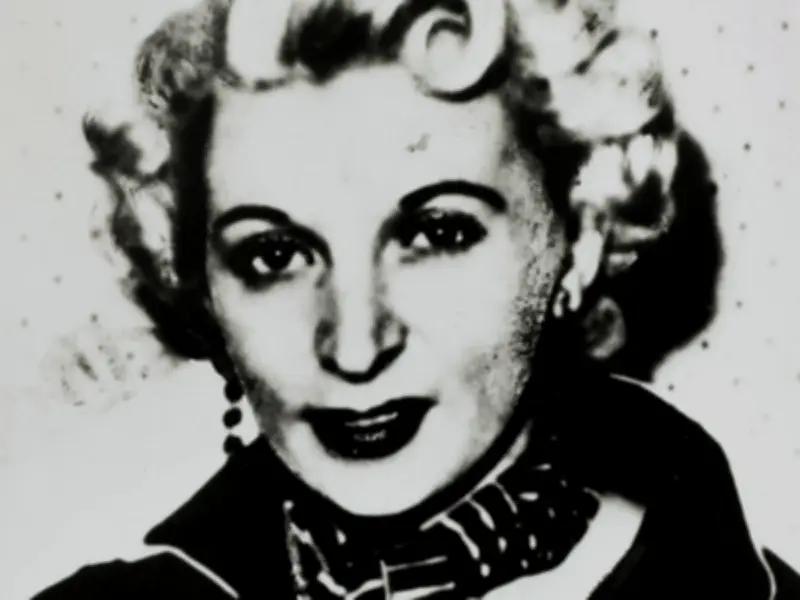
Former Hollyoaks actor Stephen Beard was having dinner with friends when he learned that his grandmother, Ruth Ellis—the last woman hanged in Britain—had been posthumously pardoned. The 38-year-old father of four tells The Mirror it was an emotional moment and the culmination of a decades-long campaign for justice.
“It was an amazing thing to hear. I lifted up my eyes to the sky and remembered Ruth and my mum. It has been such a long journey, but now at last it’s over. We can lay the burden down. The family has been carrying this weight for so long. Ruth’s death has had a multi-generational impact. But that idea that we had ‘bad blood’ in us, because of what happened, is over. It’s been put to bed,” he said.
Pardon Granted by King Charles
The news of a posthumous conditional pardon for Ruth, who shot her abusive lover David Blakely dead in 1955, was granted by King Charles and announced by Deputy Prime Minister David Lammy in Parliament. Lammy told MPs that the death penalty originally handed down had been replaced with a sentence of life imprisonment. The move acknowledges that if her case had been heard in today’s courts, a possible defence of loss of control or diminished responsibility could have been used.
Welsh-born nightclub hostess Ruth was just 28 when she was hanged on 13 July 1955, after being convicted of murdering her lover, David Blakely, outside The Magdala pub in Hampstead, north-west London. Her family has long argued for the pardon, saying she was a victim of emotional and physical abuse. Blakely, a former public schoolboy and hard-drinking racing driver, was violent towards her—at one point punching her so hard during an argument that it led to a miscarriage. He was also seeing other women.
The Crime and Trial
As Blakely stepped out of The Magdala pub, Ruth took a revolver from her handbag and shot him five times. She was arrested immediately, and an off-duty police officer heard her say: “I am guilty, I’m a little confused.” She later told the jury at her trial: “He only hit me with his fist or hands.”
Stephen, who works for international clients in the data centres field and now lives in Dubai, says he and his six siblings always believed Ruth’s trial was deeply flawed, with critical evidence about her abuse and state of mind not put forward. While the case has maintained its grip on the public’s imagination, it has also cast a long shadow down the generations in Ruth’s family. Her former husband died by suicide in 1958. Her son, Andy, took his own life in 1982; while Georgina—adopted after her mother’s death and who later had a high-profile relationship with George Best—struggled with alcohol abuse and died from cancer in 2001, aged 50.
Family Legacy and Relief
Stephen says he has borne the weight of both his grandmother’s crime and the injustice she suffered. The pardon means he has now finished what his mother started. “My mum had her problems—she had gone through childhood trauma. But years ago she tried to look into a pardon for Ruth; she was obsessed with it. It never quite happened, so this news brings a huge sense of achievement. It also shows that history can be re-written and will, hopefully, give confidence to others trying to right an injustice and fighting to be heard,” he said.
After Ruth’s death, her executioner, Albert Pierrepoint, recalled how she “tried to smile” at the end but never spoke, noting: “She was a brave woman.” Stephen says her resilience in her last moments has inspired him. “Being her grandson is a double-edged sword. It has been a blight on the family history but personally, it’s made me not scared of anything. She was brave and stoic and it made me resolute. And I always knew what we were doing was worth fighting for.”
Now he says he will go home and proudly hang a picture of his grandmother on his wall. “Before she was a murderer, called a cold-blooded killer. Now she’s just my grandmother.”