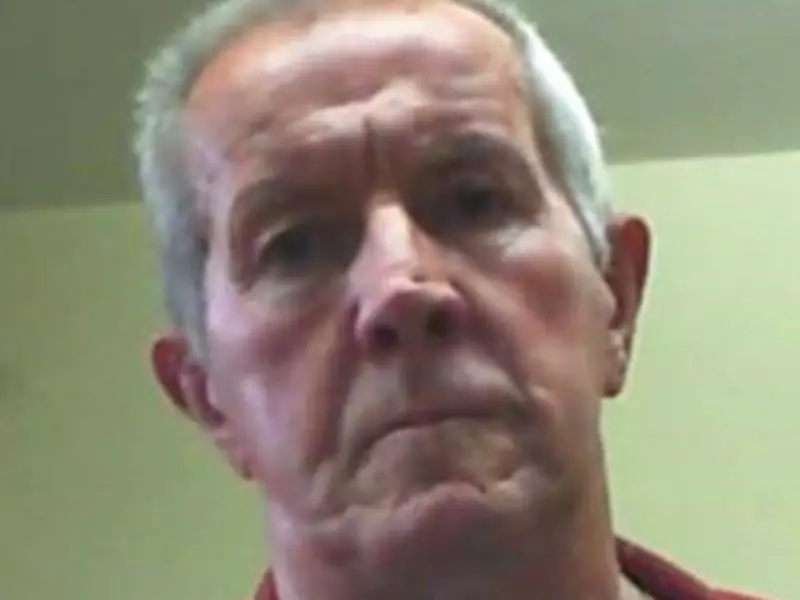
The mummified body of Richard Scatchard, a 71-year-old sex offender, was discovered hidden inside a caravan six months after he vanished following the death of his partner, Kelly Faiers. An inquest into Scatchard's death concluded with an open verdict, as the cause and timing of his death remain undetermined.
Scatchard became the subject of a police manhunt after Faiers, 61, was found dead at his home in Minehead, Somerset, in October 2023. An earlier inquest into Faiers' death heard that she had been coerced by Scatchard into taking a fatal overdose of sleeping pills and alcohol. The coroner ruled her death as unlawful killing.
Scatchard was already on a life licence following convictions for drugging and sexually assaulting women between 1986 and 2000. He immediately went on the run after Faiers' death. The last confirmed sighting of him was in the Watchet area of Somerset, about ten miles from Minehead, just one day after Faiers' body was discovered.
Police Search and Discovery
Avon and Somerset Police launched a search operation but found no evidence suggesting Scatchard was alive after October 2023. The manhunt ended six months later when his body was found at a campsite in Watchet, after a caravan was removed from winter storage. The corpse was so badly decomposed that identification was made using fingerprints.
Despite being described as fit and well for his age with no known medical conditions, Scatchard had died inside the mobile home. Detective Constable Mark Evison noted that Scatchard was wearing a wristwatch when his body was recovered, still set to British Summer Time, hinting at the time of his death. He said: "This was immediately thought of as being significant by inferring that the time on the device had not been altered since at least October 29, 2023."
Evison explained that while the police had been unable to locate Scatchard, the UK had been following Greenwich Mean Time, but due to a change to British Summer Time on March 31, 2024, the watch would have corrected. He added: "Due to the mummified nature of his body, it's highly likely that he died prior to March 31, 2024, ultimately inferring that the watch was last set prior to October 29, 2023, and so therefore would have passed prior to this date because he never corrected the watch to GMT."
Inquest Findings
Detective Sergeant Craig Thomson mentioned that Scatchard had no known connections to the campsite and it was unclear how he had travelled there. He said: "We do not know for certain what day he went into the caravan." He further noted that there was no evidence of any third-party involvement in his death or any intention to self-harm.
Pathologist Dr Deborah Cook conducted a post-mortem examination and described his body as "heavily decomposed". She said there were no visible signs of injury, penetrating injuries, or evidence of self-harm. Dr Cook stated: "Post-mortem examination confirmed near-total mummification of the body. The internal organs were severely affected by decomposition, but there was no obvious natural disease to account for his death."
She revealed evidence of fractures to five of his ribs, sustained close to the time of death. She said: "In an individual without pre-existing compromise to respiratory function, the probable effect of five rib fractures would be a degree of chest pain, a potential difficulty in taking deep breaths. But five rib fractures would not be anticipated to cause death. With the degree of decomposition present, it's not possible to exclude a concussive head injury having caused or contributed to death."
Toxicology samples indicated the presence of alcohol and a compound found in sleeping tablets, cough medicine, and hay fever medication. However, due to decomposition, accurate samples could not be obtained. Dr Cook added: "Given the advanced state of decomposition with likely interval between death and post-mortem of over five months, it's not possible to confirm or refute a hypothesis that death was due to sleeping tablet toxicity or to a combination of sleeping tablets and alcohol." She recorded the cause of death as "unascertained".
Scatchard's Background and Licence Breaches
The court learned Scatchard had kept his relationship with Faiers hidden from his probation officers, as he was required to disclose "any emerging intimate relationships". He had received two warnings for breaching his licence conditions and had been informed he risked being returned to prison.
Probation officer Curtis Martin said Scatchard had been evaluated as a medium risk. He said: "He was assessed as being too argumentative and controlling with the professionals, and there were concerns that without these risk monitoring and controls being in place, he would be an increased risk towards the public."
Samantha Marsh, Somerset's senior coroner, delivered an open verdict on Scatchard's death, stating there was no definitive evidence to ascertain how or when he died. She said: "I accept he would have known undoubtedly he was going back to prison, and he would likely have been there for some time, which is a fact I think he would have also have been aware of. In terms of findings, I find that there was no opportunity for the police to locate Richard alive earlier. He was someone who did not want to be found. I've got no evidence that he's alive after October 16. On the evidence taken at its highest, I cannot determine how he came by his death. The date of death will be recorded in these circumstances as the date of discovery."