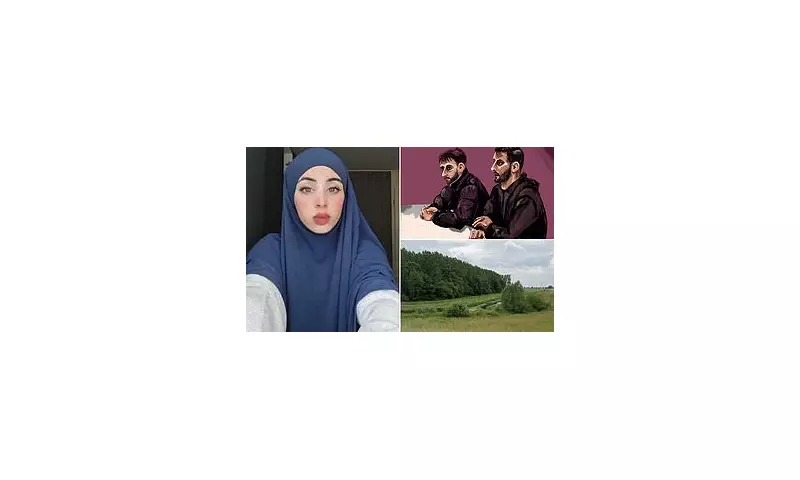
A court in the Netherlands has heard harrowing details of an alleged honour killing, where a teenage girl was drowned in a swamp by her father, who then fled to Syria, leaving his two sons to face trial for her murder.
A Fatal Clash of Cultures
The body of 18-year-old Ryan Al Najjar was discovered in a swamp near Lelystad, approximately 25 miles north-east of Amsterdam, on 28 May 2024, six days after she vanished from the family home in Joure. She was found gagged, with her hands tied behind her back and her ankles bound with tape.
Prosecutors allege the killing was triggered by Ryan's adoption of a Western lifestyle, which clashed with her family's strict traditional views. A pivotal moment appears to have been a live TikTok video showing Ryan without a headscarf and wearing makeup, which prosecutors say deeply embarrassed her family.

Her father, Khaled Al Najjar, is accused of masterminding the murder and has fled to Syria, where he is believed to have remarried. He will be tried in absentia. Her brothers, Mohamed, 23, and Muhanad Al Najjar, 25, are currently on trial, with prosecutors demanding 20-year prison sentences for each.
A Household Ruled by Fear
During the trial, which began on 27 November, defence lawyers painted a picture of a tyrannical father. Johan Mühren, representing Muhanad, described Khaled as "a terror to his family" – a grumpy, authoritarian man who tolerated no dissent and issued death threats to anyone who disobeyed him.
Mühren argued his client would "never have ended up in the dock without the role played by his father." He stated that while Khaled gave gruesome instructions during the fateful trip – ordering his sons to find a deep lake, 'ditch Ryan,' and weigh her body down – the brothers ignored every command.
Forensic evidence places all three men at the crime scene. Crucially, investigators found Khaled's DNA under Ryan's fingernails, indicating a struggle, and on the tape used to bind her. No DNA from the brothers was found on the bindings.
Conflicting Narratives and a Fugitive Father
The prosecution's case hinges on the brothers' alleged complicity. They argue the siblings collected Ryan and drove her to an isolated location, knowing she would be killed. They cite intercepted chat messages as evidence of involvement.
However, the defence insists the brothers were unaware of their father's murderous intent. Mühren claimed Muhanad picked his sister up "to take her home" and told her to apologise to their father, believing "everything would be okay."
Khaled has reportedly sent emails to Dutch media confessing to the murder while claiming his sons were innocent, a claim prosecutors reject. The Dutch Ministry of Justice and Security has stated that securing his return from Syria is currently impossible due to a lack of operational criminal justice cooperation.
The court is set to deliver its verdict on 5 January. The brothers remain in custody, supported by their sisters who also hold their father responsible for Ryan's death. The case has exposed a tragic collision of control, tradition, and a young woman's desire for freedom.