
César Chavez Legacy Faces Widespread Renaming Efforts After Abuse Allegations
In the wake of explosive sexual abuse allegations against the revered labor leader César Chavez, officials across the United States are taking swift action to remove his name from public honors. The once-celebrated legacy now carries a significant stain, prompting a moral reckoning that spans from California to New York.
Immediate Actions and Monument Removal
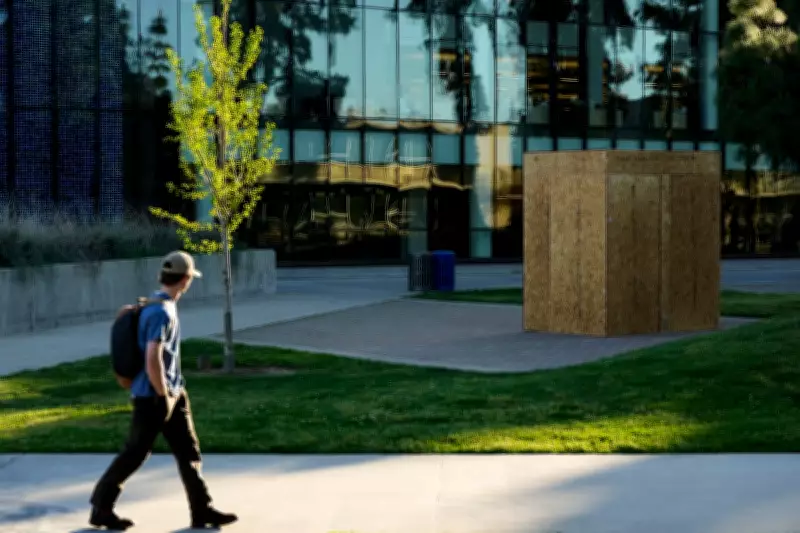
Within hours of the allegations becoming public, California State University, Fresno, took decisive steps. First, a black cloth was draped over a campus statue of Chavez, followed by a plywood box to hide it from view. University President Saúl Jiménez-Sandoval announced plans to permanently remove the statue, stating that the allegations "call for our full attention and moral reckoning by removing his statute from our campus." The timeline for this removal remains unclear, but the intent is firm.
This statue is just one of over 130 locations or objects identified by The Associated Press in at least 19 states that honor Chavez's name and his labor movement legacy. These include elementary schools, libraries, community centers, public parks, and city streets. Suddenly, the name has shifted from an honor to a burden, with institutions and local governments initiating processes to erase it.
Broader Implications and National Impact
The renaming efforts extend beyond physical monuments. Officials are also considering steps to rename César Chavez Day, a federally proclaimed holiday observed on his March 31 birthday. In Phoenix, city council members will meet next week to vote on whether to rename the holiday as well as any buildings and streets bearing Chavez's name. This reflects a growing consensus that the allegations necessitate a comprehensive review of his public recognition.
The New York Times first reported credible evidence that Chavez groomed and sexually abused young girls who worked in the movement. One victim came forward partly due to a proposal to name a street near her home after him. Notably, Dolores Huerta, a labor legend who co-founded the National Farm Workers Association with Chavez in 1962, revealed she was a victim of his abuse in her 30s. Some are now advocating for Chavez's namesake places to be renamed in honor of Huerta instead.
Challenges and Historical Context
Altering a national monument, such as the César E. Chavez National Monument in Keene, California, requires an act of Congress or action by the president. This monument, established in 2012 by then-President Barack Obama on a 187-acre site where Chavez lived and worked, includes the office where some of the reported abuse occurred. Its future remains uncertain as debates over his legacy intensify.
Most of the locations named after Chavez are in California, but they span across the nation, from New York and Maryland to Oklahoma, the Great Lakes Region, and Washington state. More than half are schools, with many in California, though in Pueblo, Colorado, a school shares the name with Huerta. Additionally, a U.S. Navy cargo ship commemorating Chavez's World War II service is among the objects bearing his name, highlighting the depth of his historical integration.
As this story unfolds, the renaming initiatives underscore a broader societal shift in how public figures are memorialized, especially in light of serious misconduct allegations. The process is complex, involving legal, emotional, and historical considerations, but the momentum for change is clear. Officials are grappling with how to balance historical recognition with contemporary moral standards, ensuring that public spaces reflect values of integrity and respect.




