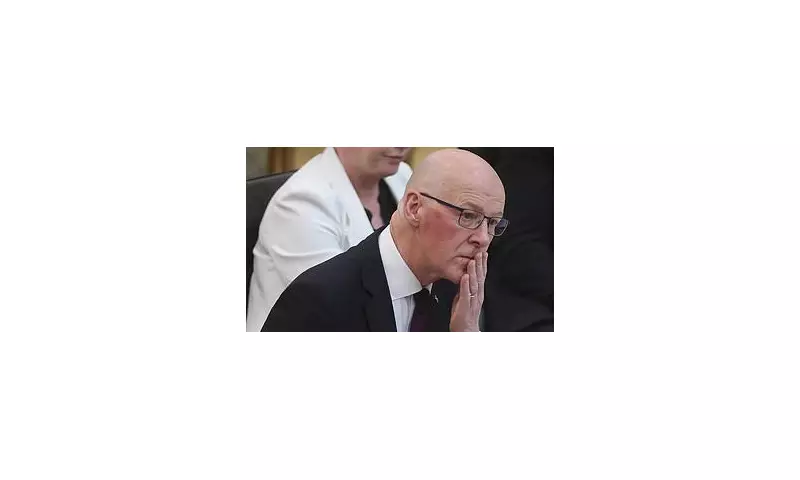
First Minister John Swinney is facing intense criticism over what opponents call a 'shameful' and 'underhand' legal attempt to circumvent a landmark Supreme Court decision protecting women-only spaces. The SNP Government has asked a judge to rule that last year's unanimous verdict should not prevent biological males from being housed in female prisons.
Legal Challenge to Landmark Ruling
The Supreme Court ruling, delivered in September 2023, was a decisive victory for campaign group For Women Scotland (FWS). Five justices unanimously ruled that a person's rights under the UK Equality Act are determined by their biological sex, not their self-identified gender. This effectively safeguarded women-only spaces like toilets, changing rooms, and refuges from being accessed by biological males who identify as women.
Despite publicly claiming to accept this ruling, SNP ministers have stubbornly refused to amend a contentious 2024 prison policy. This policy allows biological men who identify as women to serve sentences in female jails. In response, FWS launched a judicial review in September to overturn it, which the Government is now defending.

'Secret' Move Sparks Outrage and Confusion
The controversy deepened when it emerged that on 27 November, the Scottish Government informed Westminster of its request for a 'declaration of incompatibility'. This legal manoeuvre argues that applying the Supreme Court's logic to prisons would breach the human rights of transgender inmates. Ministers claim housing a trans woman according to her biological sex in a male prison creates an 'intermediate zone of neither one sex nor the other'.
This secretive action has caused fury within and outside the SNP. Michelle Thomson, the MSP for Falkirk East, publicly challenged Mr Swinney at First Minister's Questions, stating she was 'very distressed' by the development. She warned it 'flies in the face of the Supreme Court ruling and the safety, privacy, dignity of these vulnerable women'.
Scottish Tory equalities spokeswoman Tess White lambasted the move as a 'shameful example of nationalist ministers scheming behind closed doors to overturn the law'. She accused the Government of risking female inmate safety to appease 'gender extremists'. Former SNP MP Joanna Cherry KC called the action 'absolutely disgraceful'.
Complex Legal Arguments and Wider Implications
When questioned, John Swinney insisted the Government was only trying 'to ensure that we have the correct guidance arrangements in place'. He cited 'complex legal arguments' related to the European Convention on Human Rights, stating he must 'make sure the Government is acting in a lawful fashion'.
However, critics see a dangerous precedent. The FWS judicial review petition labelled the request for an incompatibility declarator an act of 'final desperation'. They argue it wrongly prioritises the 'claims of trans-identifying men' over 'women's safety and dignity in prison'.
The implications could extend far beyond Holyrood. If granted, the declaration could force the UK Government to overhaul the Equality Act itself—a prospect a divided Labour party has sought to avoid. The case continues to highlight the profound tensions between rights, safety, and identity in modern policy, with the safety of women in prison at its very centre.