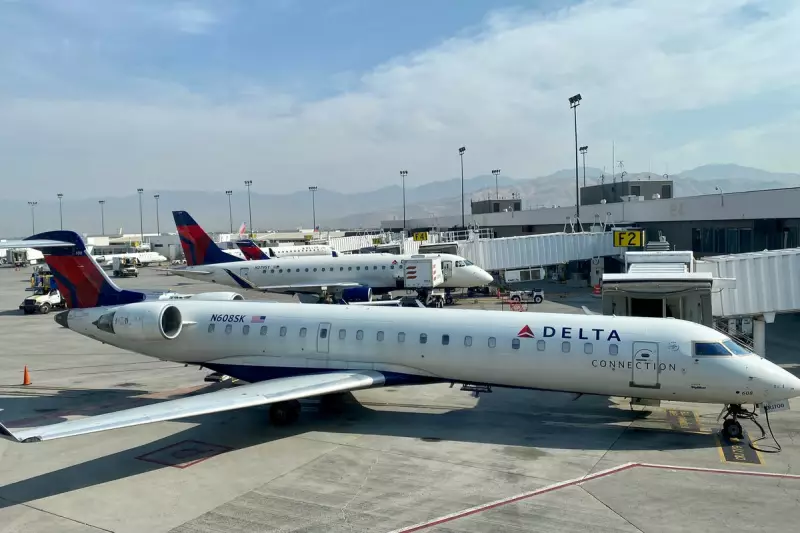
The parents of a Utah man who died after climbing into the engine of a commercial aeroplane have filed a lawsuit against Salt Lake City, alleging catastrophic security and response failures during what they describe as their son's 'obvious mental health episode'. Kyler Efinger, 30, was found unconscious inside the engine of a Delta Air Lines plane at Salt Lake City International Airport on 1 January 2024 and later died from his injuries.
A Tragic Sequence of Failures
According to the lawsuit filed last Tuesday, Efinger, who had been diagnosed with bipolar disorder a decade earlier, was waiting for a flight to Denver to visit his ill grandfather when he suffered a severe manic episode. His behaviour in the terminal was noted as 'objectively unusual for an adult', including repeatedly walking and running on moving walkways against the flow of pedestrian traffic.
Despite this visible distress, the legal claim states he was able to pass through two separate emergency exit doors onto the airport tarmac. He then walked nearly a mile across the airfield in freezing conditions to an area where aircraft were being de-iced. The lawsuit contends that the airport's camera system was not being monitored, and that the security doors he used either malfunctioned or lacked proper safety systems, failing to require identification or a delayed lock release.

Ineffective Emergency Response
The legal filing paints a picture of a disorganised and ineffective search by authorities. It claims Salt Lake City police officers were sent to incorrect locations multiple times due to poor communication, wasting crucial minutes. Furthermore, pilots operating in the area were not promptly warned that a person was walking on the active tarmac.
'In a situation where Kyler would still be alive if officers had located him 30 seconds sooner, about the first seven minutes of the city’s search for him were wholly ineffective,' the lawsuit alleges. It states that after an officer finally pulled Efinger from the engine, he was handcuffed before emergency medical responders attempted to revive him. The official cause of death was blunt force trauma to the head after his dreadlocked hair was pulled into the moving engine blades.
Seeking Change and Accountability
Efinger's parents, Judd and Lisa Efinger, say they have initiated legal proceedings not only to address their own profound loss but to force changes that could prevent similar future tragedies. 'The notion that an airport was so dangerously designed and operated as to allow this sequence of events generated international attention and shock,' their lawsuit states.
The lawsuit, which names Salt Lake City as the defendant as the operator of the airport, seeks damages in excess of $300,000, though no specific sum is requested. A spokesperson for the Salt Lake City Mayor’s Office has declined to comment on the ongoing litigation. The case highlights critical questions about airport security protocols, mental health awareness, and emergency response coordination at major transport hubs.