UK Police Forces Embark on Major AI Technology Overhaul
Britain's police forces are undergoing a significant technological transformation as artificial intelligence tools are deployed nationwide to enhance crime-fighting capabilities. Home Secretary Shabana Mahmood has unveiled comprehensive police reforms that will see over £140 million invested in cutting-edge technology designed to modernise law enforcement operations across England and Wales.
Comprehensive Technology Package Announced
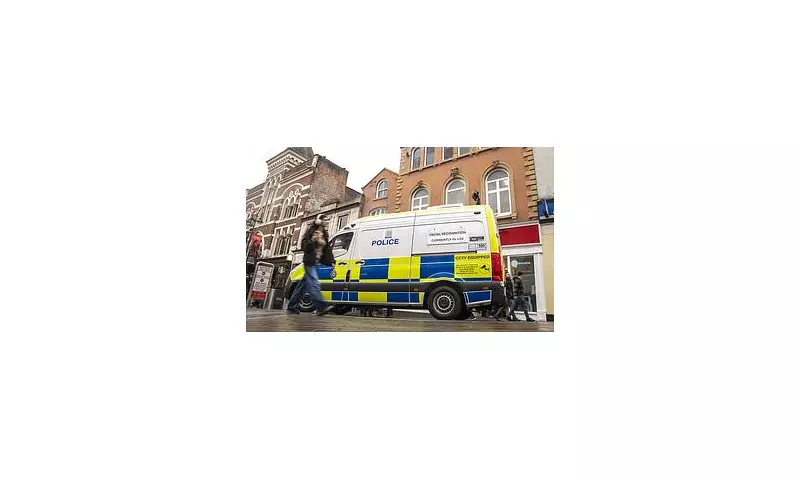
The substantial funding package will provide police forces with access to an extensive range of advanced tools. These include live facial recognition vans, sophisticated CCTV analysis systems, and comprehensive digital forensics capabilities. The technological upgrade represents one of the most significant investments in police technology in recent years, aiming to bridge the gap between criminal sophistication and traditional policing methods.
Ms Mahmood emphasised the urgent need for modernisation, stating: 'Criminals are operating in increasingly sophisticated ways. However, some police forces are still fighting crime with analogue methods.' She believes the new technologies will help 'get more officers on the streets and put rapists and murderers behind bars' by automating routine tasks and improving investigative efficiency.

AI Integration Across Police Operations
How the public interacts with police services is set to change dramatically under the new reforms. Emergency response systems will incorporate AI-assisted operator services in 999 control rooms to filter non-policing calls, while forces will deploy AI chatbots to handle non-urgent queries from crime victims. These chatbots, similar to the recently trialled 'Bobbi' virtual assistant used by Thames Valley Police and Hampshire & Isle of Wight Constabulary, will answer frequently asked questions using closed-source information provided exclusively by police authorities.
The technological rollout includes several key components:
- Live facial recognition vans that will triple in number, with 50 vehicles available to every police force
- Deepfake detection tools to combat AI-generated content and criminal misuse
- Instant translation and transcription services for audio evidence processing
- Rapid CCTV and media analysis systems for faster evidence review
- Smart audiovisual redaction tools that automatically blur faces and sensitive details
- Digital forensics capabilities to accelerate evidence gathering and analysis
- Robotic process automation for data entry and administrative tasks
Privacy Concerns and Legal Challenges
Despite government assurances about proper safeguards, the expansion of surveillance technology has drawn significant criticism from privacy campaigners. The privacy organisation Big Brother Watch has described the reforms as 'better suited for an authoritarian state than a liberal democracy.' Matthew Feeney, Advocacy Manager at Big Brother Watch, expressed particular concern about facial recognition expansion: 'An expansion of facial recognition on this scale would be unprecedented in liberal democracies, and would represent the latest in a regrettable trend.'
Critics point out that the Government has yet to complete its facial recognition consultation, which would establish a comprehensive legal framework for the technology's deployment. This week, the Metropolitan Police faces a High Court judicial review regarding the lawful deployment of facial recognition technology across London, following a case brought by anti-knife crime worker Shaun Thompson after he was mistakenly stopped and questioned.

Operational Efficiency Gains
The Government estimates that the new technologies could deliver substantial efficiency improvements. Smart audiovisual redaction tools alone could reduce time spent redacting case files by 60 percent, equivalent to freeing up approximately 11,000 officer days per month across all forces. Digital forensics tools have demonstrated remarkable potential, with one system used by Avon and Somerset Police reportedly reviewing 27 cases in a single day - a backlog that would have traditionally taken 81 years and 118 officers to complete.
Ryan Wain, senior director of Politics and Policy at the Tony Blair Institute, welcomed the technological investment but cautioned against implementation delays: 'It's indefensible that people have been denied proven crime-fighting technology because of fragmented police structures. With proper safeguards, this is a straightforward boost to public safety. The danger now is delay. Incrementalism is the enemy of safety.'
Future Implications and Regulatory Framework
The rollout coincides with broader government efforts to regulate AI technologies, including recent announcements about banning AI 'nudification' tools and making non-consensual sexualised deepfakes a criminal offence. The Government maintains that all new technologies will be 'governed by data protection, equality and human rights laws' and that facial recognition matches must be reviewed and confirmed by officers before any action is taken.
As police forces prepare to implement these technological upgrades, the balance between enhanced crime-fighting capabilities and civil liberties protections remains a central concern for policymakers, law enforcement agencies, and the public alike.