The UK's Cargo Crime Crisis: How Gangs Steal £700m a Year with Impunity
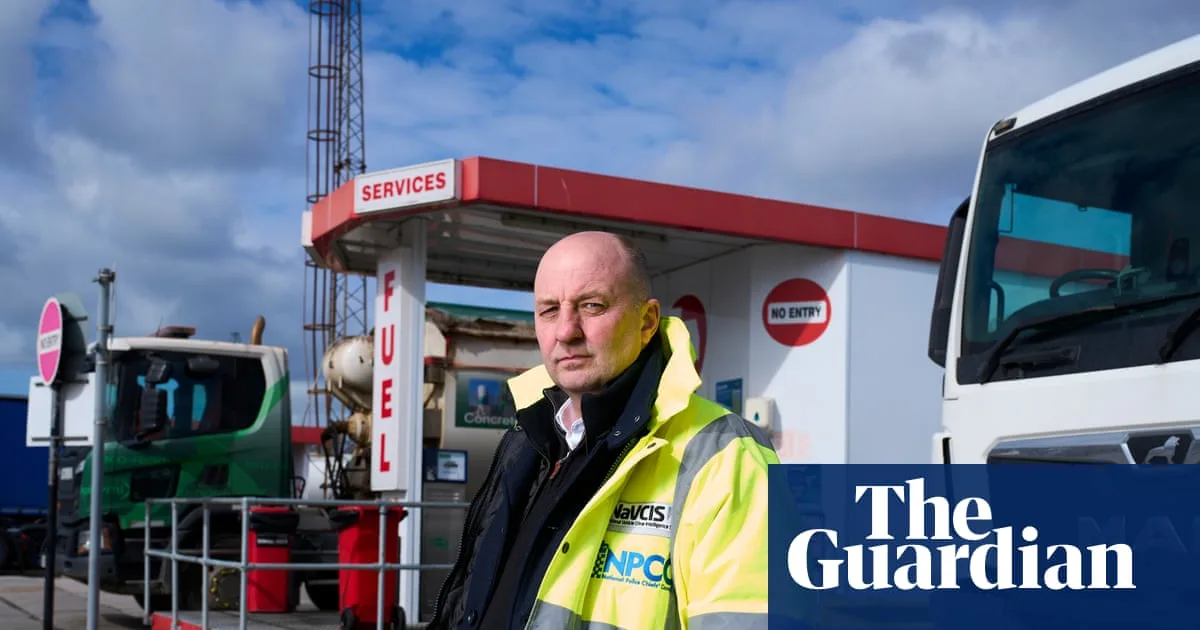
Every time a lorry gets robbed, raided, or hijacked, it's Mike Dawber who investigates. As the UK's leading detective in cargo crime, Dawber works for the National Vehicle Crime Intelligence Service (Navcis), a specialised unit based in Coventry that acts as an FBI for wheel-based theft. His role involves connecting 43 police forces across England and Wales, sharing intelligence, and assisting in operations. Cargo theft, which costs the UK economy an estimated £700 million annually, is a growing problem, with criminal gangs operating with near impunity. The goods targeted range from high-value items like olive oil and baby formula to everyday products like toasters and microwaves, reflecting a shift from traditional crimes like bank robberies to less risky but lucrative thefts.
The Scale of the Problem
In August 2021, Dawber received a call from officers in Bradford CID about two warehouses filled with suspicious goods. Upon arrival, he discovered a vast emporium of stolen items, including 17 pallets of golfing equipment worth about £1 million, stolen from Lymm motorway services near Manchester. He also found 18 pallets of Asics trainers stolen from Warwick services three years prior, 14 pallets of lawnmowers taken from the A1 at Colsterworth five years earlier, and various other goods like IT equipment, sportswear, and high-end fashion. One pallet labelled "Eyelash technology" was later valued at over £500,000. This case highlighted how easy cargo crime has become, with gangs amassing stolen goods while waiting for the heat to die down or for buyers to emerge.
Dawber, 49, with a broad Lancashire accent, is a field intelligence officer whose knowledge is so extensive that his boss, Sharon Naughton, describes him with awe. "He has so much knowledge in his head," she says, noting that he's the only person with the answers. Since joining Navcis in 2017, the number of cases reaching him has more than tripled to about 5,000 each year. He investigates everything from stolen plastic drinking cups worth £70,000 to laptops valued at £250,000. The cost of living crisis has made food and beverages particularly attractive targets, with thefts rising by up to 79% in 2024. For example, 950 wheels of premium cheddar were stolen in London, dubbed "the grate cheese heist," and a truck carrying over 400,000 KitKat bars went missing from Italy.
How Cargo Theft Works
Cargo theft operates on the law of supply and demand. When a truck carrying 400 kegs of Guinness was stolen from Northamptonshire in December 2024, it exacerbated a nationwide shortage, making the stolen goods more valuable. Theft often occurs when goods are most vulnerable: loaded onto curtain-sided articulated lorries, which have revolutionised haulage since their invention in 1969. These lorries, protected only by a PVC-coated polyester sheet, are effectively bank vaults on wheels. About a quarter of thefts involve curtain-slashing, with gangs using signature cuts, like a number seven shape for whisky or a letterbox flap for laptops.
Gangs are highly organised, with networks to move goods for serious sums. They often use spotters who enter truck stops at night, slashing curtains to identify valuable cargo. Accomplices then arrive in side-loading vehicles, park alongside the target, cut a matching hole, and transfer goods quietly. If stolen cargo isn't found within hours, it re-enters the supply chain and is often consumed, making recovery nearly impossible. High-value goods like olive oil, worth about £250,000 per truckload, are popular targets due to their high market value.
The Impact on the Economy and Industry
Cargo crime's £700 million annual cost includes lost revenues, VAT, and insurance expenses. For freight companies operating on thin margins, the impact is crippling. Insurance premiums rise with every claim, and excesses can be in the thousands, forcing many haulage firms to absorb costs and compensate customers for lost goods. The industry has long advocated for making freight theft a distinct crime, rather than categorising it as "theft from motor vehicle," which treats it the same as stealing sunglasses from a glovebox. In Parliament, Rachel Taylor MP introduced a bill to address this, with a second reading due next month, aiming for longer sentences and better crime statistics.
Infrastructure challenges exacerbate the problem. The UK has about 11,000 fewer truck parking spaces than needed, forcing drivers to park in laybys, where theft is easier. Michael Yarwood of TT Club and Ross Mendenhall of Extra MSA highlight that service stations, which could provide safer parking under lights and CCTV, face opposition from locals and councils. Planning permission for sites like Beaconsfield took nine years, and Cobham took 19 years. A dream solution involves truck stops with perimeter fencing, full CCTV, and 24-hour guards, but service stations have little incentive to invest, as they fill up by 7pm each night.
Investigations and Challenges
Navcis is not a typical police department; it's funded by industry after the Home Office pulled funding in 2011. About 70 companies pay an annual fee for access to Dawber's expertise, with Amazon recently joining. This precarious setup worries industry figures like Ashton Cull of the Road Haulage Association, who praises Dawber but warns that all his intelligence could be lost if something happened to him. Dawber's workload is immense: he assists in 1,300 investigations yearly, plays a key role in 300 arrests, participates in 50 police operations, and writes a fortnightly bulletin, all while balancing family life with his wife Louise and daughter Hope.
Surprisingly little is known about the gangs behind cargo crime. Arrests usually catch low-level criminals, with only about 10% of cases resulting in convictions. The National Police Chiefs' Council has appointed its first lead for freight crime, Jayne Meir, who is working with Dawber and a new team at Opal, the national unit for organised crime. Meir emphasises that firms are reluctant to report thefts for fear of being seen as unsafe, hindering efforts. For example, one supermarket chain fired 75 drivers suspected of collusion but only reported seven to police.
Regional Hotspots and Future Outlook
Leicester is considered ground zero for UK cargo crime, due to oversubscribed truck parking and its location near Magna Park, Europe's largest distribution hub. The area, known as the golden logistics triangle, is bounded by the M1, M6, and M69 motorways, making it a prime target for gangs. Sergeant Michael Hooper of Leicester's road policing unit deals with cargo crime calls nightly, noting that thieves are organised but not always smart. In one case, a thief crashed a stolen trailer into a low bridge, leading to an arrest for handling stolen goods.
New methods like the "Romanian rollover" involve criminals breaking into trucks while on the move, tossing boxes back at speeds over 50mph. These rare but audacious crimes target high-value goods and may involve gangs flying into the country. Despite increased police attention reducing thefts in service stations, Dawber suspects the problem has shifted to laybys and on-road targets. With more resources and expertise, there's hope for combating this crisis, but for now, cargo theft remains a pervasive issue, recorded simply as theft from a motor vehicle, with Mike Dawber at the forefront of the battle.