Tehran Police Station at Heart of Iranian Repression Destroyed in US-Israel Bombing
What collapsed in Punak on Monday evening was not merely the walls of a police station, but one of the foundational pillars of the Islamic Republic's urban repression machinery, as reported by Amirhossein Miresmaeili. This incident occurred on Sunday, 8 March 2026, at 10:00 GMT, following an explosion that rocked Iran's capital, with Israel stating it targeted Tehran after strikes that reportedly killed Khamenei.
Destruction of Police Station 140 in Baghe Feiz
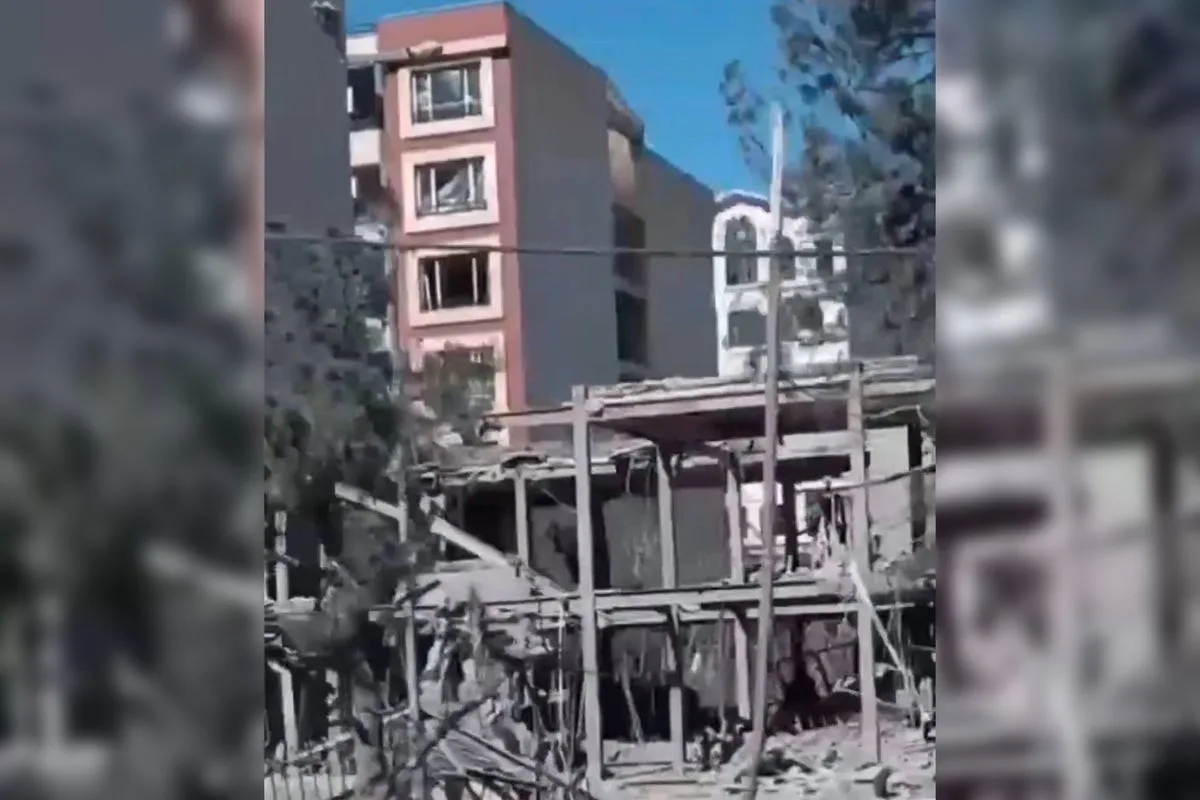
Video footage obtained by Independent Persian this week reveals the main building of Police Station 140 in Baghe Feiz, western Tehran, completely demolished. The visuals show the roof of central sections collapsed, walls of upper floors torn open, and only a few concrete columns of the primary structure remaining upright. The blast was so intense that it obliterated much of the main building and caused significant damage to the surrounding compound.
This attack is part of a wider wave of strikes targeting police facilities across Tehran. Information received by Independent Persian indicates that over the past three days, in addition to Police Station 140, multiple other stations were hit by missiles and entirely destroyed. These include stations 104 Abbasabad, 109 Baharestan, 113 Bazaar-15 Khordad, 121 Pirouzi, 133 Shahr-e Ziba, 138 Jannatabad, 131 Shahr-e Rey, 153 Shahrak-e Vali-Asr, 158 Kianshahr, 139 Marzdaran, and 151 Yaftabad.
A Symbol of Repression and Abuse
For many protesters in Tehran, the Baghe Feiz police station was far more than a standard law-enforcement facility. It had evolved into a notorious centre for violent arrests, often serving as the initial point where individuals encountered the state's harsh security apparatus.
A 32-year-old man, detained during protests in the national uprising earlier this year on 8 January 2026, shared his harrowing experience. After being arrested in western Tehran, he was taken to this police station, where he endured severe beatings that left him unable to walk properly even two months later. He recounted, "They beat me so badly that even after two months I still can't walk properly. They broke my legs. They gave me no medical care. They just kept saying I had to confess." He was denied access to a lawyer or contact with his family, and noted that special police units involved in shooting protesters in the Punak area on 8 and 9 January would return to this station after operations.
Paria, a 27-year-old resident of the Punak neighbourhood, described her first arrest in 2020 at age 21 for "improper hijab." She was held in the station's courtyard, where both male and female officers insulted, pushed, and hit detainees, creating an atmosphere of intimidation. "I felt like there was no law at all," she said, adding that her father was also humiliated when he came to secure her release. She emphasized that families often heard stories of young people being transferred from this station to face security charges or heavy sentences.
Historical Context of Violence
A 45-year-old man recalled being arrested outside the same police station in 2008 for possessing a homemade bottle of alcohol. "We weren't even drunk," he said. "It was just one bottle. They beat us until morning. Then we went to court and each of us was sentenced to three months in prison." He observed that officers from this station treated Punak residents with violence and humiliation over the years, and during the January protests, they fired pellet rounds and live ammunition, blinding and killing dozens at the Punak intersection.
Independent Persian has previously documented cases of torture, deaths in custody, enforced disappearances, and secret executions in Iranian police stations and detention centres. These reports highlight a cycle of repression that begins on the streets, continues in local police stations, and can end in larger facilities with torture, death, and secret body transfers. Many families first search for detained relatives at these stations, often facing threats, humiliation, or silence from authorities.
Broader Implications of the Destruction
Against this backdrop, the targeting of Police Station 140 in Baghe Feiz is viewed by some Tehran and Punak residents as more than just the demolition of a building. For many, it evokes memories of initial beatings, insults, and vulnerability after arrest—a place where street detentions frequently led to fabricated charges, psychological pressure, and sometimes irreversible physical harm.
What collapsed in Baghe Feiz on the evening of Monday, 2 March, was therefore not only the physical structure of a police station but a key pillar of the Islamic Republic's urban repression apparatus. In the memories of numerous protesters, this site is associated with years of violent arrests and degrading treatment, symbolizing a significant blow to the regime's control mechanisms.
This article was reviewed by Tooba Khokhar and Celine Assaf, underscoring the gravity of the events and their impact on Iranian society.