Sydney Protest Erupts in Clashes as Police Defend Actions
Police in Sydney detained numerous protesters during a demonstration against the visit of Israel's President, Isaac Herzog, leading to accusations of excessive force and a heated political debate. The New South Wales Premier, Chris Minns, has staunchly defended the police, stating they were placed in an "impossible situation," while Labor backbench and Greens MPs have condemned the response as "wildly inappropriate."
MPs Allege Police Violence and Inappropriate Conduct
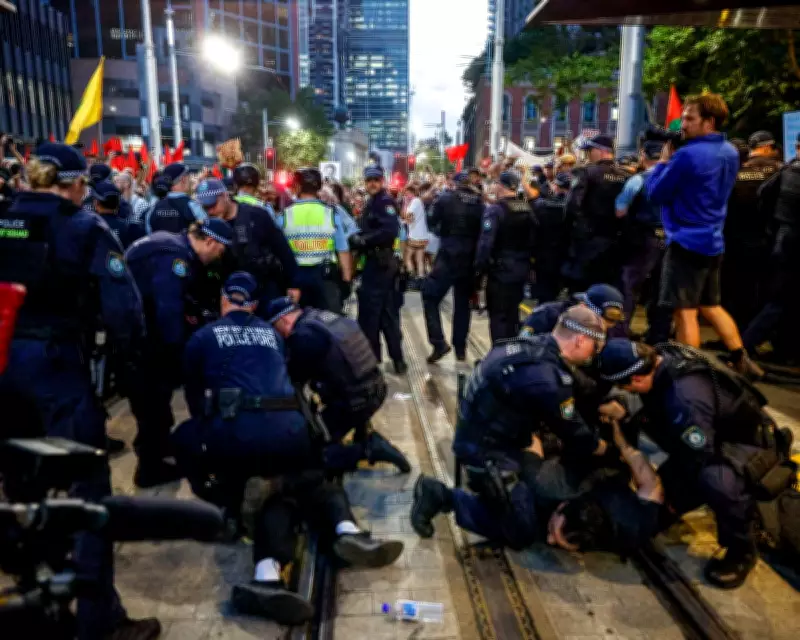
State Greens MP Abigail Boyd claimed she was "targeted and attacked" by officers, sustaining injuries to her wrist and chin. "I feel quite naive, but I didn't know that this was what police could do in our state," Boyd expressed on ABC radio, adding she was "absolutely shocked." NSW police reported using pepper spray on protesters at the rally near Town Hall, arresting 27 individuals and noting 10 officers were assaulted, though none seriously.
NSW Greens MP and justice spokesperson Sue Higginson announced she would refer the police actions, which she alleged included horse charges and "unprovoked assault," to the Law Enforcement Conduct Commission. "I saw with my own eyes something I had hoped to never see," Higginson stated, describing the event as evidence of a descent into a "police state."

Premier Minns and Police Defend Response
Premier Chris Minns defended both the police response and the controversial protest restrictions, which a government member said created a "pressure cooker" situation. Minns explained on Channel Nine's Today program that police were "put in an impossible situation" after protesters defied a restriction preventing a march to NSW parliament, implemented following the Bondi attack.
He emphasized that police had "done everything possible to avoid that confrontation," including urging organizers to hold the protest in Hyde Park for safety. Minns also highlighted the concurrent presence of 7,000 Jewish mourners in Sydney, necessitating separation of the groups. NSW police assistant commissioner Peter McKenna strongly defended officers' actions, citing "one of the most precarious, volatile situations" he had witnessed, with "palpable" aggression from the crowd.
Protest Organizers and Political Reactions
Josh Lees, an organizer for the Palestine Action Group, described Monday night's events as the worst he had seen in years of pro-Palestine activism. He argued that if police had facilitated a peaceful march, as requested, "all of this could have been avoided." The group plans another event to demand dropped charges and accountability for police behavior.
Prime Minister Anthony Albanese expressed devastation at the scenes, stating they "undermined" the protesters' cause, while affirming the appropriateness of Herzog's visit. He supported police guidelines for peaceful expression. Federal minister Tanya Plibersek called social media videos "very concerning" and expected investigations, though she stressed protesters should have heeded police advice.
Controversy Over Protest Restrictions and Context
Labor NSW upper house member Stephen Lawrence, who attended the rally, criticized the state for not facilitating a peaceful protest and questioned linking the Bondi attack to pro-Palestine demonstrations. He warned that removing protest authorization capacity created an "inevitable consequence" of tension.
Footage showing men praying before being dragged away by police sparked debate, with Minns rejecting claims of disproportionate focus on the Muslim community, citing the "riotous behaviour" context. McKenna cautioned against taking "snippets" of footage out of context, defending officers' decisions amid volatile conditions.