San Francisco Public Defender Hit with $26,000 Fine for Contempt of Court
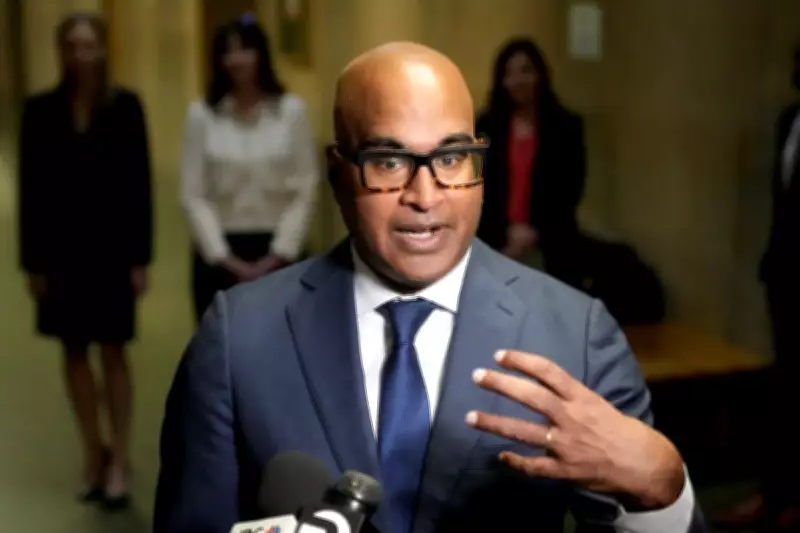
A San Francisco judge has imposed a substantial fine of $26,000 on the city's public defender, Mano Raju, after finding him in contempt for refusing to accept new felony and misdemeanor cases. The ruling follows Raju's defiance of a January court order that mandated his office stop declining cases, a stance he maintains due to overwhelming workloads and inadequate resources.
Escalating Conflict Over Legal Representation
Public Defender Mano Raju initiated the policy of rejecting some new cases in May of last year, pointing to a surge in prosecutions under District Attorney Brooke Jenkins and chronic understaffing. Raju argues that his attorneys are handling unsustainable caseloads, averaging 60 felony and 135 misdemeanor cases each, far exceeding the recommended limits of 40 felonies and 80 misdemeanors per attorney as suggested by a 2025 study from the Deason Criminal Justice Reform Center.
"Every member of my team could cut their workload in half, and they would still have more than a full-time job," Raju stated in an interview with The Associated Press. He emphasized that the heavy workload compromises the quality of legal representation, violating defendants' rights and causing significant stress and health issues among his staff.

Courtroom Showdown and Political Tensions
San Francisco Superior Court Judge Harry Dorfman ordered Raju in January to cease declining cases, but Raju continued his refusal, leading to the contempt finding. On Tuesday, Dorfman fined Raju $1,000 for each of the 26 cases rejected since the order and scheduled another hearing in April to consider additional fines. Raju has announced plans to appeal and will persist in declining some new cases.
The courtroom was packed with public defenders and staff from across California in a show of support for Raju. He told the judge, "People and their families get hurt when we can't provide the representation we should and our staff suffers the residual trauma."
This conflict places Raju, a progressive and the only elected public defender in California, directly at odds with District Attorney Jenkins. Jenkins criticized Raju's actions, claiming they disrupt the justice system and could result in violent defendants being released due to lack of legal representation. "Their objective is to disrupt the system, it's to cause chaos, it is to bottleneck the courthouse," Jenkins asserted.
Broader Context of Public Defender Shortages
The dispute occurs against a backdrop of nationwide public defender shortages. Courts from Oregon to Massachusetts have struggled with insufficient legal representation for years. In Oregon, a February Supreme Court ruling is set to dismiss over 1,400 cases due to lack of timely representation. However, the public spat in San Francisco is notably contentious and political, reflecting deeper debates over public safety in the city.
Mayor Daniel Lurie, elected in 2024 on a promise to restore San Francisco's image after years of negative attention, has pledged to clean up city streets. His election followed the 2022 recall of prosecutor Chesa Boudin, who faced criticism for his perceived permissive approach to street crime. Jenkins, who replaced Boudin, has ramped up prosecutions, filing 8,000 felony and misdemeanor cases last year compared to about 5,600 in 2021.
Workload Disputes and Budgetary Pressures
Raju attributes the unsustainable workload to a surge in low-level crime prosecutions and the increasing volume of digital and video evidence that requires review. He accused Jenkins of "clogging up the courts" and highlighted a 2023 RAND Corporation study finding that excessive public defender workloads violate ethics rules and harm defendants.
Jason McDaniel, a San Francisco State University political science professor, suggested that Raju is using disruption as leverage in a tough budget fight, rather than engaging in a genuine policy dispute over public safety. Mayor Lurie is currently dealing with a $400 million budget deficit, adding to the tension.

"If this really were a policy fight rather than a fight for resources, that would be something that I think voters would really get upset about because more progressive positions on law enforcement have received a lot of pushback from the majority of voters in San Francisco," McDaniel noted.
Judge's Rejection and Legal Implications
Judge Dorfman rejected Raju's claims of excessive workload, determining that the Public Defender's Office has sufficient staff to handle cases. He also criticized the practice of assigning two attorneys to some felony cases, which Raju defended as necessary for training purposes. Dorfman acknowledged that studies on caseload limits are worthy of consideration but emphasized, "they are not California law."
In court, Dorfman stated that while he found Raju acted in good faith, "that does not mean that I'm going to retreat or stay a court order." He added, "The court is not a bystander in this. The law compels the court to appoint a public defender when necessary."
Despite the fines, Raju assured that no defendant in San Francisco has been left without legal representation, as his office coordinates with city-contracted private attorneys. However, the Bar Association of San Francisco, which has assisted in representing some defendants, informed the judge that its attorneys are at capacity and cannot accept new clients, underscoring the growing strain on the city's justice system.