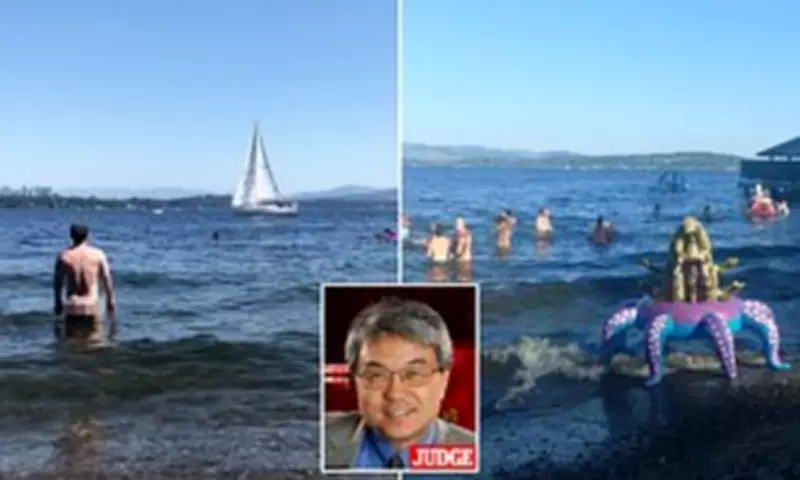
A Seattle judge has ruled that women must be permitted to sunbathe topless at Denny Blaine Park, a public beach on Lake Washington that has long been an unofficial nude beach and a gathering place for the city's gay community. King County Superior Court Judge Samuel Chung issued the ruling on Friday, mandating that no one must cover their torsos at the park regardless of sex, gender, or gender identity.
Background of the Controversy
The beach has been mired in controversy due to frequent acts of sexually aggressive behavior. In 2025, Judge Chung ordered the beach to temporarily close after locals filed a lawsuit citing incidents of masturbation, indecent exposure, and menacing behavior. The lawsuit included video evidence of people masturbating in the park, and an open letter detailed troubling incidents such as a man exposing himself to a female neighbor while making sexually aggressive remarks.
Judge Chung ruled that the sexual behavior and nudity constituted a 'public nuisance' and ordered the city to develop a plan to combat the offensive behavior. This led to the installation of fencing, increased staff, and signs outlining park rules. In August, the city designated a 'clothing required' section of the park.

Private Security and Discrimination
A nearby homeowner hired private security who would order topless beachgoers in the 'clothing required' area to cover up and report them to Seattle police. Friends of Denny Blaine, a community group supporting nudity at the park, claimed that the private security primarily targeted women, violating state and federal laws prohibiting sex-based discrimination. The group also argued that the actions threatened the beach's status as a 'rare safe space' for Seattle's queer community.
Seattle police would not cite the beachgoers reported to them by private security, as public nudity is legal anywhere in the city, though 'lewd' nudity can still be considered indecent exposure, which is a crime.
City and Court Decisions
A few days before Judge Chung's latest ruling, the city sided with Friends of Denny Blaine, stating that its abatement plan does not require torso coverings in the 'clothing required' area. Friends of Denny Blaine released a statement saying: 'Denny Blaine Park is not private property. It is a public beach, a historic queer gathering space, and a place where no one should have to wonder whether a neighbor's security guard will decide their body is a problem. With today's ruling, parkgoers can again enjoy the toplessness that has defined this beach for decades, free from intimidation by private security.'
Denny Blaine Park for All, the community group that filed the 2025 lawsuit, was not involved in the private security efforts and released a statement saying it did not oppose Chung's Friday ruling. The statement said: 'This case isn't about a sign or topless sunbathing. It's about whether the City will finally address the ongoing safety risks and illegal activity that have defined this park for years.'