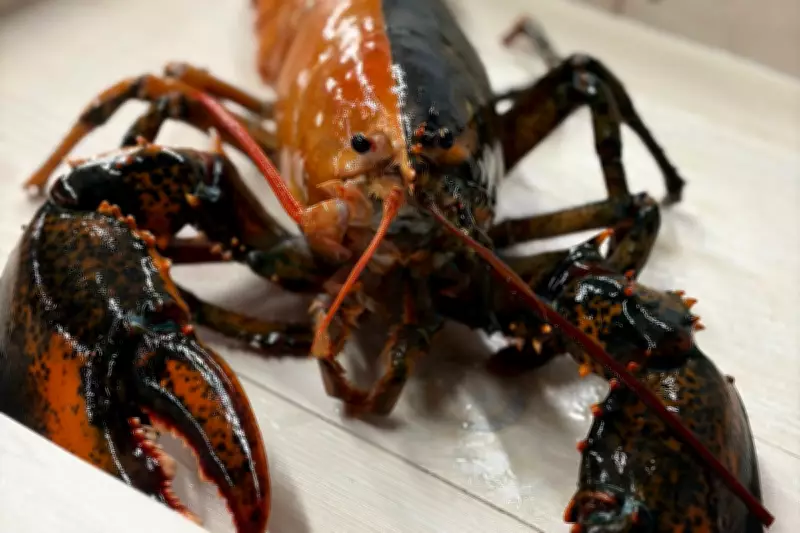
A Cape Cod seafood company has donated a rare two-colored lobster to a science center, sparing the crustacean from the cooking pot because of its remarkable coloration. The lobster, caught by fishermen off Cape Cod on April 16, features the typical brown color on one side and bright orange on the other, a two-toned pattern that extends from its head to its tail.
Fascination Unites New Englanders
While the lobster might be divided in color, it has united New Englanders in fascination. Representatives for Wellfleet Shellfish Company in Eastham, Massachusetts, reported receiving numerous inquiries about the unusual crustacean for days. The company decided to gift the lobster to the Woods Hole Science Aquarium in Falmouth, Massachusetts, where it will be placed on public display once the aquarium reopens.
“The lobster is now with Woods Hole Science Aquarium’s animals currently being housed in holding tanks at the Marine Biological Laboratory during the aquarium’s construction period. When the aquarium reopens, the lobster will be on display, offering visitors a rare look at one of the ocean’s most striking natural anomalies,” the shellfish company stated.

Rarity of Two-Colored Lobsters
Oddly colored lobsters frequently appear at New England docks during spring and summer, but the two-colored specimen is considered rarer than most. The American lobster typically exhibits a mottled brown coloration, but gene mutations affecting pigment-binding proteins can cause color abnormalities. Some lobsters are blue, orange, spotted calico, or even brightly colored specimens known as “cotton candy” lobsters.
A two-colored lobster can occur when two lobster eggs fuse and develop as a single animal, explained marine sciences professor Markus Frederich of the University of New England in Maine during a 2024 interview with The Associated Press. While estimates exist regarding the rarity of different lobster colors, Frederich cautioned that such figures are approximations.
Wellfleet Shellfish Company described the two-colored lobster as a “remarkable and exciting find” and expressed delight in ensuring its preservation for public education and enjoyment.