Home Secretary's Radical Policing Overhaul Faces Significant Opposition
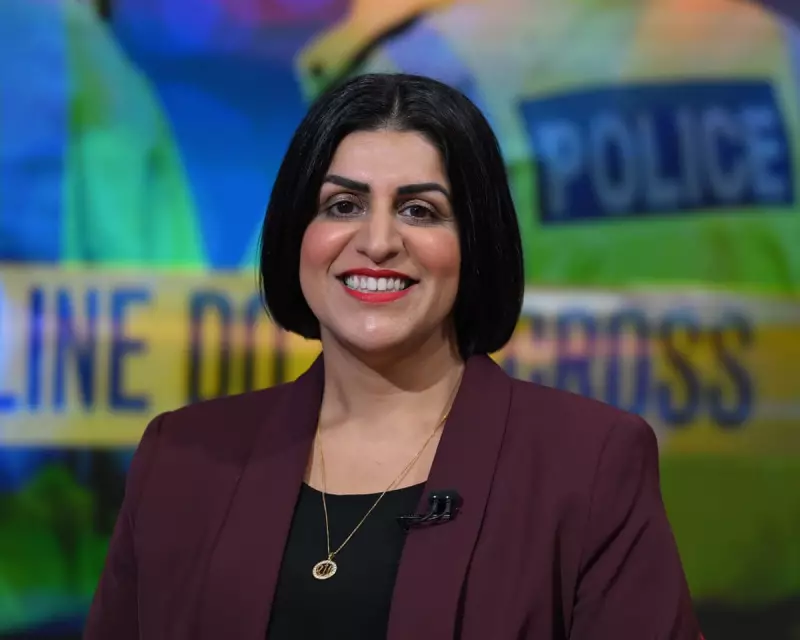
The Home Secretary, Shabana Mahmood, is likely to encounter substantial resistance to her ambitious plans to merge smaller police forces across England and Wales. This comprehensive reform package, described by her department as the most significant overhaul of policing in two centuries, has already sparked concerns about centralisation and practical implementation challenges.
The Scale of Proposed Changes
Following numerous policy announcements over recent months, Mahmood has unveiled a white paper entitled From Local to National: a New Model for Policing that outlines transformative reforms affecting every police force. The most dramatic proposal involves reducing the current 43 forces through mergers by 2034, with a review determining specific details. This structural change represents perhaps the most ambitious element of the entire reform package.
Key Components of the Reform Package
The white paper details several major policy initiatives that will reshape British policing:

- A reduction in police force numbers from 43 through mergers by 2034
- Creation of an FBI-style National Police Service to lead on terrorism, fraud and organised crime
- Establishment of local policing areas in every borough, city and town with officers focusing on neighbourhood policing
- Granting home secretaries the power to dismiss chief constables
- Requiring every police officer to hold a "licence to serve" with regular testing
- Implementing a fast-track system for professionals and experts to assume senior police roles
- Appointing a new police commander to lead on violent disorder and rioting
- Creating a new national forensics team to assist in solving serious crimes
- Nationally rolling out live facial recognition technology, increasing deployment vans from 10 to 50
- Scrapping police and crime commissioners in 2028
Rationale Behind Force Mergers
Officials argue that merging forces represents a crucial efficiency measure that could save billions of pounds currently spent on duplicating backroom services such as human resources, payroll and IT systems. These savings could then be redirected toward frontline policing services. Under the proposed structure, each force would be divided into multiple local policing areas where neighbourhood officers would focus on addressing shoplifting, phone theft and anti-social behaviour.
Home Office sources point to Police Scotland as a successful precedent, established in 2013 through the merger of eight regional forces, which reportedly saved approximately £2 billion through staff reductions, operational efficiencies and improved working practices.
Significant Implementation Challenges
Critics highlight that merging 43 forces presents a substantially more daunting challenge than the Scottish example and would require entirely new funding and governance arrangements. The Treasury may prove reluctant to provide the necessary cash injection for such a massive reorganisation.
This is not the first attempt at such reforms. During Labour's previous period in government, then Home Secretary Charles Clarke attempted to scrap more than 20 forces, but the plans were ultimately abandoned following intense lobbying from MPs and local police chiefs.
Expected Sources of Opposition
Resistance is anticipated from multiple quarters, including rural politicians, opposition parties and senior officers from smaller forces that would disappear in the reorganisation. Some senior police officers have suggested the number of forces could be reduced to as few as 12.
Concerns have been raised about whether these reforms might sideline the policing needs of rural areas in favour of towns and cities. The Conservative party has questioned the evidence supporting the claim that reducing force numbers actually reduces crime rates.

The National Police Service Proposal
The proposed National Police Service would consolidate the capabilities of the National Crime Agency, counter-terrorism policing, regional organised crime units, police helicopters and national road policing under a single organisation. Home Office sources indicate that some forces have demonstrated insufficient capability in dealing with serious and organised crime such as trafficking, drug dealing or financial crime, often relying excessively on Metropolitan Police expertise.
Officials argue that organised crime has become highly professionalised and operates through international networks, necessitating corresponding structural changes within police organisations.
Historical Context and Concerns
This represents the third attempt to establish an FBI-style organisation in the UK. In 2006, Labour introduced the Serious and Organised Crime Agency, which the Coalition government later replaced with the National Crime Agency. Senior police officers express concern that another reorganisation could be reversed by a future government, while sources also worry that concentrating capabilities into one major force might enable an interfering home secretary to meddle in operational matters.
Implementation Timeline and Political Realities
The major reforms involving force mergers and introducing the National Police Service will require years to implement, potentially extending beyond the current government's tenure. Mergers will commence with consultation and a test merger, aiming to build broad consensus rather than provoke confrontation.
Additional elements of the reform package face their own objections. MPs have already voiced concerns about the national deployment of live facial recognition technology, particularly given Home Office admissions that the current system is more likely to incorrectly identify black and Asian people than their white counterparts in certain settings. The Police Federation has expressed reservations about the "licence to practice" requirement, emphasising that it must be accompanied by improved training provisions.
Political Support and Calculations
Privately, some Labour MPs acknowledge that while these reforms may address structural failings that police officers and politicians have highlighted for years, they are not necessarily vote-winners and could occupy civil servants and senior officers for years. One former minister noted, "These may be necessary reforms in the long run but they might not be good politics, given our position in the polls."
The reform package represents a bold attempt to modernise British policing, but its successful implementation will require navigating significant political, financial and operational challenges while building consensus across multiple stakeholders.