Police Clear Fuel Protest Blockade in Dublin Amid Ongoing Cost Crisis
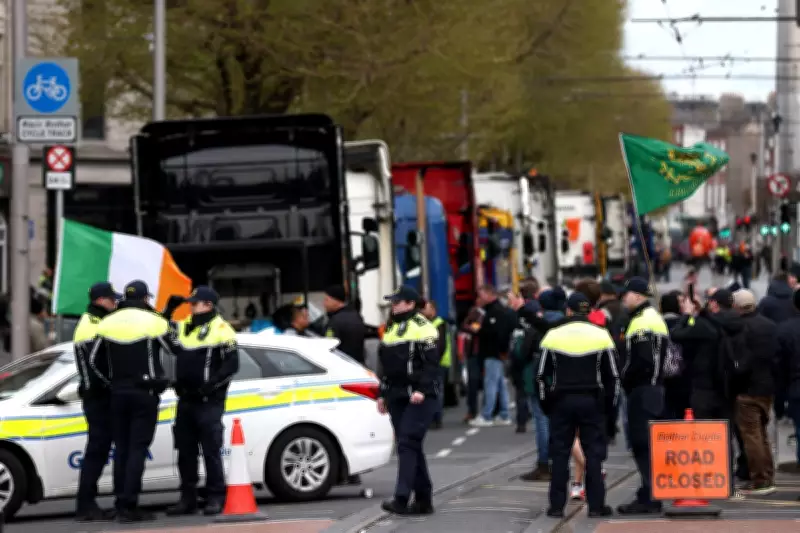
Police in Ireland have broken up a blockade in the centre of Dublin by fuel protesters who have brought much of the country to a standstill over the past week. The action comes as the government prepared on Sunday to approve cost-cutting measures aimed at ending six days of disruption over soaring costs at the pump.
As tractors and trucks that had blocked O'Connell Street were rolling out of the capital, protests continued elsewhere. On the other side of the country, police clashed with demonstrators at the Galway docks, where a military vehicle was used to knock down a makeshift barrier.
Widespread Chaos and Infrastructure Disruption
The protests have caused significant chaos across Ireland, with blockades at the country's only oil refinery and several vital depots preventing tanker trucks from delivering fuel to service stations. This has resulted in more than a third of pumps running dry nationwide. Additionally, slow-moving convoys of vehicles have caused severe traffic jams on major highways, further compounding the disruption.

Police began cracking down on Saturday, using pepper spray to help clear protesters at the Whitegate refinery in County Cork. Authorities vowed to remove others who were endangering critical infrastructure and public safety, warning that gas shortages could prevent emergency services from responding effectively.
Official Response and Protester Reactions
Irish Police Commissioner Justin Kelly stated on Saturday, "They are not a legitimate form of protest. We gave the blockaders fair warning that we were moving to enforcement and they choose to ignore it and continue to hold the country to ransom."
However, a farmer who has become a spokesman for the group in Dublin expressed anger that their peaceful protest had been "ambushed" by an army of officers overnight. Christopher Duffy explained that police threatened to tow their heavy vehicles, forcing them to leave. "These vehicles are very expensive with automatic transmissions and everything, and if they drag them with the engine not on they could wreck them," Duffy said. "So we have no choice, financially we have to move the vehicles."
Root Causes and Government Measures
The protests began on Tuesday and have grown as word spread on social media, with truckers, farmers, and taxi and bus operators participating. They are calling for government help—such as price caps or tax cuts—to bring down fuel costs they say will drive people out of business.
Government officials, who had already introduced measures to ease the burden of price rises two weeks ago, have been baffled over the rationale behind the protests. They note that the global price spike is due to the conflict in the Middle East, which has restricted oil exports. Prime Minister Micheál Martin called the move "illogical" and warned that the country was on the brink of turning tankers away at ports and losing its oil supply.
The government was expected to approve a measure to help reduce the cost of gas and diesel, though it remains unclear if this will be sufficient to halt the protest movement. The ongoing disruption highlights the deepening cost-of-living crisis and the challenges facing policymakers in addressing public discontent.