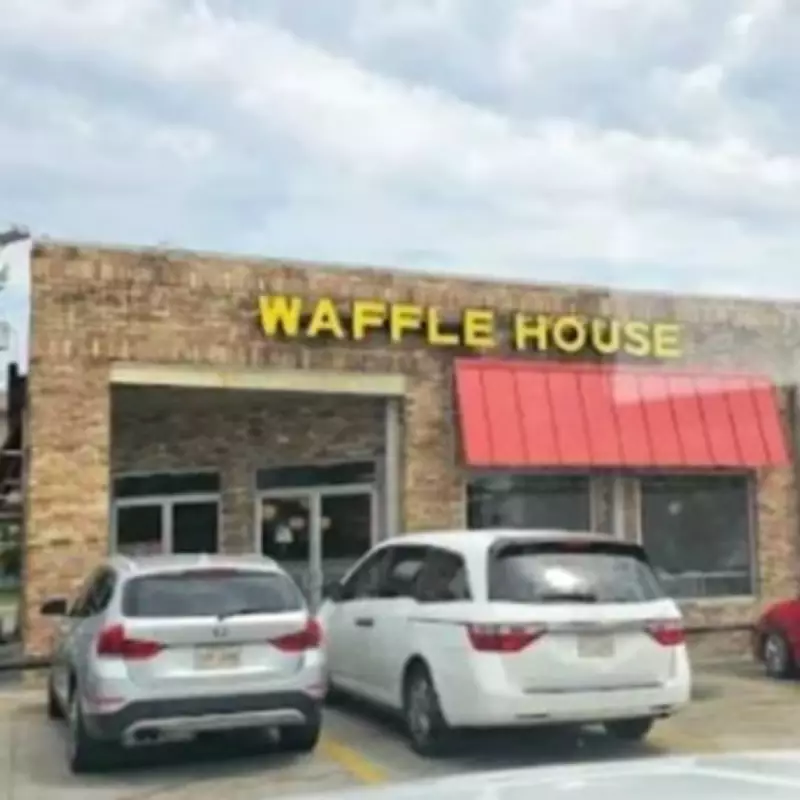
In a deeply distressing incident, the body of a newborn baby boy was discovered inside a portable toilet near a Waffle House restaurant in Gretna, Louisiana, a suburb of New Orleans. Authorities have revealed that the infant was alive at birth, according to autopsy results, adding a tragic dimension to the case.
Discovery and Investigation Details
Emergency services were called to the area in the early hours of Thursday, March 26, 2026, following reports from the restaurant. A woman allegedly entered the Waffle House at 52 West Bank Expressway around 3:17 am local time and informed staff that she had given birth in a nearby portable toilet. Police and paramedics responded promptly to the scene.
Officers later located the baby boy's body in the tank of a porta-potty at a construction site near the Mississippi River, situated at 62 West Bank Expressway, approximately one block away from the restaurant. The Jefferson Parish Coroner's Office reported that the infant was found submerged in liquid cleaning chemicals within the portable toilet tank.

Autopsy Findings and Legal Context
An autopsy conducted by the coroner's office determined that the newborn, who weighed 7.2 pounds and was born during the third trimester, died from asphyxia by drowning. Gretna Police Deputy Chief Jason DiMarco emphasized that the autopsy confirmed the baby was alive at birth, highlighting the preventable nature of the tragedy.
Tim Genevay, director of forensic operations for the coroner's office, noted that the baby had not been given a name. Officials indicated that unless relatives come forward by the end of April, the infant is likely to receive a pauper's burial, a basic funeral funded by the state or local authority when no family is available or willing to arrange it.
Safe Haven Law and Community Response
Police believe the child's mother was homeless at the time of birth, underscoring the vulnerabilities faced by some individuals. Louisiana's Safe Haven Law allows parents to surrender custody of a newborn up to 60 days old without facing prosecution for abandonment. Under this law, babies can be left at designated safe locations such as hospitals, fire stations, police stations, or public health units, where they can receive immediate medical care.
Lise Naccari, founder of Compassionate Burials for Indigent Babies, stressed the importance of raising awareness about the Safe Haven Law. "It's very important that mothers know they can use the Safe Haven Law," she stated, advocating for better education to prevent similar incidents in the future.
This case has sparked discussions about public health resources and support systems for at-risk mothers, with community leaders urging increased outreach to ensure vulnerable individuals are aware of legal protections and assistance available to them.